
Unveiling the Best Details of the B-1 Lancer Bomber
By AirPra

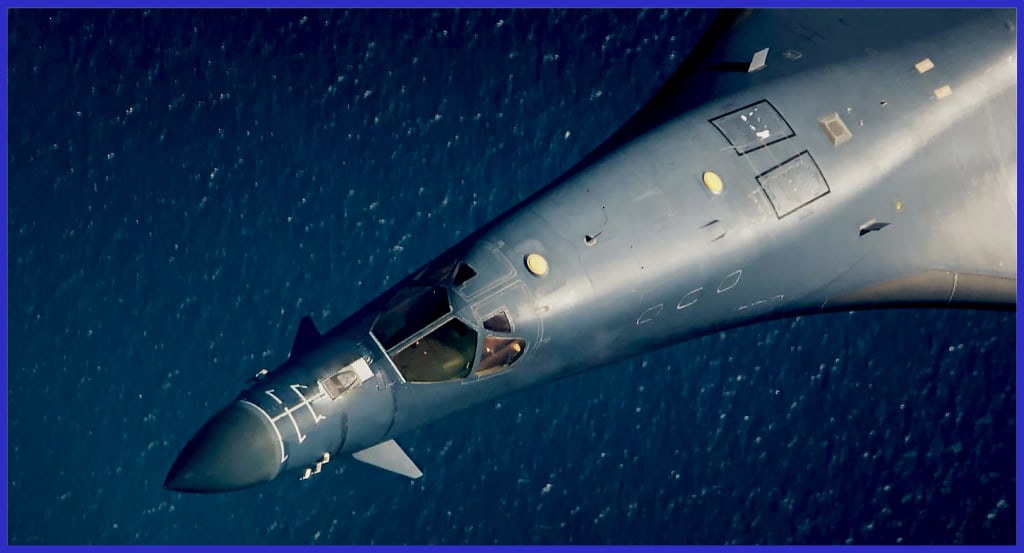
The Rockwell B-1 Lancer, widely recognized as the B-1 worldwide and referred to as the ‘Bone’ by USAF personnel due to its ‘B-One’ designation, stands as one of the cornerstones of America’s long-range bomber fleet. The article is Unveiling the Best Details of the B-1 Lancer Bomber which also constitutes the backbone of the nation’s long-range bomber capabilities and has the ability to deliver a substantial payload of both precision and non-precision weaponry, along with achieving supersonic speeds of Mach 1.25, the B-1 bomber excels at promptly engaging potential adversaries across the globe on short notice—a capability lacking in the other American bombers as of 2023.
It is operated by the United States Air Force (USAF) and serves as a crucial component of the U.S. military’s long-range strike capabilities and exhibits exceptional manoeuvrability across diverse flight conditions. It was initially designed as a nuclear weapon delivery system to meet the 1965 need for a fast, low-level B-52 Stratofortress replacement.
After a comprehensive series of research endeavours, the construction phase of the inaugural B-1A prototype was initiated in the latter part of 1972. Subsequently, on December 23, 1974, the prototype accomplished its maiden flight. This specific iteration achieved a peak velocity of Mach 2.2 during high-altitude flights, supplemented by the capability to efficiently traverse extended distances at Mach 0.85 when flying at significantly lower altitudes. As of the conclusion of June 1977, a trio of prototypes had concluded a total of 118 flight missions, amassing a cumulative flight duration of 646 hours. Escalating expenditures prompted the termination of the project in 1977.
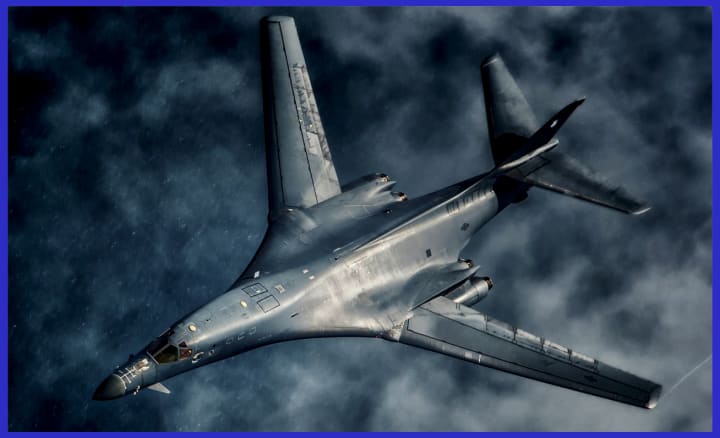
However, intriguingly, trials of the B1-As endured until 1981, serving as an interim solution primarily due to setbacks in the development of the B-2 stealth bomber initiative. Consequently, modifications were made to the B-1A design, resulting in a reduction of its maximum speed to Mach 1.25 for high-altitude operations. Simultaneously, enhancements were implemented to elevate the low-altitude speed to Mach 0.96, extensively refine electronic components, and augment the airframe’s capacity for enhanced fuel and armament carriage.
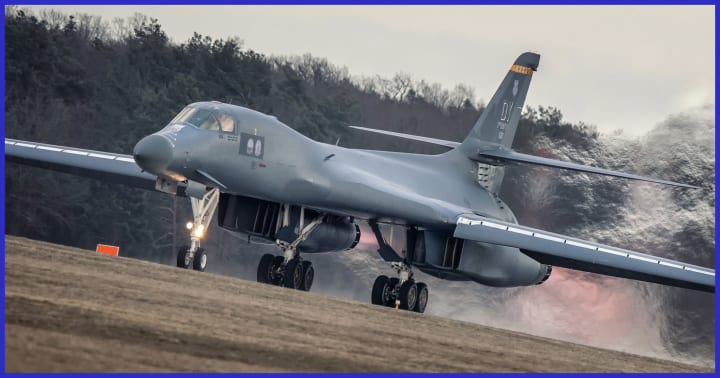
The bomber was brought back to use by the Reagan government in 1982 after a lot of important military and political support. They made an improved version, called the B1-B, which started flying on October 18, 1984. This new version was different from the earlier B1-A because it had better equipment, a stronger base, seats that could shoot the pilots out in emergencies, and the ability to carry weapons outside the plane.
The first B1-B was given to Dyess Air Force Base in Texas in June 1985. It officially joined the Strategic Air Command (SAC) as a nuclear bomber the next year. It was fully ready for action on October 1, 1986. The last out of the 100 B1-B planes was handed over on May 2, 1988. Each plane cost 200 million US dollars. This was a really fast rate of making planes, especially when compared to how planes are made today.
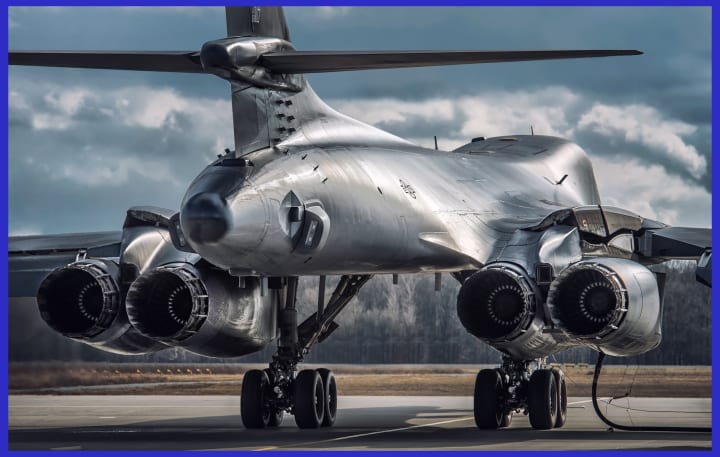
The Concept Behind the Development of the B-1 Lancer: Supersonic Bomber
In 1955, the United States Air Force (USAF) established criteria for a novel bomber that could integrate the payload and range capabilities of the Boeing B-52 Stratofortress. Additionally, there was a specific emphasis on achieving supersonic speeds, with a targeted maximum velocity of Mach 2. This objective closely mirrored the characteristics of the Convair B-58 Hustler, the aircraft that the new conceptual bomber was intended to succeed in. Here’s an overview of its development history:
Origins and Cancelation of B-70 Valkyrie: The development idea of the B-1 Lancer can be traced back to the 1950s when the United States Air Force (USAF) was engaged in the development of the B-70 Valkyrie, a high-speed, high-altitude strategic bomber. In December 1957, the USAF opted for North American Aviation’s B-70 Valkyrie for this purpose. This six-engine bomber was capable of cruising at Mach 3 at a high altitude of 70,000 ft. However, due to escalating costs, advancements in Russian surface-to-air missile technology, and a growing shift towards the intercontinental ballistic missile (ICBM) force, President John F. Kennedy ultimately cancelled the B-70 bomber program in 1961.
"Dive In and Explore the Complete Article"
About the Creator
Prajesh Majumdar
Hi there, I'm Prajesh, the creator of airpra.com
The site is dedicated to nurturing a community of individuals with a keen interest in exploring the intricate aspects of defence equipment and related news.
Keep reading
More stories from Prajesh Majumdar and writers in FYI and other communities.
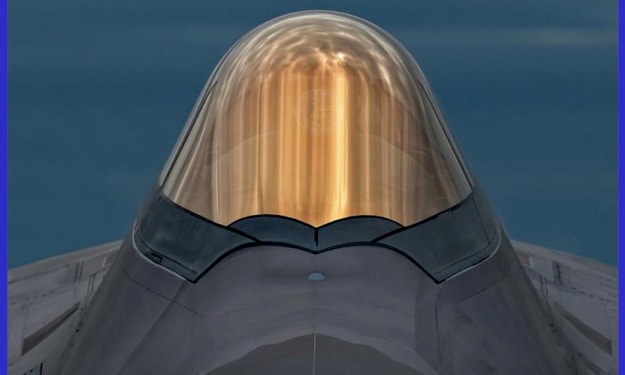
Discovering the Pinnacle of Stealth: The F-22 Raptor Unveiled
As an advanced 5th-generation aircraft, the F-22 represents the epitome of modern aerial dominance. Its expertise in stealth, derived from state-of-the-art materials and design, makes it nearly undetectable by enemy radar systems. Let’s Unveil the Best of the Stealth Titan F-22 Raptor, a marvel that achieves supersonic velocities sans afterburners, thus significantly tilting the balance in air combat engagements. Its unparalleled agility, facilitated by thrust-vectoring nozzles, bestows it with remarkable acrobatic abilities, allowing it to adeptly evade and outmanoeuvre adversaries.
By Prajesh Majumdar3 years ago in FYI


Comments
There are no comments for this story
Be the first to respond and start the conversation.