
Discovering the Pinnacle of Stealth: The F-22 Raptor Unveiled
By AirPra

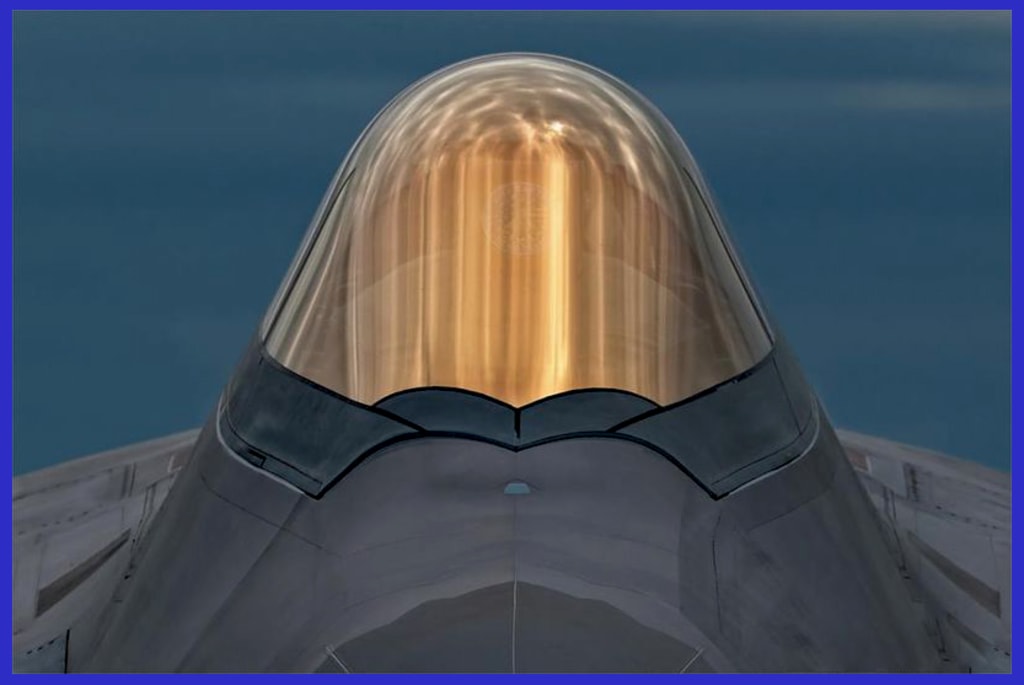
As an advanced 5th-generation aircraft, the F-22 represents the epitome of modern aerial dominance. Its expertise in stealth, derived from state-of-the-art materials and design, makes it nearly undetectable by enemy radar systems. Let’s Unveil the Best of the Stealth Titan F-22 Raptor, a marvel that achieves supersonic velocities sans afterburners, thus significantly tilting the balance in air combat engagements. Its unparalleled agility, facilitated by thrust-vectoring nozzles, bestows it with remarkable acrobatic abilities, allowing it to adeptly evade and outmanoeuvre adversaries.
The fighter’s fusion of stealth, aerodynamic excellence, and advanced mission systems has propelled a revolution in air combat capabilities, establishing a new standard for its generation. Designed and developed by Lockheed Martin in collaboration with Boeing and General Dynamics, the project, codenamed “Senior Sky,” was initiated in the 1980s era to establish itself as the premier air superiority fighter, specifically tailored for the USAF Advanced Tactical Fighter (ATF) program. This single-seat, twin-engine, supersonic all-weather stealth fighter aircraft not only excels as a prime interceptor but also encompasses ground attack, electronic warfare, and signals intelligence capabilities, demonstrating unparalleled precision as of 2023 and beyond.
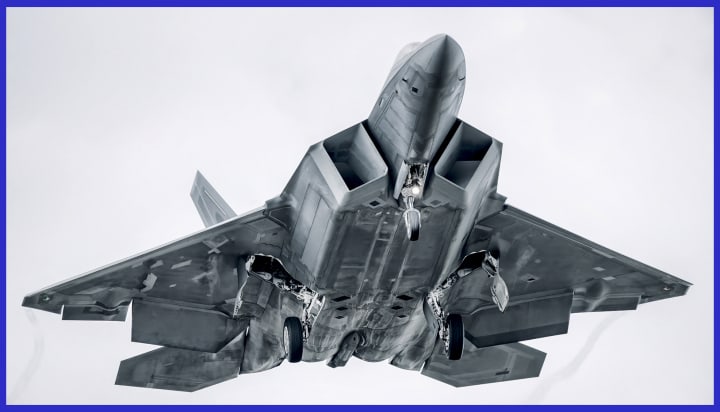
In fact, the F-22, known as the “Air Dominance Fighter,” outclasses all previous and existing American-origin fighters, but this superiority comes at a significant cost – its enormous price tag. Although the USAF had initially planned to purchase a total of 750 aircraft, the program was reduced to 195 (8 test models and 187 production aircraft) production units in 2009 due to each aircraft costing approximately $130 million at that time. Additionally, there were substantial expenses associated with flying and maintenance. As a result, the F-22 never achieved high numbers in its fleet.
Undoubtedly, everything in the world possesses its inherent pros and cons. However, the paramount aspect that distinguishes the F-22 Raptor, from its inception to the present day, is its pioneering and seamless integration of advanced technology, empowering it to rule the skies with the formidable strategy of “First Look, First Shoot, First Kill.”
The Concept Behind the Development of an Advanced Tactical Fighter
The development of an Advanced Tactical Fighter (ATF) is driven by the need to maintain air superiority and combat effectiveness in modern warfare scenarios. The concept encompasses a synthesis of cutting-edge technologies, innovative design principles, and tactical doctrines to create a platform that excels across various mission profiles.
The Story of its Origin: The issuance of the Advanced Tactical Fighter (ATF) requirement in 1981 set in motion a lengthy process that culminated in the F-22 Raptor’s introduction into service some 26 years later. During this period, both the world and technology underwent significant changes. The computer modelling techniques of the 1970s and 1980s could only ensure stealth performance for faceted shapes and straight lines.
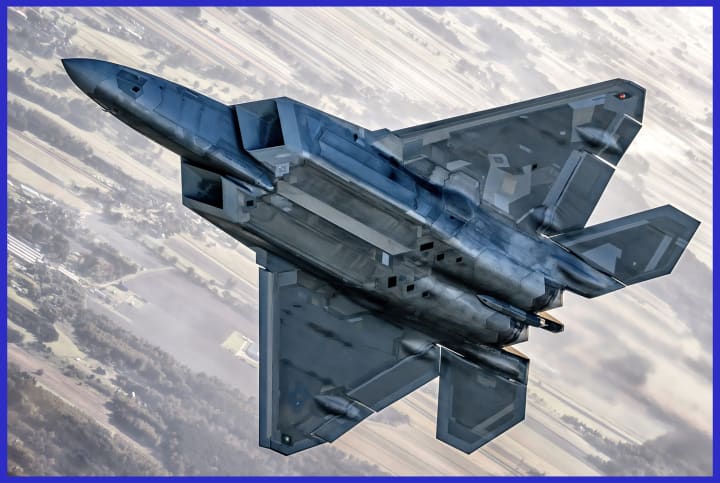
The F-117 Night Hawk, though not an air-dominance fighter, lacked provisions for air-to-air weaponry. Its defence strategy centred around remaining undetected. However, even before 1999, when an older-generation SAM brought one down over Kosovo, it became evident that future combat aircraft would require stealth protection of an entirely different magnitude, all without compromising their combat capabilities due to stealth features.
Furthermore, with the proliferation of the Sukhoi Su-27 “Flanker” and Mikoyan MiG-29 “Fulcrum” class of fighter aircraft, the need for an Advanced Tactical Fighter (ATF) became even more critical. It was imperative to execute offensive and defensive counter-air operations (OCA/DCA) within this fiercely contested environment. To accomplish this, the ATF program aimed to achieve a remarkable leap in performance by harnessing emerging technologies in fighter design.
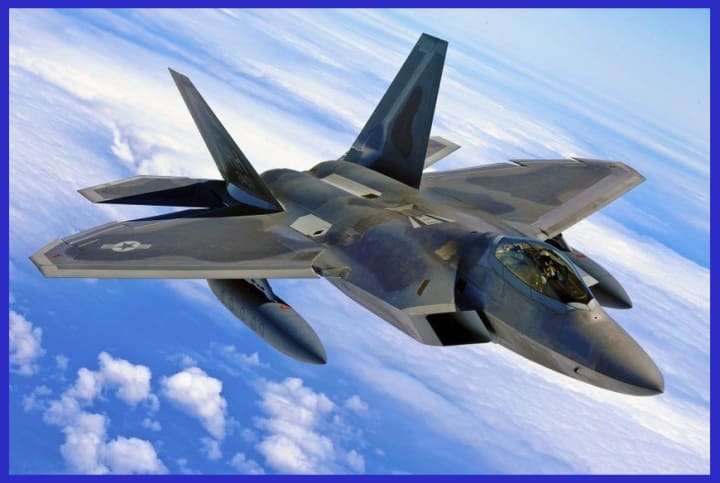
The program resulted in the development of two competing prototype aircraft: Lockheed Martin’s YF-22 and the Northrop/McDonnell Douglas YF-23, both of which completed their inaugural flights in late 1990. Simultaneously, Pratt & Whitney and General Electric were commissioned to develop the propulsion systems for the ATF’s engine competition. Following a rigorous competitive evaluation process, on April 23, 1991, Secretary of the USAF Donald Rice announced the Lockheed team and Pratt & Whitney as the victors of both the ATF and engine competitions, paving the way for full-scale development.
About the Creator
Prajesh Majumdar
Hi there, I'm Prajesh, the creator of airpra.com
The site is dedicated to nurturing a community of individuals with a keen interest in exploring the intricate aspects of defence equipment and related news.
Keep reading
More stories from Prajesh Majumdar and writers in FYI and other communities.
Revealing the Ultimate Transformation: From F/A-18 Hornet to EA-18G Growler!
The F/A-18 Hornet is a versatile and iconic multirole fighter aircraft designed and developed by McDonnell Douglas until 1997. Afterwards, it was taken over by Boeing to produce the Super Hornets and Growlers for the United States Navy and Marine Corps. Unveiling the Best of F/A-18 Hornet to EA-18G Growler, this transition brought about even more advanced and sophisticated capabilities in aerial warfare. With its sleek design and twin-engine configuration, the aircraft boasts exceptional agility, speed, and range, making it a formidable asset in various combat scenarios.
By Prajesh Majumdar3 years ago in FYI
A Planetary Alignment will coincide with Mercury Retrograde
Double phenomena in the heavens Some people say in jest that the planets have aligned in their favor when life works the way they desire. Were you aware that there are seasons when things do line up in the heavens? There will be a planetary alignment AKA a planet parade, on February 28, 2026.
By Cheryl E Preston19 days ago in FYI
The Role of NSN Identification in Aerospace Procurement
The aerospace industry relies heavily on precision, organization, and traceability when sourcing parts and equipment. Aircraft are made up of thousands of individual components, each playing a vital role in the safe and efficient operation of the system. Managing these parts across manufacturers, maintenance teams, and procurement networks can be extremely complex. To simplify this process, standardized identification systems are used to classify and track components throughout their lifecycle.
By Beckett Dowhanabout 13 hours ago in FYI




Comments
There are no comments for this story
Be the first to respond and start the conversation.