
Top Mobile App Development Trends in Australia
App Development Trends in Australia

Everyone says AI, PWAs, and 5G are the hottest trends. But what really matters for businesses in Australia?
It’s a tricky spot to be in because the app development space is full of new trends right now. There's new “must-have” technology everywhere. But for Australian businesses trying to build or scale an app, the real challenge is figuring out which ones will actually impact their growth, improve customer experiences, and, of course, justify the investment.
This becomes even more critical because not every global trend might be relevant for the local market, and not every innovation lives up to the hype. What matters is knowing which trends are shaping how Australians use apps, from the way they shop and pay, to how they expect content to load and look.
That’s exactly what this article will help you with. We’ll walk through the top app development trends in Australia, their relevance, and explore how a mobile app development company in Australia can leverage them to open up new opportunities for your app strategy. By the end, you’ll have a clear picture of which trends can help your business stay competitive and connected with its users.
Overview of the Mobile App Market in Australia
Similar to everywhere in the world, smartphones are now an inseparable part of everyday life in Australia too, as most people rely on them for shopping, connecting with others, etc. This widespread use has pushed businesses to create their own apps and spend heavily on app-based advertising.
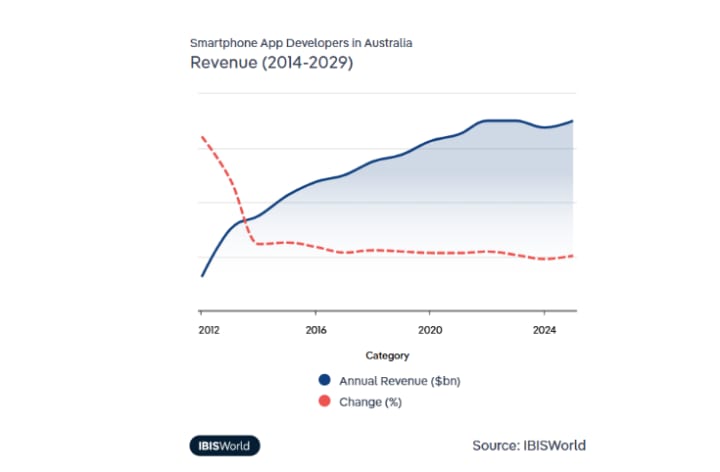
The pandemic also played a big role, as online shopping surged and new apps were launched to meet changing customer habits. All of this has helped the industry grow, which reflects in the industry’s revenue set to grow at an average pace of around 2.3% each year through 2024-25.
However, this has also presented several challenges. Many companies turn to outsourcing development to countries with lower labour costs, which can reduce expenses but often comes with trade-offs. Quality issues, time zone differences, and communication gaps sometimes undermine the end product.
This has given Australian developers a competitive edge in terms of reliability and alignment with local business needs. This mix of rising demand and outsourcing pressure has shaped the market into what it is today.
Key Challenges in the Australian App Market
The app market in Australia is growing, no doubt about that. More people rely on apps for shopping, banking, travel, or even just ordering dinner. But the growth doesn’t mean it’s easy for businesses. In fact, it’s getting harder to survive because users have so many choices and expectations are higher than ever. When you look closer, there are a few challenges that stand out and keep coming up for companies trying to make their mark.
1. Fierce Competition and Market Saturation
The first big challenge is simply how crowded the market is. Every category already has a few big players, whether it’s food delivery, fitness, or finance. On top of that, global apps like Uber, Netflix, or Amazon have the kind of brand recognition and budgets that local developers just can’t compete with. For a new app, getting noticed in such a saturated space is tough.
Even if you do manage to launch something unique, the reality is that users aren’t looking to download yet another app unless it really solves a problem better than what they already use. So businesses often end up spending a lot on marketing just to get visibility. Without a clear edge, an app can easily get lost in the store, no matter how well it’s built.
2. Rising User Expectations Around Experience
Users are quick to drop an app that doesn’t deliver a smooth experience. A slow load time, a clunky interface, or too many steps in the process, and people will uninstall without a second thought. And since global apps set the benchmark with slick designs and personalised features, local developers often feel the pressure to keep up.
It’s not just about good design either. People do expect apps to be fast, secure, and integrated with other services they already use. If an app feels outdated or disconnected, it’s a quick ticket to low ratings and poor retention. So the bar is constantly rising, and meeting those expectations takes serious investment.
3. Customer Acquisition and Retention Costs
Getting users to download your app is expensive, and keeping them engaged is even harder. With ad costs going up and competition for attention at an all-time high, businesses are pouring more money into getting people on board.
But the problem is, many users open an app once or twice and then forget it even exists!
That means developers need to think about how to keep people coming back through personalisation, regular updates, or loyalty features. Otherwise, the cost of acquisition doesn’t pay off. It’s a challenge because you’re not only fighting to win users, you’re fighting to hold their attention when new options are popping up every week.
4. Data Privacy and Regulatory Compliance
Then there’s the issue of data privacy. Australians are becoming more conscious of how their data is collected and used, and at the same time, regulations are getting stricter. For developers, this means more time and resources going into compliance, security, and making sure users feel safe. One breach or misuse of data is enough to damage trust permanently.
Smaller companies especially feel this pressure because they don’t always have large teams to handle compliance while also focusing on innovation. On top of local rules, you also have to meet the requirements of app stores and global standards, which adds another layer of complexity. So, it’s more of a balancing act where you need to move at a steady pace.
Top Mobile App Development Trends in Australia
Now that we have understood the core challenges, let's take a look at some mobile app development trends in Australia that are shaping the border market:
1. Adoption of Smartphones & Shopping Apps
Smartphones have become part of everyday life in Australia. With mobile devices making up over 97% of internet access, people are increasingly relying on them for almost everything, from banking and healthcare to shopping and even government services. This shift has made mobile phones a primary gateway for digital interaction, making apps a necessity rather than a luxury.
The pandemic played a huge role in cementing this behaviour. Even after restrictions were eased, the reliance on mobile apps only grew stronger. App downloads have stayed above pre-pandemic levels, and Australians now spend close to 4.5 hours a day on apps, which is an entire hour more than before lockdowns.
This explains why industries as varied as retail, healthcare, and government have been pouring resources into app development. But this wave of new apps also brings fresh challenges. As people can access an app for almost anything, it's becoming more critical to focus on a good user experience. This is pushing developers to raise their standards, ensuring apps are smooth, intuitive, and genuinely valuable if they want to stay on a user’s phone.
2. The Increasing Craze of Mobile Gaming
Among all types of apps, gaming stands out as one of the strongest performers in Australia. The mobile gaming market generated around USD 2 billion in 2024 and is forecasted to more than double by 2033, growing at an annual rate of over 8%. This growth is primarily driven by the convenience of mobile gaming.
Unlike consoles, smartphones are always in your pocket, and casual or hyper-casual games fit neatly into people’s busy schedules. This explains why retention rates in mobile gaming are among the highest across all app categories.
The impact of gaming isn’t merely limited to entertainment, though. Many brands are starting to use gaming elements as a way to engage customers. A recent example was MyMacca’s partnership with Netflix for a Squid Game promotion, which turned brand engagement into an interactive experience.

This kind of gamified marketing shows how mobile gaming concepts are spilling into other industries and creating new ways to capture user attention. The appeal of gaming also cuts across generations. Kids are spending a huge chunk of their time on platforms like Roblox, averaging over two hours a day, while older users are drawn to strategy and multiplayer games with social interaction.
On the competitive side, Australia is even making a mark in mobile esports as several players compete internationally in PUBG Mobile and Mobile Legends. What makes this space especially powerful is its monetisation model. This typically includes in-app purchases, subscriptions, advertising, and freemium upgrades, which have made mobile gaming a backbone for revenue in the app economy.
3. Sydney as a Hub for App Development
Sydney is leading the app development scene in Australia, mainly because it’s home to a lot of businesses and tech companies. This concentration of activity gives developers access to a steady stream of projects and clients, which helps them stay up to date with industry needs. Universities and local tech programs also supply a constant flow of skilled developers, which makes it easier for companies to find the right talent.
The city also benefits from having established companies like Atlassian, which attract smaller developers and startups. Being close to these major players helps smaller teams learn, adapt, and collaborate, keeping Sydney’s app market active and innovative.
So, if you're a business looking to develop an app, Sydney offers a good mix of options. You can choose from larger firms with proven track records or smaller, agile teams that may be more flexible or cost-effective. Therefore, such a high concentration of developers means you have to do some homework to pick a partner that fits their needs.
4. A Fragmented Market with Low Barriers to Entry
The Australian app development industry is quite fragmented, which is why it has a low entry barrier. So, even if you have little to no coding knowledge, you can get into app development. Self-learning platforms, accessible development tools, and affordable software have made it possible for independent developers and small startups to compete alongside bigger firms.
This fragmentation has both advantages and disadvantages. On the positive side, businesses have access to a wider variety of services and can find flexible, budget-friendly options. Smaller developers often bring creative approaches and quick turnaround times that larger companies may struggle to match. On the downside, the market’s diversity makes it harder to evaluate quality. Some developers may lack experience, and project outcomes can vary widely.
As a result, the industry effectively has 2 layers:
- Established firms in major cities like Sydney and Melbourne handle large-scale, complex projects, while smaller teams and freelancers fill niche markets or focus on budget-conscious clients.
- Businesses must weigh the benefits of flexibility and cost against potential risks in quality and reliability.
At the same time, it pushes developers to constantly upgrade their skills, adopt new tools, and differentiate their services to survive. So, if you carefully understand this structure, it can help you make smarter choices when selecting development partners.
6. Rise of No-Code and Low-Code Development Platforms
One of the most significant Australia app development trends is the increasing adoption of no-code and low-code platforms. These platforms come with drag-and-drop interfaces, pre-built components, and templates that let businesses and startups create apps quickly and cost-effectively.
If you are a small business or have a team without a full development department, these platforms can help significantly. That's primarily because they reduce the need to hire specialized developers and allow faster experimentation. Hence, you can test ideas, tweak features, and launch apps much quicker than traditional coding methods.
But of course, there are limits. No-code or low-code platforms might struggle with highly complex functionalities or apps that need heavy customization.
However, for many businesses, especially those that need to get to market fast, they’re more than enough. To give a clearer picture, here’s a quick snapshot of how businesses in Australia are currently using these different types of development platforms and which ones are the most popular:
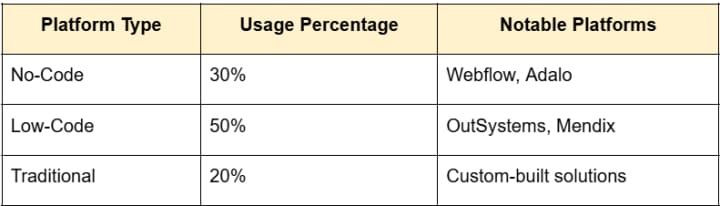
This table helps you understand that while traditional coding still has its place, low-code and no-code solutions are dominating because of their speed, cost efficiency, and accessibility. They’re especially useful for small businesses trying to launch apps quickly without a huge budget.
Conclusion
As we saw in this discussion, the app development trends in Australia are constantly reshaping how businesses must now approach their development plan and strategize accordingly. Users expect smoother experiences, but at the same time, competition is getting tougher, which is why simply building an app isn’t enough.
You actually need to keep up with these shifts so your app stays relevant and useful over time. This is where Dev Story makes a real difference. Instead of treating app development as a one-time project, we focus on aligning every step with current market demands. So, let's get in touch and
About the Creator
Rajinder Kumar
Rajinder Kumar is a tech content writer specializing in app development, UI/UX design, and emerging technologies. He creates clear, engaging, and SEO-friendly content to inform and inspire readers.
Keep reading
More stories from Rajinder Kumar and writers in FYI and other communities.
How AI/ML in App Development Is Creating Better B2B Solutions in Australia
Australian businesses are feeling the heat to implement smart digital solutions that will not only make the daily running of their operations smoother but also bring up a more insightful and faster decision-making process. Business-to-business (B2B) apps are the lifeblood of this change in the business landscape. They have become the central hub for facilitating communication, collaboration, and service exchanges between enterprises. Despite that, with the competition getting fiercer and customer expectations rising, simply relying on the traditional app development is no longer a viable option.
By Rajinder Kumar4 months ago in FYI
Indonesia Furniture Market: Housing Demand, Design Trends, and Manufacturing Expansion
According to IMARC Group’s latest research publication, the Indonesia furniture market size reached USD 9.1 Billion in 2025. Looking forward, the market is expected to reach USD 15.2 Billion by 2034, exhibiting a compound annual growth rate (CAGR) of 5.82% during 2026–2034.
By Abhishek Rastogi4 days ago in FYI



Comments
There are no comments for this story
Be the first to respond and start the conversation.