
Top Cybersecurity Questions to Ask Your QA Provider
If you’re trusting someone with your app, ask them how they’d stop it getting wrecked.

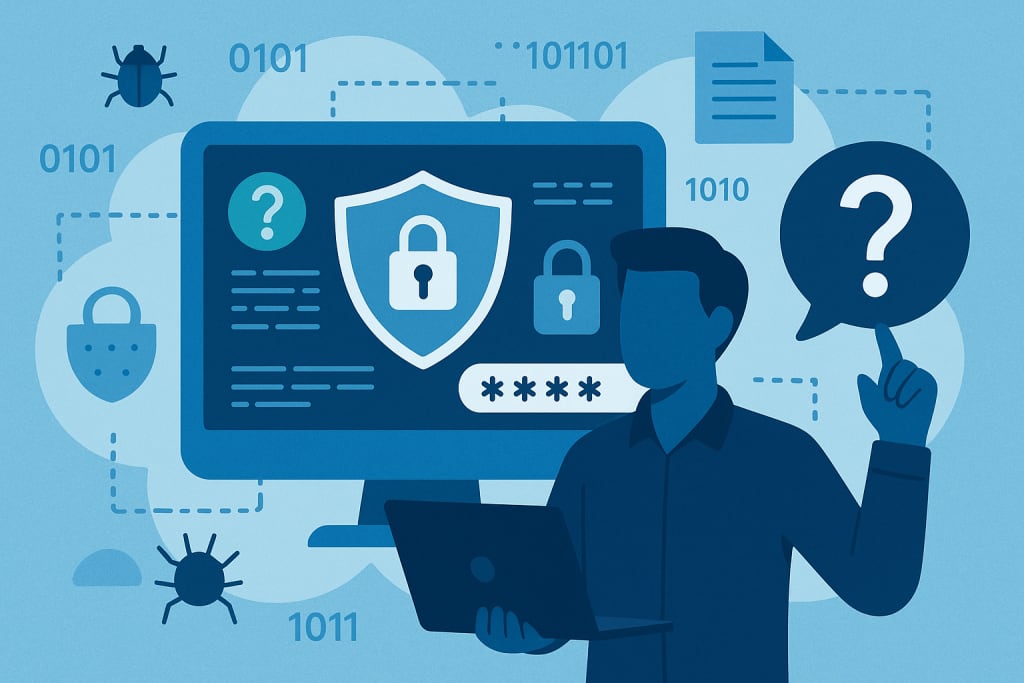
Let’s not dance around it, cybersecurity is messy. Vulnerabilities pop up overnight, developers cut corners under deadline, and testers sometimes just don’t dig deep enough.
When you bring in a QA provider, you’re not just hiring someone to check that buttons click and pages load. You’re giving them access to your systems, your data, and the reputation your team has worked hard to build.
So don’t stay quiet. Ask tough questions. Get uncomfortable if you have to.
Here are ten questions you absolutely need to ask, ideally before someone’s snooping through your admin panel from a beach in the Bahamas.
1. “What’s your playbook for security testing, do you actually follow any standards?”
Some teams wing it. Others base their security testing on proper frameworks like OWASP, NIST, or ISO 27001.
You want the second kind.
Why? Because those standards exist for a reason. They’re the result of years of people getting hacked and learning the hard way what went wrong.
If your QA provider doesn’t know what OWASP is, or claims it’s “not relevant to your stack”, thank them for their time and keep looking.
2. “Can you simulate a real attack, or just spot surface-level stuff?”
There’s a big difference between ticking off a checklist and mimicking what an actual attacker would do.
You want them to think like a hacker, and more importantly, test like one. That means penetration testing, vulnerability assessments, the works.
Also, please don’t forget mobile. Too many QA teams focus on web apps and ignore what’s running on people’s phones. The weak point could be the login flow inside your mobile app, not your homepage.
3. “Do you test security early, or after the code’s already out there?”
This one matters more than most people realise.
If security testing only happens right before release, it’s already too late. At that point, fixing things means rewriting half your logic, pulling devs off new features, and probably delaying a sprint or two.
Ask if your QA partner supports shift-left testing. That means testing security stuff early, before it breaks everything.
If they’re still doing security as a final step? That’s not QA. That’s mopping up after a flood.
4. “We’re regulated, can you handle that?”
If your product touches finance, health, payments, or basically anything sensitive, compliance is part of your job.
That means HIPAA, ISO 27001, PCI DSS, and their fun little friends.
So ask them straight up:
“Have you worked under compliance pressure before? Can you help us pass an audit?”
Because if they’ve only ever tested SaaS dashboards for time-tracking apps, they might not be ready for the level of scrutiny you need.
5. “What’s your plan when a breach actually happens?”
Not “if.” When.
Because here’s the truth: something will go wrong eventually. Some library will introduce a zero-day exploit, or someone will click a bad link, or your test environment will get scraped.
Your QA provider should have a clear, documented, tested incident response plan. And no, “we’ll flag it in a Slack message” doesn’t count.
Ask them: Who do they call? How fast do they isolate the issue? What gets logged? What’s the recovery plan?
Their answer shouldn’t be vague. It should sound like they’ve done this before.
6. “How do you protect our data while you’re testing?”
This one’s underrated.
When you hand your QA provider access, you’re not just giving them a sandbox—you’re often giving them access to staging databases, test credentials, internal APIs, and maybe even real user data.
So what protections are they putting in place?
Are they using role-based access? Is everything encrypted? Can they revoke access instantly if needed?
Ask to see it in action. If they can’t walk you through it, assume there’s a spreadsheet floating around with your login details.
7. “Do you really need production data—or do you generate test data properly?”
If your QA partner says “oh, we prefer real data for realism,” that’s your cue to dig deeper.
Using actual customer records in testing is a huge red flag unless it’s handled properly—with anonymisation, data masking, or synthetic data generation.
If they can’t do that? You’re opening yourself up to unnecessary risk. And depending on your location, possible fines.
The best QA teams generate realistic fake data that matches production without putting any real user at risk. Accept nothing less.
8. “How do you stay current? Or are you testing like it’s 2019?”
Cybersecurity doesn’t sit still. New vulnerabilities are discovered constantly. Exploits get shared in forums faster than most people can update their test automation frameworks, software and tools.
Ask your QA provider:
- Do they monitor CVE feeds?
- Are they reading security advisories?
- Do they follow platforms like HackerOne or Bugcrowd?
If they’re relying on what they learned in a course three years ago, they’re already behind.
9. “Is your own team trained to spot threats, or are they your biggest risk?”
Security isn’t just about firewalls and test suites. People make mistakes. Sometimes big ones.
You need to know that your QA partner trains their own team in cyber hygiene. That means knowing how to spot phishing, handling credentials safely, and not forwarding access tokens to a personal email “just for convenience.”
If they don’t take their own internal security seriously, how much care do you think they’ll give yours?
10. “What does a typical security report look like?”
You’re not just paying them to test—you’re paying them to show what they found clearly.
So ask to see a sample report. A good one should include:
- The vulnerability
- How it works
- Why it matters
- Severity level (ideally with CVSS scores)
- Steps to fix it
- Screenshots or proof-of-concept
If their report is just a list of vague issues with no context, your dev team’s going to waste hours figuring out what to prioritise—and what’s even real.
Good QA doesn’t just find issues. It helps you solve them fast.
Final Word: Be That Annoying Person
You know that person who always asks “what if” questions in meetings? Be that person here.
Because when it comes to security, your job isn’t to be polite. Your job is to protect your users, your product, and your company’s neck.
So ask the awkward questions. Dig into the details. Make them show their work.
A great QA provider won’t get defensive, they’ll be glad you’re asking.
And if they’re not? Well… now you know what their security posture really looks like.
Get the latest insights on testing and industry trends—follow me on X/Twitter!
About the Creator
A Failed Artist, A Disillusioned Poet, An Underpaid Game Show Host
I took my son and niece to Gori, a small town in Georgia where Joseph Stalin was born. They talked me into visiting the Stalin's Museum, the largest in the post-Soviet space. I had resisted going there because I just can't stand the monster and know enough about him, or so I thought.
By Lana V Lynx26 days ago in FYI




Comments
There are no comments for this story
Be the first to respond and start the conversation.