
Three Identical Strangers
Three Twin Brothers, One Experiment by the US Government



Have you ever wondered what it would be like to have a twin? What would you do and how would you feel if you discovered that you did in fact have a twin but were separated at birth? It could happen, in fact it did- multiple times. There are still at least four sets of twins or triplets that do not know that they are missing out on their sibling(s) in their life. All of these identical babies were separated on purpose- in the name of science. I personally feel that this is wrong to do. The triplets were together for the first six months of their lives and when they were placed in their adopted homes, they gave signs of abnormal distress such as hitting their heads on the wall or on the side of their crib. They were obviously in distress due to separation anxiety from their twins and I believe it is unethical to cause unnecessary pain to anyone. I wanted to look at why researchers decided to conduct this study and maybe come to understand the final result.
In the early nineteen sixties psychology was beginning to catch attention in America. The mind was one of the last unknown expansions in our earthly world that was easily accessible to be studied. One of the most complex, interesting and commonly known debates in human psychology is the debate of Nature vs Nurture. Is how we are raised from a young age shaping who we will become or is it dependent on who we are already, genetically? A psychiatrist by the name of Doctor Neubauer, of Yale University, decided to conduct a study with the Jewish adoption agency, Louise Wise Adoption Agency. Called The Twin Study, the study included separating twins and triplets at birth and placing them with different families. A set of male triplets were separated at birth and placed into three very different style families. One family was a couple that worked as a doctor and an attorney, another was placed in a middle class family where the father worked as a teacher and the final baby was placed in a blue collar immigrant family that knew English as their second language.
As the children grew, scientists made home visits to document and film each individual child. The families were told that the scientists made home visits to see how adopted children adapted and grew in an adopted family. The families were never told about the other children nor the children’s biological parental history. When one of the boys went to college he discovered that he had many friends that he had never met. He discovered that he had a twin and then when their story went to the national news station, another twin was discovered. Their story is remarkable and is told in the movie, 'Three Identical Strangers'. They met at nineteen years old and they shared many of the same mannerisms, had similar interests and even smoked the same brand of cigarettes. They also shared a history of mental illness. Many of the other sets of identical’s parents suffered mental illness. When Yale was asked for access to records of the study, they denied any of the twins access. An interview held with a man who worked as one of the scientists for ten months gave some insight as to what the study was focused on.

Each child was placed into very different families but the focus was not for the different monetary incomes as originally thought. Children were placed into different families based on the parent’s different parenting styles. The families selected already had a child and the child in each of the families were girls of the same age. The agency had an idea of the families parenting style based upon the child already present. The family with parents that had careers (doctor and attorney) were loving but had little time at home. The blue collared immigrant family gave their adopted son a loving home and he was their pride and joy. When the other boys were discovered the blue collared family said, “We have gained two more sons!” and were overjoyed. The third family had a strict disciplinarian father that worked as a teacher. The boy that was adopted by them unfortunately committed suicide in his thirties and when the family was asked if they knew he was having mental health issues, the father said, “No. We didn’t talk about things like that. We didn’t talk about feelings with each other.” I believe this to be wrong on many moral outlooks. The fact that researchers already had an idea that a child could potentially suffer from being placed in a family that had little time to offer guidance or in a family that was basically emotionally unavailable, is borderline child endangerment. The adoption agency knew that the biological mother had a history of mental illness, which already gave these boys an “uneven playing field”, but they didn’t warn the parents so that they could keep an eye out and seek help if needed. I believe that the study was based on discovering the results of children that are more likely to develop mental health issues and how they handled the issues based on their upbringing and the very different family environments. Does nurture really make a difference? Conducting this experiment with twins is the closest that we could ever come to knowing if nurture would have made the difference between seeing a therapist or suicide. If we are to look at this study, I would say that yes nurture can make all the difference.

Overall the study was said to have been focused on Nature vs Nurture and the study with the three triplets showed that although each child had mental health issues, the boys with support from their families were able to persevere through their troubles. The documents are archived at Yale University and include information gathered from nineteen sixty to nineteen eighty and are not set to be released until the year of twenty sixty six. The two remaining triplets have gained access to their records alone which is covered in a ten thousand page review.
Was any of this morally permissible? I don’t believe so. These babies were separated after six months of being together which made a negative impact. Even if they had been separated right away, it is still wrong to separate siblings. I believe it is also wrong to withhold health information, especially mental health, from adopted children. These boys would have had a better life if they had known to seek help if beginning to show signs of mental illness. I believe that the records are set to be released so late into the future because the researchers knew that this was morally wrong. They are waiting for everyone who would be affected directly by this case to be deceased. The world would sympathize with these boys. Who knows what the conclusion was or if the researches had even come to a conclusion. I believe that there was a conclusion and the fact that one of the boys took his own life (the boy in the emotionally unavailable family) proves that the theory of nurture being important in the development of who children will grow into, would cause not only a lawsuit but also have a negative effect on the doctor's reputation. Documentaries about this story tried to become public twice in 1980 and once again in 1990- both times the films were scrapped by "Higher Ups" within the filming company. Those involved with this experiment do not want the public to know. That is why I believe that the records are sealed, because it is morally unjust and the world will believe so as well.

About the Creator
A. Keson
Thank you for visiting my page! My goal is to write articles and short stories that are interesting and hopefully educational. I work full time but writing has always been a hobby that I am passionate about. I hope everyone enjoys my work!
A Smarter Google Lens Alternative? How Chance AI Is Quietly Redefining Visual Intelligence
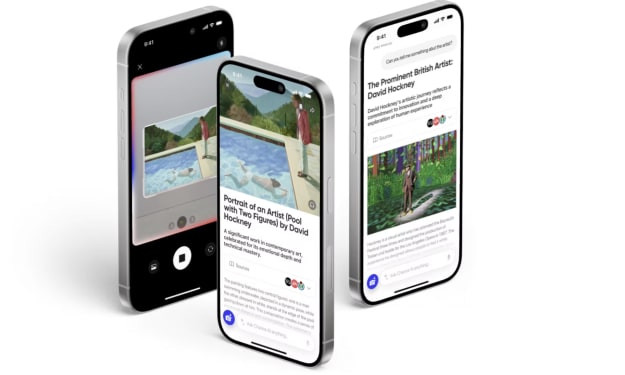
We live in a world where we point our phones at something and expect instant answers. A plant, a landmark, a product, a pair of shoes someone is wearing on the street — we want information immediately. Visual search has become part of daily life, and for many people, Google Lens has been the default tool.
By Madison Zhao7 days ago in FYI



Comments
There are no comments for this story
Be the first to respond and start the conversation.