
The Ultimate Buyer's Guide to Choosing Your First Carbon Fiber Bike
Importance of choosing your first carbon fiber bike

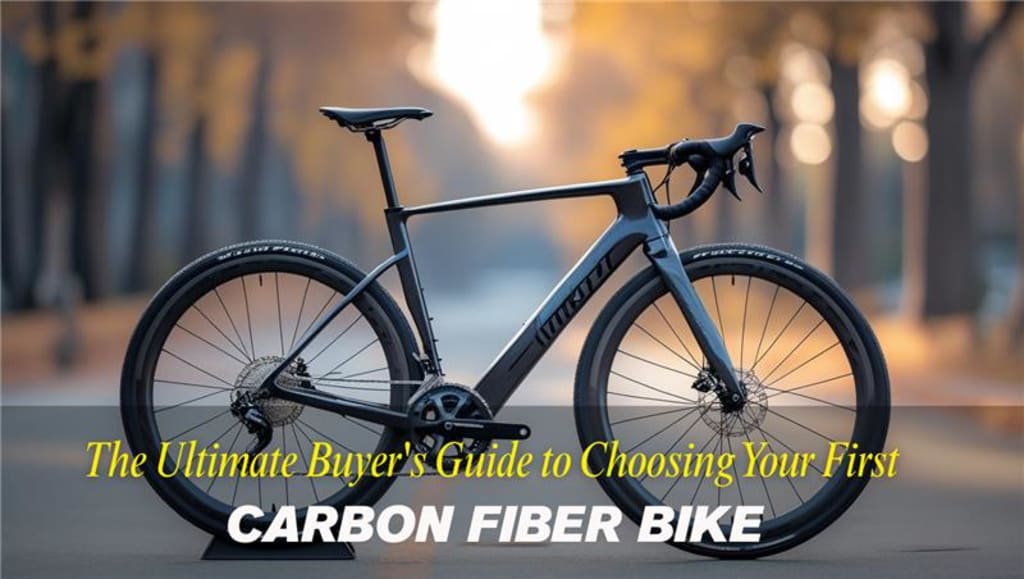
Stepping into the world of carbon fiber bikes is a rite of passage for any serious cyclist. It’s an exciting leap forward in performance, comfort, and speed. But let's be honest: it can also be overwhelming. With a dizzying array of frame shapes, components, and price points, how do you choose the one that's perfect for you?
Fear not. This guide is your clear, no-nonsense roadmap. We'll break down the five key areas you need to consider to move from aspiring owner to a confident buyer, ensuring your first carbon fiber bike is the right one.
1. Understand Frame Geometry: The Soul of Your Bike
Before you look at a single component, you must understand that a bike's geometry defines its personality. It's the most critical factor in how a bike will feel and perform on the road. Generally, geometries fall into three categories:
Race Geometry: Built for pure speed and aggressive positioning. These frames feature a long top tube and a short head tube, putting the rider in a low, aerodynamic stance. They have a shorter wheelbase for nimble, lightning-fast handling.
Best for: Competitive racers, criterium riders, and anyone who prioritizes speed above all else.
Endurance Geometry: Designed for comfort on long rides without sacrificing performance. These frames have a shorter top tube and a taller head tube, allowing for a more upright and relaxed riding position. This reduces strain on your back and neck over many hours in the saddle.
Best for: Century riders, gran fondo enthusiasts, and cyclists who want a high-performance bike that is comfortable for all-day adventures.
Aero Geometry: A specialized category where every tube is shaped like a wing to cheat the wind. These bikes are designed for maximum aerodynamic efficiency, making them incredibly fast on flat and rolling terrain.
Best for: Time trialists, triathletes, and riders focused on solo speed and breakaway efforts.
Your Action Step: Be honest about your primary riding style. Are you racing, or are you embarking on long weekend journeys? Choosing the right geometry is the foundation of a happy purchase.
2. Not All Carbon is Created Equal: A Quick Word on Quality
You'll hear terms like "layup," "modulus," and "resin" thrown around. While the science is complex, the concept is simple: how the carbon fiber sheets are layered (the layup) and the stiffness of those fibers (the modulus) determine a frame's ride quality.
A more expensive frame often uses higher-modulus carbon in key areas like the bottom bracket and head tube for stiffness, while using different carbon in the seat stays for comfort. This intricate "recipe" is what separates a good frame from a great one. While you don't need to be a materials scientist, you should trust that a reputable brand has invested the R&D to create a safe, reliable, and high-performing frame.
3. The Groupset: Your Bike’s Engine Room
The groupset (often called the "groupset") includes the brakes, shifters, derailleurs, and crankset. This is the engine of your bike, and it has a huge impact on your riding experience. For road bikes, Shimano is a common benchmark:
Shimano 105: The ultimate workhorse. It offers nearly all the performance of its more expensive siblings and is known for its incredible reliability and value. An excellent choice for a first carbon bike.
Shimano Ultegra: The sweet spot for most serious enthusiasts. It's lighter than 105 and offers exceptionally crisp, smooth shifting and braking.
Shimano Dura-Ace: The pro-level choice. The lightest and highest-performing option, offering marginal gains for those who demand the absolute best.
Your groupset choice is often tied to your budget, but a bike equipped with Shimano 105 or its equivalent is a fantastic place to start.
4. Don’t Overlook the Wheels
Many manufacturers will equip their entry-level carbon bikes with a basic set of alloy wheels to keep the overall cost down. While these wheels are perfectly functional, they are also the single most effective upgrade you can make down the line. A lighter, more aerodynamic set of carbon wheels can completely transform the feel and speed of your bike. Don't let a basic wheelset be a deal-breaker, but do budget for a potential future upgrade to unlock your frame's full potential.
5. The Golden Rule: Bike Fit is Everything
This is the most important point in the entire guide. An expensive, ill-fitting bike is infinitely worse than a modest bike that fits you perfectly. A bike that is too large or too small will be uncomfortable, inefficient, and can even lead to injury.
Start with the Size Chart: Carefully consult the manufacturer's sizing chart based on your height and inseam.
Consider a Professional Bike Fit: Investing in a professional bike fit is the best money you can spend. An expert will adjust the bike to your body's specific biomechanics, ensuring maximum comfort and power output.
Your Pre-Purchase Checklist
Before you click "buy," run through these questions:
- What is my primary riding style (Race, Endurance, or a mix)?
- Does the bike's geometry match that style?
- What is the groupset, and does it meet my performance needs?
- What is my realistic budget, leaving room for essentials like pedals and bottle cages?
- Have I carefully checked the size chart to ensure the best possible fit?
Conclusion
Choosing your first carbon fiber bike is a journey of matching the machine to your personal ambition and riding style. By focusing on the fundamentals, geometry, a reliable groupset, and above all, a perfect fit—you can be confident that you're making a smart investment that will deliver countless miles of speed, performance, and pure cycling joy. In case of a purchase, we recommend this trusted wholesale carbon fiber mountain bike brand known as Skilful Sports.
Now that you’re armed with the knowledge to make a confident choice, you're ready for the exciting part.
About the Creator
John Lee
My Name is John Lee and I am a writer with a passion for exploring diverse topics. From thought-provoking essays to engaging stories, I try to bring curiosity and creativity to every piece.
A Failed Artist, A Disillusioned Poet, An Underpaid Game Show Host
I took my son and niece to Gori, a small town in Georgia where Joseph Stalin was born. They talked me into visiting the Stalin's Museum, the largest in the post-Soviet space. I had resisted going there because I just can't stand the monster and know enough about him, or so I thought.
By Lana V Lynx26 days ago in FYI
When Safety Comes First: Understanding the Ramipril Medication Recall
Ramipril is one of the most commonly prescribed medications for treating high blood pressure, heart failure, and kidney disease related to diabetes. For millions of patients worldwide, it plays a vital role in preventing strokes and heart attacks. However, recent medication recalls involving certain batches of Ramipril have raised concerns and questions among patients and healthcare providers alike. The incident highlights how closely monitored the pharmaceutical supply chain is and why patient safety remains the highest priority in modern medicine.
By Sajida Sikandar5 minutes ago in FYI
One Hard Thing
Stop me if you’ve heard this one before: You have the number, you know your schedule- you’ve even picked out the perfect day and time to make this appointment. Shoot, you’ve even picked out alternative days and times just in case their schedules can’t accommodate you!
By Taylor Rigsby6 days ago in Motivation


Comments
There are no comments for this story
Be the first to respond and start the conversation.