
The Thailand-Cambodia Conflict is Growing
Thailand and Cambodia Spiral Toward All-Out War

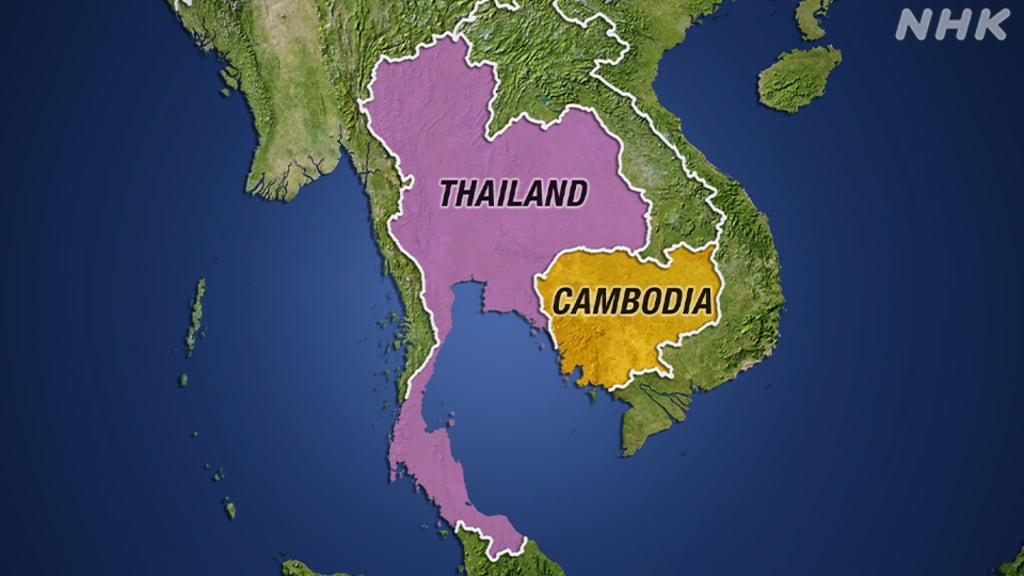
Today, Southeast Asia is standing on a knife’s edge. Thailand and Cambodia—neighbors with a long, tangled past—are once again trading heavy fire across their disputed border. It’s the second time this year the two have gone at each other’s throats, and the fragile ceasefire brokered with help from Washington has all but collapsed. Civilians are fleeing by the hundreds of thousands, the rhetoric is getting uglier, and neither government seems willing to step back from the edge.
Both nations insist the other is to blame. Both are acting as if they believe the worst is still ahead. And Thailand—the far stronger state militarily—has begun speaking openly of “total victory.”
So the question is no longer academic. Are we witnessing a blip on a disputed frontier? Or the opening act of Southeast Asia’s next all-out war?
The Prelude: A Century of Disputed Ground and Rising Nationalism
To understand why these clashes feel so combustible, you’ve got to rewind the clock. Thailand and Cambodia have shared a contested border for more than a century—a boundary lined with cultural treasures, historic temples, and national pride on both sides. It’s been a pressure point for decades.
Back between 2008 and 2011, minor skirmishes were common. But both governments were careful then, performing the diplomatic dance of showing strength without actually seeking a larger war. That restraint is much harder to find today.
The real accelerant? Nationalism.
Over the last two decades, political movements in both nations have grown louder, angrier, and more eager to define themselves against the other. Leaders in Bangkok and Phnom Penh discovered that stoking national pride—especially around the disputed border—was a guaranteed way to boost political fortunes. Talk of “teaching the other side a lesson” became more common. Confrontation began to feel inevitable.
So when a late-May skirmish left a Cambodian soldier dead, it was enough to ignite the fuse. Hardliners in both countries treated it as an unforgivable insult. When Thailand's prime minister was caught speaking deferentially to Cambodia’s Senate President Hun Sen in leaked audio, backlash exploded in both capitals. Diplomacy started evaporating.
And here’s the strategic reality neither population wanted to hear: Thailand’s military is modern, well-funded, and supported by a powerful ally in the United States. Cambodia’s is under-equipped, undermanned, and plagued by internal corruption. If cooler heads had prevailed, this would’ve been the moment for de-escalation.
But cooler heads were nowhere to be found.
By late July, border crossings shut down. Diplomacy collapsed. The shells started falling. Roughly 150,000 Thais and 135,000 Cambodians fled the fighting. Dozens died. And while Washington eventually pressured both sides into a ceasefire, it was clear this wasn’t over.
It was only the end of Round One.
Round Two: Landmines, Accusations, and a Ceasefire in Ashes
Once the guns went silent, both governments went to work shaping their narratives. Thailand proudly declared the first exchange a demonstration of its superior firepower. Cambodia insisted it had stood strong against a more powerful aggressor. And both sides, quietly, began preparing for the next round.
The months that followed were defined by accusation after accusation:
- Thailand claimed Cambodia planted new landmines in violation of the Ottawa Treaty.
- Cambodia accused Thailand of erecting new barriers inside Cambodian territory.
- Thailand held onto 18 Cambodian POWs.
- Cambodian civilians clashed with Thai troops in the border region.
- Thai soldiers continued getting maimed by mines.
A US-backed ceasefire was signed in Kuala Lumpur in late October. Two weeks later, it collapsed.
By early December, troops and military assets were again streaming toward the border. On December 7, clashes reignited. By the next day, they escalated dramatically. Thai F-16s struck Cambodian artillery positions. Rocket fire reportedly hit civilian areas. Ground battles flared across multiple provinces. Civilians evacuated for the second time this year.
Then Thailand issued an ultimatum: accept our ceasefire terms or face unrestricted military force.
Cambodia refused. Whether that was because of battlefield realities or political pressure from its own hardliners, the effect was the same.
On December 9, the conflict blew wide open.
No End in Sight: Thailand Shifts Its Strategy—and the War Changes With It
As of the early morning hours of December 10, the situation is deteriorating fast. Thailand claims its tanks struck a Cambodian military depot disguised as a casino complex. Thai aircraft continue hitting “strategic targets.” Cambodia says it is merely defending itself from Thai aggression.
Reports from civilians describe constant shelling. Cambodia is counting its dead: nine civilians so far, with twenty severely injured. Thailand says it has lost four soldiers and seen twenty others wounded.
International pressure—especially from Washington—is mounting, but something has shifted in Bangkok. This time, Thai leaders aren’t talking about securing the border.
They’re talking about dismantling Cambodia’s ability to wage war. Full stop.
One Thai general told the country that the mission is now to cripple Cambodia’s military “for a long time to come.” The prime minister added: “We can't stop now... the armed forces can fully carry out the planned operations.”
And that is the moment the entire region sat up straighter.
Because Thailand absolutely can destroy large portions of Cambodia’s conventional capabilities—its tanks, its artillery, its ammunition stores. But that doesn’t mean Thailand can destroy Cambodia’s resolve. Cambodia has every incentive, once pushed into a corner, to shift into asymmetric warfare: mines, drones, ambushes, guerrilla campaigns.
Terrain in this border region favors small, mobile, irregular forces. If Thailand pushes Cambodia to fight that kind of war, the conflict won’t burn out quickly. It will mutate. And once that switch happens, it won’t be easy—or maybe even possible—to reverse.
Which means the scenario most experts fear isn’t simple conquest.
It’s a grinding, endless conflict. A Southeast Asian echo of other asymmetrical wars we’ve watched spiral far beyond their original borders.
A Region Running Out of Time
The hope—thin as it may be—is that Thailand will achieve whatever symbolic military goals it feels it needs to check off, then relent. That Cambodia will resist escalating in ways that risk dragging the fight deeper into its territory. That the world, especially the United States, can pressure both sides into a ceasefire that’s actually durable this time.
Because right now, the region is drifting toward a war that no one can control, and certainly no one can win cleanly.
Thailand’s confidence may be intoxicating for its leadership. Cambodia’s defiance may be politically necessary for its own. But nationalism has a way of lighting fires leaders never intended to spread.
And Southeast Asia is running out of time to stamp this one out.
About the Creator
Lawrence Lease
Alaska born and bred, Washington DC is my home. I'm also a freelance writer. Love politics and history.
Keep reading
More stories from Lawrence Lease and writers in FYI and other communities.
The Drone That Broke Modern Warfare
The global drone revolution isn’t quietly unfolding in laboratories or behind closed military briefings. It’s happening out in the open, across battlefields from Ukraine to Yemen to the Middle East. Nations are racing to build more drones, faster drones, and smarter drones, while criminal networks and insurgent groups turn everyday electronics into lethal tools. In the middle of all this chaos, Iran managed to create a drone so effective — and so disruptive — that it rewired military thinking across the world.
By Lawrence Leaseabout a month ago in FYI
United States Glass Drinkware Market Size and Forecast 2025–2033
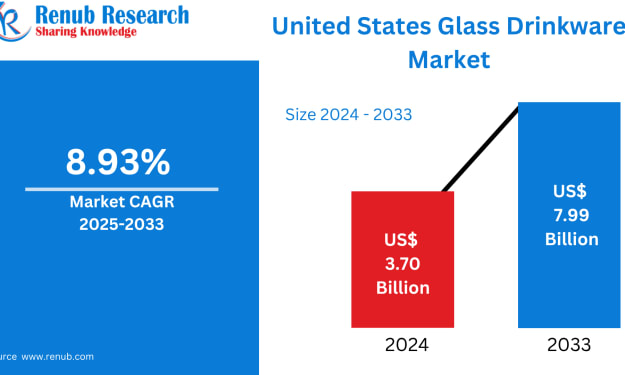
United States Glass Drinkware Market The United States Glass Drinkware Market is expected to reach US$ 7.99 billion by 2033, rising from US$ 3.7 billion in 2024, at a CAGR of 8.93% from 2025 to 2033. Growing consumer awareness of sustainability and reusable materials, the expansion of the hospitality and beverage industries, and the desire for high-end, fashionable glassware in both homes and foodservice settings are the main factors propelling the U.S. glass drinkware industry.
By jaiklin Fanandish6 days ago in FYI



Comments
There are no comments for this story
Be the first to respond and start the conversation.