
The Drone That Broke Modern Warfare
How Iran’s Shahed-136 Forced the World to Rethink the Battlefield

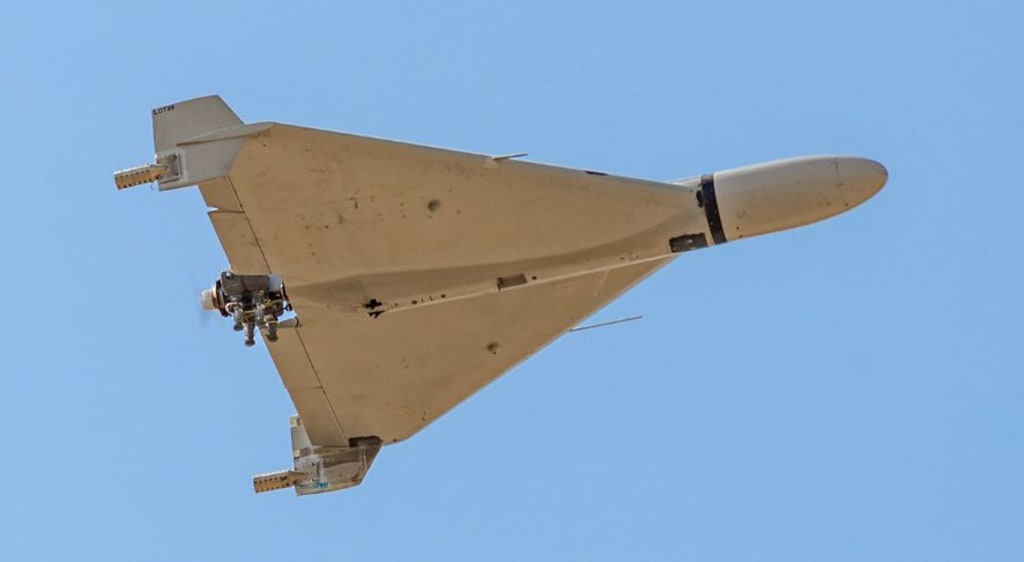
The global drone revolution isn’t quietly unfolding in laboratories or behind closed military briefings. It’s happening out in the open, across battlefields from Ukraine to Yemen to the Middle East. Nations are racing to build more drones, faster drones, and smarter drones, while criminal networks and insurgent groups turn everyday electronics into lethal tools. In the middle of all this chaos, Iran managed to create a drone so effective — and so disruptive — that it rewired military thinking across the world.
The Shahed-136 is the prime example of a weapon that succeeds not because it's technologically awe-inspiring, but because it embraces the opposite philosophy. It’s the antidote to decades of “bigger, more advanced, more expensive” military doctrine. That shift in perspective mirrors a broader truth in modern warfare: the most impressive machine isn’t always the most useful one.
The F-22 Raptor is a masterpiece of engineering, nearly unmatched in its role as an air superiority fighter. But place it in the context of low-budget trench warfare, and it becomes a wildly inappropriate tool. Drone warfare has forced analysts to confront this mismatch head-on. Real success now belongs to systems that are cheap, disposable, simple, and adaptable — the very qualities traditional militaries spent decades overlooking.
In Ukraine, where much of today’s drone experimentation is being shaped, the battlefield is full of homemade, hacked-together UAVs that look crude but deliver results. Soldiers win dogfights by taping knives to quadcopters or modifying commercial drones with explosives. It’s messy and unsophisticated, yet brutally effective. And this is exactly the world where the Shahed-136 thrives.
Meet the Shahed-136: Small, Slow, Ugly — and Absolutely Deadly
The Shahed-136 emerged sometime in the late 2010s, designed not as a reusable aircraft but as a “loitering munition” — a drone meant to fly one way and never return. At first glance, it looks almost unthreatening. It’s a small delta-wing aircraft powered by a chugging rear propeller. Its cruising speed barely keeps pace with a hobbyist plane. Its shape is plain and unmistakably utilitarian. Nothing about it screams “cutting edge.”

But this simplicity is exactly what makes it dangerous. Behind its dull façade is a machine crafted for endurance, reliability, and surprising lethality. The drone can travel incredibly long distances — in some cases more than a thousand miles — while flying low enough to slip beneath radar or blend into ground clutter. Its basic navigation suite relies on consumer-grade GPS and inertial systems, making it semi-autonomous and resistant to jamming. And because its design is modular, operators can quickly adjust payloads, swap components, or integrate surveillance gear when needed.
Most importantly, the Shahed-136 is unbelievably cheap to produce. Analysts estimate that the actual manufacturing cost may be as low as $10,000 — a fraction of what most modern munitions cost. Iran even added a hefty markup for export, and it was still inexpensive enough for its customers to buy in large quantities. That affordability is not an accident. It’s the design philosophy.
Why the Shahed Is So Hard to Stop
Despite its unimpressive appearance, the Shahed-136 exposes blind spots in the way advanced militaries think. It isn’t stealthy in any traditional sense, yet its small size and terrain-hugging flight paths make it hard to detect. When spotted, it can resemble a civilian aircraft or even a large bird, creating hesitation among air defense operators.
Its long-range endurance allows it to threaten targets far from the front, crossing entire countries or regions in a single mission. Its semi-autonomous operation means it doesn’t rely on constant communication with its operators, making it resilient to jamming. And the ease with which it can be launched — often from simple rails mounted to trucks — enables deployments with little warning or fixed infrastructure.
The drone’s cost, however, is what gives it a near-unmatched strategic advantage. Expensive missile systems like the Patriot interceptor are designed to eliminate high-speed, high-value threats. But when militaries are forced to use multimillion-dollar weapons to destroy drones that cost a few thousand dollars each, the math breaks instantly. A single Patriot missile can only intercept one Shahed, but the cost of that interception dwarfs the price of the drone itself.
This isn’t just clever accounting — it’s a deliberate strategy. By flooding the battlefield with expendable, low-cost aircraft, Iran and its clients force wealthier militaries to burn through their resources. The Shahed doesn’t need to break through every time; it only needs to impose a financial burden that’s unsustainable.
Everyone Laughed — Then Everyone Tried to Copy It
When the Shahed first appeared, Western analysts dismissed it as crude, unsophisticated, even embarrassing. The idea that Iran could meaningfully shape modern drone warfare seemed absurd. But that confidence evaporated once the Shahed started appearing over Kyiv, Odesa, Tel Aviv, and the skies of the Middle East.
The drone proved itself devastatingly effective in large numbers. Russian forces embraced it, mass-produced their own version (the Geran-2), and used it to pressure Ukrainian air defenses across the entire country. Iranian-backed groups deployed it to strike regional targets with surprising accuracy. The more the Shahed flew, the more obvious it became that the West had underestimated its impact.
By 2025, the global conversation had shifted dramatically. A Wall Street Journal headline captured the new reality: nearly every major military power was scrambling to build a Shahed-style weapon. They weren’t chasing elegance or prestige. They were chasing results.
The Copycat Race Begins
Countries around the world have shifted gears, trying to recreate the qualities that make the Shahed so dangerous.
In the United States, military leaders openly acknowledge that the Pentagon fell behind. Programs such as the FLM-136 “Lucas,” Griffin Aerospace’s Arrowhead, and the Ukrainian-American Artemis project represent early attempts to fill the capability gap. Even high-ranking generals have stated plainly that America should have developed this class of drone years earlier.

China has already unveiled multiple Shahed-inspired platforms. The ASN-301, a drone designed to home in on and destroy radar sources, uses many of the principles behind the Shahed. Another model, the Sunflower-200, appears to be a near-direct replica and has already been used by forces in Sudan.
Europe is experimenting as well. Britain’s Sky Shark pushes for higher speed, while France’s MBDA one-way drone prioritizes payload and modularity. Neither fully matches the Shahed’s balance of cost and performance, but both mark steps toward mass-produced kamikaze systems. Even Turkey has entered the field with prototypes of its own.

Taiwan, watching the regional buildup closely, revealed a Shahed-style design in 2023, acknowledging the necessity of low-cost, long-range munitions in modern defense.
Copying the Shahed Isn’t Enough — Nations Have to Copy Its Philosophy
The true genius of the Shahed-136 isn’t in its airframe or its engine. It’s in the philosophy behind it. Iran built a drone that reflects decades of economic, political, and military constraint. Unable to compete with the conventional air forces of Israel or the United States, Iran sought alternatives that played to its strengths: affordability, adaptability, and rapid iteration.
Russia has taken that lesson to heart. In just a few years, its Geran-2 variants have been upgraded with better engines, new navigation packages, and even jet-powered prototypes. Iran itself continues streamlining the design, replacing parts with cheaper, widely available consumer components whenever possible. This constant evolution is part of the platform’s identity.
If the U.S., Europe, or China simply clones the Shahed without embracing the culture of fast, relentless adaptation, they’ll always be one step behind. Modern drone warfare rewards flexibility, not pedigree.
The Future: Counter-Drones Are Evolving Too
The Shahed dominates today, but its reign won’t last indefinitely. Ukraine has demonstrated that cheaper interception methods are possible. Soldiers shoot Shaheds out of the sky with rifles, modified prop planes collide with them midair, and specialized interceptor drones chase them down in first-person-view engagements.
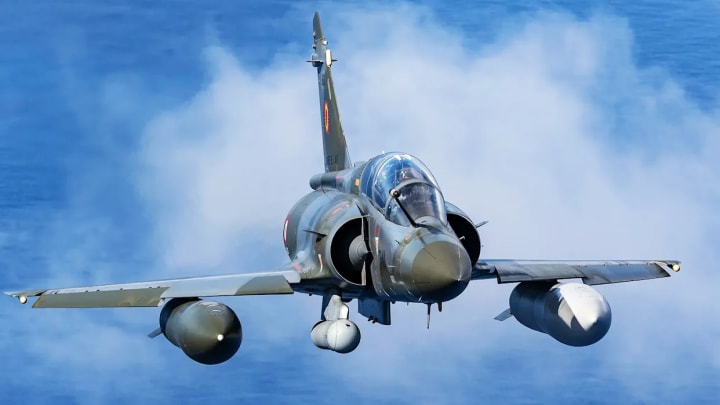
NATO nations are beginning to invest heavily in directed energy systems, microwave disruptors, and laser-based defenses. Aircraft like the F-15E or Mirage 2000D are being modified to deploy precision counter-drone munitions. Western startups, meanwhile, are designing interceptor UAVs that mimic the low-cost philosophy of the Shahed itself.
The race is no longer just about offense. It’s about matching cheap with cheap, fast with fast, disposable with disposable.
Why Iran Won This Round — and What the World Must Learn
Iran never had the luxury of building advanced fighters or vast fleets of stealth aircraft. Its innovation stemmed from necessity. The Shahed-136 is the product of a nation that had to think around its limitations rather than through them. Its designers internalized the central truth of modern drone warfare: the future belongs to the nations that can innovate quickly, cheaply, and creatively.
Ukraine discovered the same truth through survival. Insurgent groups around the world have discovered it out of desperation. Together, they’ve rewritten the rules of war in ways major powers can no longer ignore.
What makes the Shahed the “perfect drone” isn’t its engineering. It’s the way it exploited cracks in the global military system and forced far stronger nations to adapt. It is a reminder that innovation doesn’t always come from wealth or prestige. Sometimes it comes from scarcity.
The world’s most powerful militaries now face a choice. They can cling to their legacy thinking and risk falling further behind, or they can embrace the messy, improvisational, uncomfortable style of innovation that defines drone warfare today.
Whatever comes next — better drones, even cheaper drones, more autonomous systems, more advanced countermeasures — will emerge from that tension. And the nations willing to innovate like underdogs may be the ones that come out ahead.
The Shahed-136 didn’t win because it was amazing. It won because it fit the moment. And for now, that’s enough to change everything.
About the Creator
Lawrence Lease
Alaska born and bred, Washington DC is my home. I'm also a freelance writer. Love politics and history.
Keep reading
More stories from Lawrence Lease and writers in FYI and other communities.
How Gen Z Killed Chipotle: The Rise, Glory, and Slow Fade of America’s Fast-Casual King
For a long stretch of the late 1990s and early 2000s, Chipotle wasn’t just popular. It dominated. The chain that once redefined fast food with massive burritos, customizable bowls, and an aura of coolness practically owned the lunch crowd. College students swore by it. Young professionals stood in lines that wrapped out the door. Even people who normally couldn’t care less about fast food had an opinion on what protein belonged in a proper burrito bowl.
By Lawrence Leaseabout a month ago in FYI
A Failed Artist, A Disillusioned Poet, An Underpaid Game Show Host
I took my son and niece to Gori, a small town in Georgia where Joseph Stalin was born. They talked me into visiting the Stalin's Museum, the largest in the post-Soviet space. I had resisted going there because I just can't stand the monster and know enough about him, or so I thought.
By Lana V Lynx7 days ago in FYI


Comments
There are no comments for this story
Be the first to respond and start the conversation.