
The Surprising Link Between Too Much Salt and Brain Troubles
"Unveiling the Hidden Impact: How Excess Salt Shapes Brain Function"

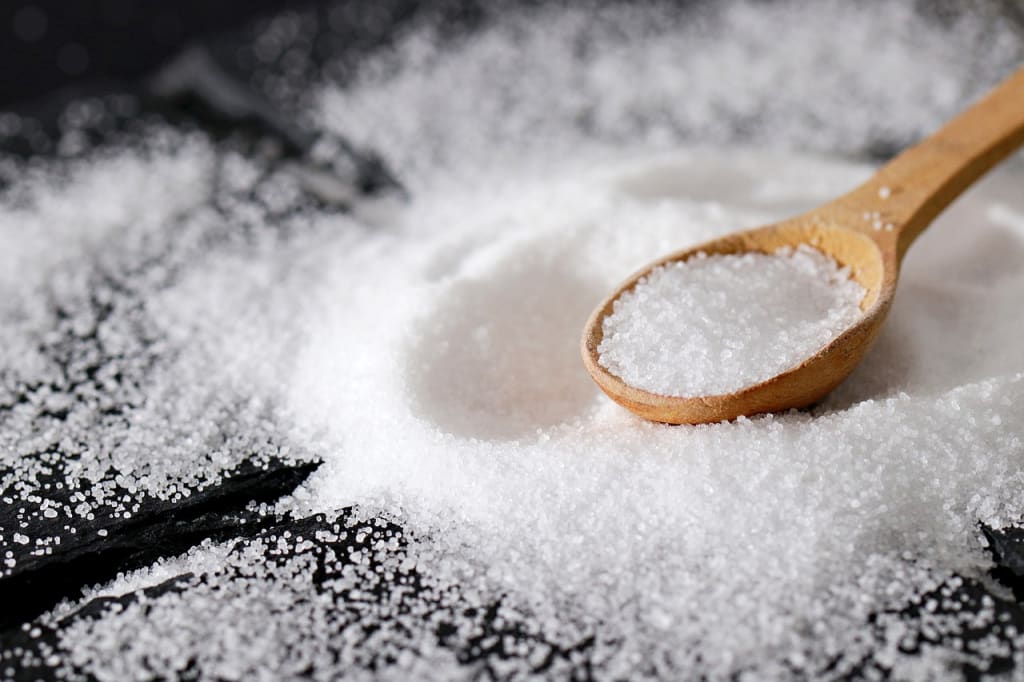
Ever wondered how that pinch of salt affects more than just the taste of your food? A bunch of smart minds at Fujita Health University in Japan rolled up their sleeves and discovered something eye-opening. Brace yourself for this: too much salt might mess with your brain!
So, here's the scoop: these brainiacs found that when we gobble up loads of salt, it messes with how our body handles blood pressure. Picture this: there's this system in your body that keeps your blood pressure in check. But when you munch on too much salt, it’s like this system gets all tangled up and starts sending out weird signals to certain fatty molecules. These wonky signals end up causing some serious hiccups in your brain's performance.
Hold up! What's the fuss all about? Well, turns out, these brain blips caused by high salt intake could mess with your emotions and how sharp your brain is. Yep, your mood swings and memory might just be taking a hit because of that salt shaker on your table.
Now, here's the nitty-gritty without all the science jargon. There's this hormone called angiotensin II that's a big deal in controlling blood pressure. It has this buddy called AT1 that helps it do its job. Previous studies hinted that these guys, along with another molecule called prostaglandin E2 (don't worry about remembering the name), might be troublemakers in causing high blood pressure and brain issues.
But, hey, here's the kicker: nobody was really sure how these troublemakers were causing all this fuss in our brains because of too much salt. Until now!
The researchers at Fujita Health University played detective with some lab mice. They gave these mice a super salty drink for about 12 weeks and kept an eye on their blood pressure. Plus, they peeked into two areas of the mouse brain – one called the prefrontal cortex (the smarty-pants part) and the other, the hippocampus (yep, it's involved with memory).
Guess what they found? The salt overload was like a spark setting off a chain reaction in these mouse brains. It messed with a protein called tau, which is a big player in Alzheimer's disease. Think of it like too many puzzle pieces getting jammed together – that's what happened to tau in these brains.
But that’s not all! The salty trouble didn't stop there. It messed around with some other brain bits, like this enzyme called CaMKII (don’t worry about that name either). It's a protein that helps your brain cells talk to each other. And when there's too much salt in the mix, this protein gets wonky too, making those cell conversations a bit blurry.
So, what's the silver lining in this salty tale? Well, here’s the good news: they found a way to reverse all this brain chaos caused by salt. They used a fancy drug called losartan, which is known to keep blood pressure in check. When they gave this drug to the mice, poof! All those brain problems caused by too much salt vanished like magic.
Oh, and get this: they also did a cool experiment where they tinkered with a gene related to one of those troublemaker molecules. And guess what? It worked like a charm! When they messed with this gene, the brain issues caused by salt went poof again!
So, what's the takeaway from all this? The big shots at the World Health Organization recommend keeping your daily salt intake under 5 grams to dodge these sneaky health troubles. That's like a teaspoon of salt, tops. So, next time you're shaking that salt onto your fries, think twice! Your brain might just thank you for it.
Disclaimer
Please be aware that some part of the content has been generated by an AI system and may contain errors. We strongly recommend using this content as a starting point for further research and consultation with relevant experts or authorities.
About the Creator
Partha Majumdar
Writer by profession, foodie at heart. Sharing flavorful recipes, exploring topics. Join my culinary journey!"
Keep reading
More stories from Partha Majumdar and writers in FYI and other communities.
Discovering Happiness Within: Nurturing Joy in Solitude and Connection
In our fast-paced world, where constant connectivity is celebrated, there exists a quieter, more profound joy in finding contentment within one's own company. Let's intricately examine the art of embracing solitude, cultivating self-contentment, and nurturing relationships while navigating the delicate balance between solitude and connection.
By Partha Majumdar2 years ago in Lifehack
A Failed Artist, A Disillusioned Poet, An Underpaid Game Show Host
I took my son and niece to Gori, a small town in Georgia where Joseph Stalin was born. They talked me into visiting the Stalin's Museum, the largest in the post-Soviet space. I had resisted going there because I just can't stand the monster and know enough about him, or so I thought.
By Lana V Lynx27 days ago in FYI
Who Could Be The Next Leader of Iran
As the cameras roll and analysts sharpen their talking points, the United States appears to be quietly assembling the pieces for a major military move in the Middle East—one that, if carried through, could aim directly at the heart of Iran’s political system. Whether this buildup ultimately leads to the removal of Ali Khamenei, Iran’s Supreme Leader, remains uncertain. Even senior officials in Washington admit as much. But the harder question, and the one that matters most, isn’t how such a move would happen. It’s what comes after.
By Lawrence Lease3 days ago in FYI


Comments
There are no comments for this story
Be the first to respond and start the conversation.