
The Strange and Shocking World of Plants
A Journey Through the Bizarre and Unseen Side of the Plant Kingdom

A Journey Through the Bizarre and Unseen Side of the Plant Kingdom
Plants are essential for life on Earth, providing us with oxygen, food, and countless other resources. But beyond their practical uses, plants also offer a world of wonder and mystery, with a diverse range of species that often go unnoticed. While we may be familiar with the common trees and flowers in our gardens and parks, there are many strange and shocking plants out there that will leave you amazed and bewildered. From parasites that feast on the energy of other plants to flowers that mimic insects and animals, the plant kingdom is full of surprises waiting to be discovered.
In this article, we will embark on a journey through the bizarre and unseen side of the plant world. We will explore some of the most unusual and fascinating plants, from the Hydnora Africana, a parasitic plant that ensnares unsuspecting bugs, to the Dracula simia orchid, which mimics a capuchin monkey to attract fungus gnats for pollination. We will also delve into the unique features of the Welwitschia, a plant that can live for over 1,500 years in one of the driest places on Earth.
Hidden Horror: The Strange World of Parasitic Plants
Parasitic plants are those that live off the nutrients and energy of other plants. While they may seem like something out of a horror movie, these plants have evolved unique adaptations to survive in their environments. One of the most bizarre examples is the Hydnora Africana, a plant native to Southern Africa that has no stems or leaves. Instead, it consists of a fleshy flower and roots that attach to the roots of other plants. The Hydnora Africana emits a putrid odor that attracts insects like dung beetles, which then become trapped in the flower and covered in its pollen.
But the Hydnora Africana is just one example of the strange and shocking world of parasitic plants. There are also species like the Rafflesia arnoldii, which produces the largest individual flower in the world, growing up to three feet in diameter. However, this parasitic plant has no roots, leaves, or stems, and relies entirely on its host plant for survival.
Magnificent Mimicry: The Art of Deception in the Plant Kingdom
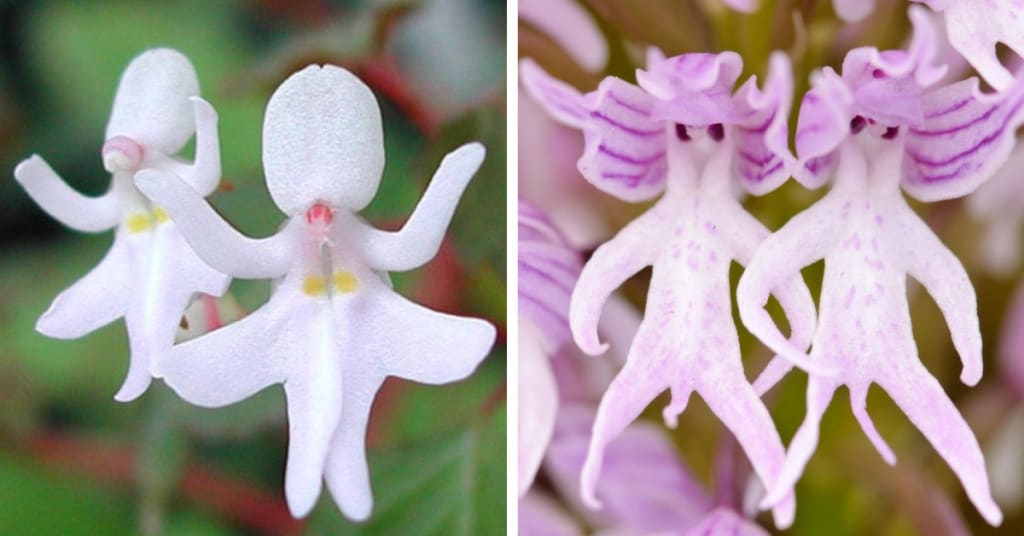
Many plants have evolved to mimic other organisms to attract pollinators. Orchids, in particular, are known for their mimicry of insects and animals. For example, the Dracula simia orchid resembles a capuchin monkey, while the Bee Orchid emits the scent of female bees to attract male bees for pollination.
One of the most intriguing examples of mimicry is the green birdflower, which looks like a hummingbird despite the fact that there are no hummingbirds in its native Australia. While scientists are unsure why this plant evolved to resemble a hummingbird, it is clear that its unique appearance has a purpose in attracting pollinators.
Witsch You Well: Surviving in Extreme Environments
Plants are masters of adaptation, and some have evolved to survive in some of the harshest environments on Earth. The Welwitschia, for example, is a plant that can live for over 1,500 years in the Namib Desert of Southern Africa, one of the driest places on Earth. This plant has only two leaves that continue to grow throughout its life, eventually resembling wires that stretch up to 20 feet long. The Welwitschia can survive on very little water, making it well-suited to the arid conditions of the desert.
Conclusion
The plant kingdom is full of wonder and mystery, with countless species that are waiting to be discovered. From parasitic plants
About the Creator
Keep reading
More stories from Tsar Banks and writers in FYI and other communities.
How Your Brain Makes Its Own Electricity
The human brain is an incredibly complex network of cells that enables us to think, feel, move, and experience the world around us. At the most basic level, everything we think and do is made possible by the activity of neurons - specialized cells that communicate with each other through electrical and chemical signals. With over 86 billion neurons in the brain, each connected to hundreds or thousands of other cells, the potential for communication between these cells is vast. In fact, there are more possible connections between neurons than there are stars in a thousand Milky Way galaxies.
By Tsar Banks3 years ago in FYI



Comments
There are no comments for this story
Be the first to respond and start the conversation.