
How Your Brain Makes Its Own Electricity
Exploring the Fundamental Role of Electricity in Our Thoughts, Movements, and Senses

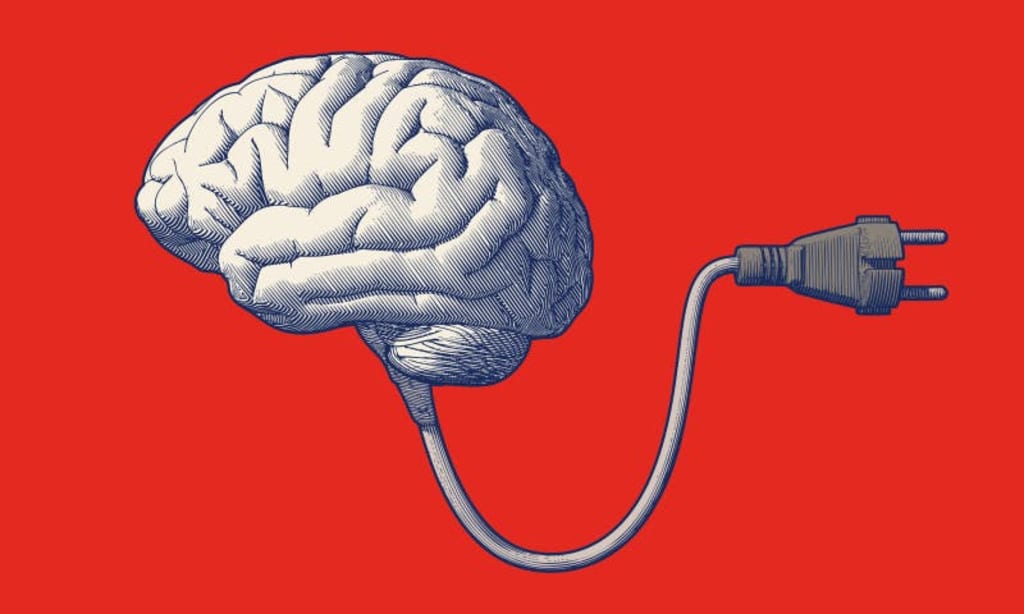
The human brain is an incredibly complex network of cells that enables us to think, feel, move, and experience the world around us. At the most basic level, everything we think and do is made possible by the activity of neurons - specialized cells that communicate with each other through electrical and chemical signals. With over 86 billion neurons in the brain, each connected to hundreds or thousands of other cells, the potential for communication between these cells is vast. In fact, there are more possible connections between neurons than there are stars in a thousand Milky Way galaxies.
But what exactly is a thought, and how do neurons work to produce them? This is a question that has fascinated scientists for centuries. In order to answer it, we need to delve deep into the world of neuroscience and explore the fundamental workings of these incredible cells.
At their core, neurons are specialized cells that are responsible for transmitting information throughout the brain and nervous system. They do this by generating electrical impulses that travel down the length of the cell, from the dendrites at one end to the axon terminals at the other. Along the way, these impulses trigger the release of chemical messengers called neurotransmitters, which allow the signal to cross the tiny gap, or synapse, between neurons and continue on its way.
So how do these electrical impulses actually work? It all comes down to the way that neurons are structured. Each neuron is composed of three main parts: the cell body, the dendrites, and the axon. The cell body contains the nucleus and other organelles that are responsible for keeping the cell alive and functioning properly. The dendrites are branching structures that extend from the cell body and receive signals from other neurons, while the axon is a long, thin extension that carries the signal away from the cell body and towards the next neuron in the chain.
The key to the neuron's ability to generate electrical impulses lies in the difference in electrical charge between the inside and outside of the cell. When a neuron is at rest, the inside of the cell has a slightly negative charge compared to the outside. This is due to the presence of negatively charged ions, such as chloride and protein, inside the cell, and positively charged ions, such as sodium and potassium, outside the cell.
When a neuron receives a signal from another cell, such as a neurotransmitter binding to a receptor on the dendrite, it triggers the opening of tiny channels in the cell membrane called ion channels. These channels allow positively charged sodium ions to rush into the cell, which temporarily neutralizes the negative charge inside the cell and creates a wave of electrical activity that travels down the axon.
Once the electrical impulse reaches the axon terminals, it triggers the release of neurotransmitters into the synapse, which can then bind to receptors on the dendrites of the next neuron in the chain and continue the signal. This process of electrical and chemical communication between neurons is what allows us to think, feel, move, and experience the world around us.
But how fast do these signals actually travel? While the speed of electrical impulses can vary depending on a number of factors, such as the size and myelination of the axon, in general they can travel at speeds of up to 120 meters per second (268 miles per hour). This is incredibly fast compared to chemical signals, which can take up to several seconds to travel across a synapse.
So what does all of this have to do with a cockroach? Well, the nervous system of insects like cockroaches is actually quite similar to that of humans. While their neurons are smaller and simpler in structure, they still communicate through electrical and chemical signals in much the same way as our own neurons. This similarity has made insects like cockroaches valuable models for studying the basic principles of neuroscience.
About the Creator
Keep reading
More stories from Tsar Banks and writers in FYI and other communities.
ECHOLOCATION
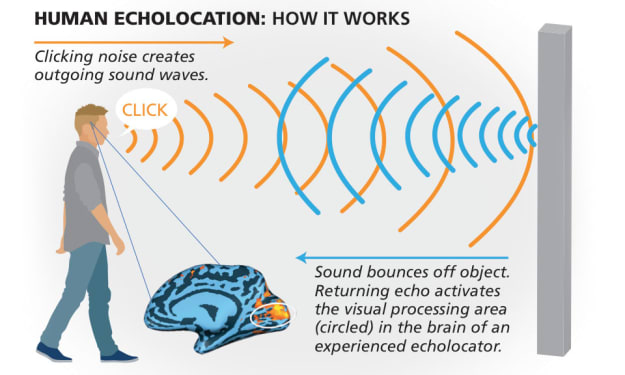
The Power of Echolocation: How Anyone Can Learn to Navigate with Sound Have you ever wondered what it would be like to have superpowers? Imagine being able to navigate any environment, even one you've never been in before, with just the power of sound. That's exactly what echolocation can do for you. Echolocation is the use of sound waves to navigate and perceive the environment around you. You might associate echolocation with animals like bats and dolphins, but did you know that humans can learn to echolocate too?
By Tsar Banks3 years ago in FYI
The Politics of Playing Dress-Up
Well, to start off I'd like to say a happy world book day to all who celebrate. I know I haven't really posted anything on my socials about it but I'm not a jubilant kind of person. I lay low most of the time. Let's start off with a popular anecdote from the vaults...
By Annie Kapur3 days ago in Geeks


Comments
There are no comments for this story
Be the first to respond and start the conversation.