
The search for lost tombs
Detail the efforts of archaeologists and historians to locate lost tombs in Egypt, including the discovery of the tomb of Tutankhamun and other notable finds.

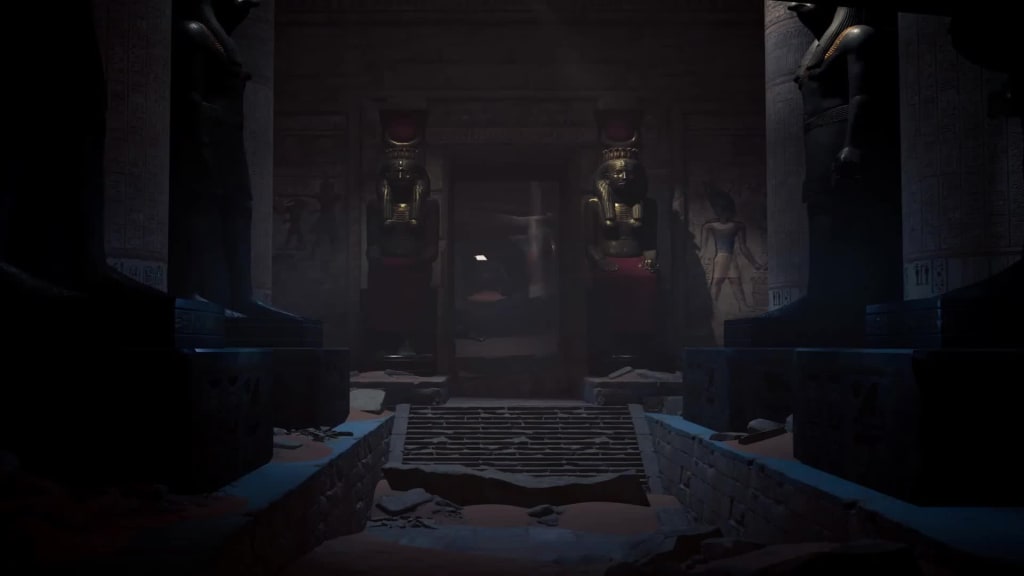
The boy, have they found some treasures! From the legendary tomb of Tutankhamun, also known as the "Boy King", to the more recent discovery of the tomb of Senebkay, the search for lost tombs has been a wild ride. With each new discovery, we learn more about the ancient civilizations that once flourished in Egypt and the lives of the powerful rulers who called the land their home. But the search for lost tombs is not just about discovering treasures and gaining knowledge, it is about preserving the rich cultural heritage of a country that has so much to offer the world. With a good dose of humor, and a passion for history, we'll detail the efforts of these archaeologists and historians in their quest to uncover the secrets of the past. So buckle up and let's dive into the fascinating world of lost tombs!
The Discovery of Tutankhamun's Tomb
Ah yes, the discovery of Tutankhamun's tomb! Now this, my friends, is a story that has it all: mystery, adventure, and a whole lot of gold! Tutankhamun, also known as the "Boy King," ruled Egypt more than 3,000 years ago, and his tomb was lost for centuries. That is, until the legendary British archaeologist Howard Carter stumbled upon it in 1922.
Imagine the scene: Carter and his team are digging in the Valley of the Kings, where many pharaohs of ancient Egypt were buried. After years of searching, they finally come across a small step leading down to a sealed door. With his heart racing, Carter chips away the plaster and reveals a small window into the tomb. What he sees next must have taken his breath
The Use of Technology in the Search for Lost Tombs
Gone are the days of using just pickaxes and shovels to search for lost tombs! In this modern age, archaeologists have access to a whole host of technological advancements that have revolutionized the search for lost tombs. From satellite imagery to ground-penetrating radar, these tools are helping experts to uncover new discoveries in ways that would have been impossible just a few decades ago.
Take, for example, the use of 3D modeling and virtual reality. This technology allows archaeologists to recreate ancient sites and tombs in stunning detail, allowing them to study the structures and artifacts in a whole new way. They can even "walk" through the recreated tombs and get a sense of what it was like to be there in ancient times. And if that's not cool enough, there's also the use of drones and robots that can explore tight spaces and hazardous areas, minimizing the risk to human archaeologists.
But technology isn't just making the search for lost tombs easier, it's also helping to preserve the finds for future generations. Digital documentation and scanning techniques can create detailed records of even the most delicate artifacts, ensuring their preservation long after they've been removed from the ground.
So, as you can see, technology is playing a major role in the search for lost tombs, and it's making the whole process even more exciting and groundbreaking. Who knows what amazing discoveries we'll make next!
The Importance of Interdisciplinary Cooperation
Interdisciplinary cooperation refers to the collaboration between individuals from different academic disciplines or fields of study, working towards a common goal. In today's rapidly changing world, the importance of interdisciplinary cooperation has become increasingly evident. The complex and multifaceted problems facing society can no longer be solved by individuals working in isolation, but require the collaboration of experts from different fields.
One of the key advantages of interdisciplinary cooperation is that it brings together individuals with different perspectives, expertise and skills to tackle complex problems. This allows for a more comprehensive and holistic approach to problem-solving, as the different disciplines can complement each other and provide a wider range of solutions. Additionally, interdisciplinary cooperation often leads to the development of new and innovative approaches to problem-solving, as individuals from different fields bring their unique perspectives and ways of thinking to the table.
Another benefit of interdisciplinary cooperation is that it helps to bridge the gap between theory and practice. By bringing together experts from both academic and practical fields, interdisciplinary cooperation enables the translation of thadvancement of society. It also helps to ensure that the solutions developed are both effective and applicable to real-world problems.
In addition, interdisciplinary cooperation can lead to the creation of new interdisciplinary fields of study. For example, the field of environmental science emerged from the collaboration of experts from various disciplines, including biology, chemistry, geology and physics. The study of environmental science now encompasses a wide range of subjects and is crucial in addressing many of the environmental challenges facing the world today.
About the Creator
Keep reading
More stories from Mirza Mirza and writers in FYI and other communities.
Mummies Beyond Egypt
From the arid deserts of South America to the chilly peaks of the Andes, mummies have been discovered in every corner of the world. Some of these mummies were created as a result of natural processes, while others were deliberately mummified as part of religious or cultural beliefs. In Europe, mummies have been found in ancient burial tombs and medieval catacombs. In Asia, mummies have been uncovered in the Tarim Basin of China and the Altai Mountains of Mongolia. Each of these mummies has its own unique story to tell, and they offer a glimpse into the diverse practices and beliefs of cultures from around the world. So, buckle up, because we're about to go on a journey to discover the mummies beyond Egypt!
By Mirza Mirza3 years ago in FYI
What Are Personal Styling Services and Who Are They Really For?
Style is no longer about trends alone. For many professionals, image plays a direct role in credibility, confidence, and how they are perceived in high-stakes environments. This shift is one reason personal styling services have moved from being a luxury add-on to a practical tool for people who value time, clarity, and consistency.
By Elsab Styling6 days ago in FYI




Comments