
The Possibility of Resurrecting People Hours After Their Apparent Death
A Glimpse Into the Science of Reviving Lives

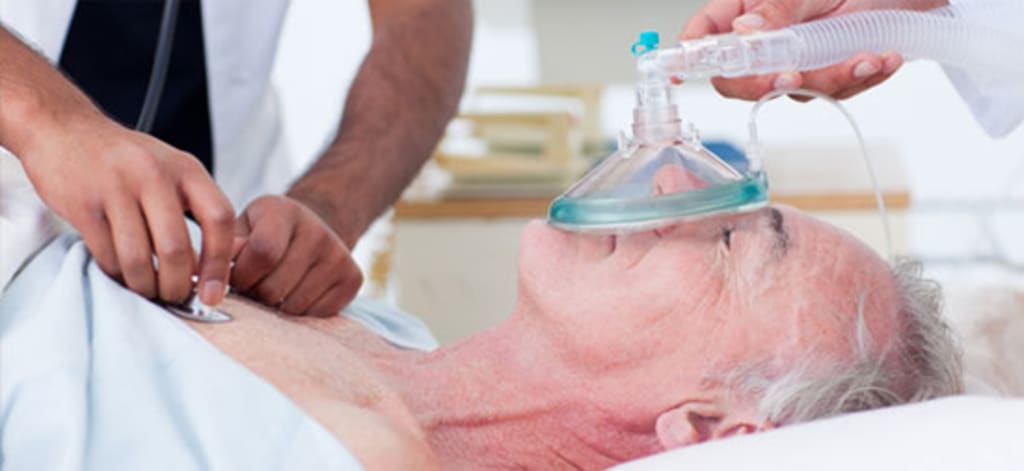
A fascinating statement from a doctor has reignited hope that human beings may be able to come back to life hours after they appear to have died. This remarkable possibility challenges the traditional boundaries of life and death, offering a glimmer of hope in situations where people might have once been thought to be beyond saving.
Carol Brothers, 63, cannot precisely recall the moment she passed away. However, her husband, David, has a vivid memory of that day three months ago, when he opened the door of their home in Wiltshire to find his wife collapsed on the floor, gasping for air, and her face quickly losing its color as her heart stopped beating.
Fortunately, an elderly neighbor, well-versed in the basics of cardiopulmonary resuscitation (CPR), quickly jumped into action, applying the life-saving techniques. An ambulance arrived shortly afterward, and around 30 to 45 minutes after Carol’s heart stopped, her heart began to beat once more.
"While 45 minutes may seem like a long enough time for many to believe that she was lost to us forever, we now know of cases where people have been revived even 3 to 4, or even 5 hours after they appeared to be dead, and later went on to live healthy lives," said Dr. Sam Parnia, the director of the Resuscitation Research at Stony Brook University.
The New Understanding of Death and Resuscitation
For many years, the cessation of a heartbeat has been considered synonymous with death. However, this view is being challenged by the latest research and advancements in medical science, particularly in the field of resuscitation.
Doctors have long believed that if a person’s heart stops beating for more than 20 minutes, their brain typically suffers irreversible damage. But Dr. Parnia argues that this damage can be avoided with proper CPR techniques and careful post-resuscitation care.
"The key to success is to perform chest compressions at the correct rate and with the right amount of force to ensure the patient doesn't suffer from air trapping. CPR can also be assisted by machinery," Dr. Parnia explained. Additionally, doctors now have innovative ways of caring for patients once their heart begins to beat again.
Dr. Parnia elaborates in his new book, The Lazarus Effect, that when the brain stops receiving regular oxygen supply due to the cessation of blood flow, it doesn’t die immediately. Instead, it enters a state of suspended animation—a survival mechanism that temporarily halts the process of self-decomposition.
The "Waking Up" Process
This process of "waking up" the brain from its dormant state is critical and carries significant risks, as reintroducing oxygen can be potentially toxic at this stage. Dr. Parnia likens this effect to a tsunami following an earthquake and explains that the best approach to this challenge is to cool the patient’s body temperature from 37°C to 32°C.
"Cooling therapy is truly effective because it slows down the decay process of brain cells," he added.
This cooling process can help prevent the damage that typically occurs when the brain is deprived of oxygen for an extended period. It gives the cells a chance to survive and be restored once the circulation and oxygen supply are re-established.
The Road to Recovery
The challenge doesn’t end with restoring the heartbeat; the recovery phase is equally critical. After revival, patients must undergo careful monitoring and treatment to ensure that they do not experience further complications, such as brain damage or organ failure.
Dr. Parnia’s research highlights that with advanced medical interventions and an understanding of the dynamics of human revival, there is a real potential for saving lives hours after death appears to have occurred. This knowledge may one day revolutionize how we view life and death, offering hope for people in critical conditions who previously would have been written off.
In conclusion, while the idea of people being revived hours after death remains startling, scientific progress in resuscitation and understanding the complexities of human biology could soon make such miraculous recoveries more common. The future of medicine may hold the key to unlocking life after death, giving people who once seemed lost a second chance at life.
About the Creator
Eleanor Grace
"Dream big.Start small.Act now."
Keep reading
More stories from Eleanor Grace and writers in FYI and other communities.
The Arrow of Time: Can We Reverse It?
We often wish we could turn back time to correct a mistake or relive past memories. Yet, this is something that remains impossible today. But why is it that we can’t rewind time like we would turn back the hands of a clock, or is there a way we haven’t discovered yet?
By Eleanor Grace10 months ago in FYI
Europe Commercial Greenhouse Market Size and Forecast 2025–2033
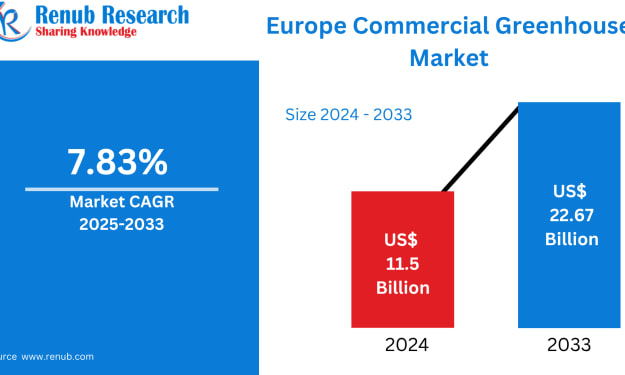
The Europe Commercial Greenhouse Market is set for dynamic expansion over the coming decade, reflecting the region’s accelerating transition toward sustainable, technology-driven agriculture. According to Renub Research, the market is projected to reach US$ 22.67 billion by 2033, rising from US$ 11.5 billion in 2024, at a robust CAGR of 7.83% during 2025–2033. This growth is being driven by increasing demand for year-round crop production, the rapid adoption of Controlled Environment Agriculture (CEA), and a strong policy push toward climate-resilient and resource-efficient farming.
By Renub Research4 days ago in FYI



Comments
There are no comments for this story
Be the first to respond and start the conversation.