
The most Controversial Doll of All Times: From Men’s toy to an Ultimate Feminist Role Model
Today, Barbie celebrates her 64th birthday

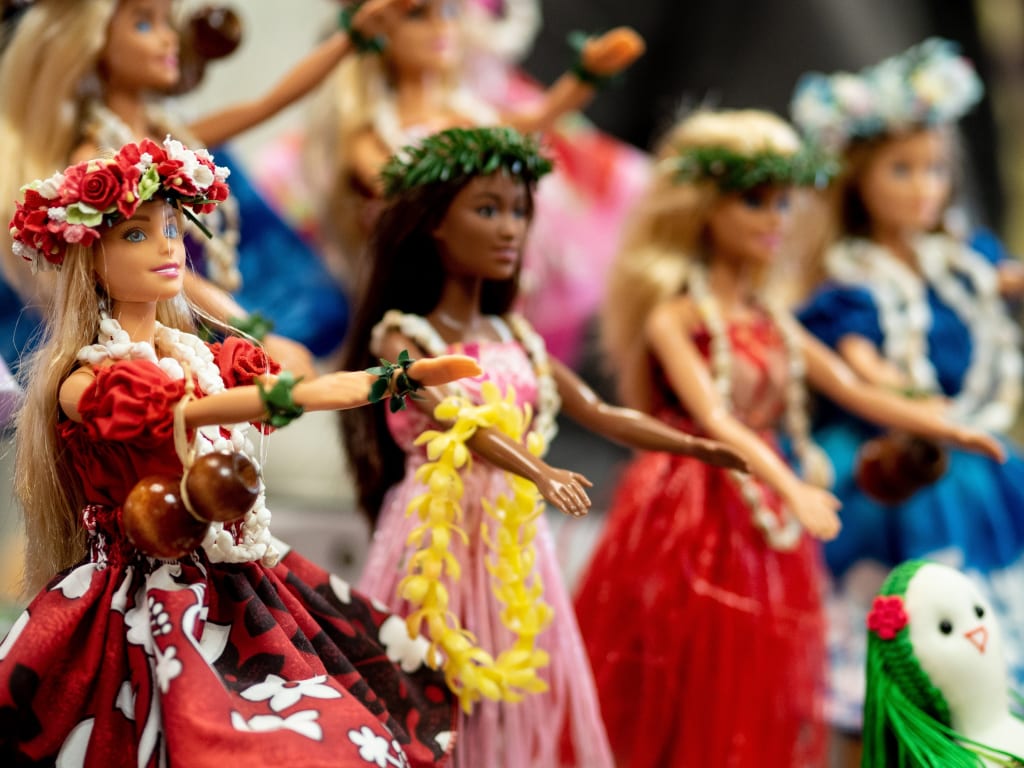
No other doll has been so thoroughly dissected both in the media and in science labs over the years as Barbie has been. She was both praised and shamed. She was called an inspiration and an abomination. But to this day, the 64 year-old Barbie remains the most famous doll in the world.
Tobacco Store Doll for Men
No, I don’t mean the Barbie doll but instead, the one that inspired Mattel co-owner Ruth Handler to create her most famous design.
So, let me introduce you to a German doll of the 1950s named Lilli - a socialite, a party girl, and...a call girl whose character was presented to the German public in a newspaper comics section.
The humorous stories became so popular that, not long after, Lilli’s doll appeared. However, it was targeted for male audiences and it was sold in tobacco shops.
But I don’t mean that kind of doll… No, it was a popular bachelor party gift, car accessory, or even a suggestive present given to a girlfriend, according to Robin Gerber, the author of the book “Barbie and Ruth”, cited in the Time article.
Nonetheless, the doll that bears close resemblance to Barbie, aside from her heavy makeup and the stilettos instead of feet, caught the attention of young girls.
How Lilli Became Barbie
One of those girls was a teenager Barbara Handler. Lilli caught her eye while she was vacationing with her family in Switzerland, and the girl brought the doll home with her.
A few years later, her mother, who noticed how much Barbara liked Lilli, decided to bring her to the Mattel family. The company bought rights to Lilli, and not long after, the first Barbie was officially introduced to the world at an international toy fair in New York.
Needless to say, Barbie stood out from the rest of the kids' toys. Not only did she not look like a child or a baby, the first Barbie was barely dressed. In a striped black and white swimsuit and her blond hair in a ponytail, Barbie looked more like a Hollywood star of that era.
Her ample bust and wasp-like waist immediately drew criticism, but the doll’s creator stood her ground. She firmly believed that Barbie was the perfect doll for teenage girls who had no interest in playing with flat chested dolls when their own bodies were changing.
Shaping the Future and Attitudes
As if introducing the doll that does not bring out motherly instincts in little girls was not enough, Mattel further turned Barbie into a representation of an independent woman, who didn’t need a man and a bunch of kids beside her to be happy.
Sure, Ken appeared by her side two years later, in 1961, but he never stole Barbie’s spotlight. If anything, Ken was more of a sidekick figure, and his position reflected the change in family dynamics of the 60s. Women went from being only wives and mothers to competing for their place in the professional world with men who were less than willing to give up their warm seats.
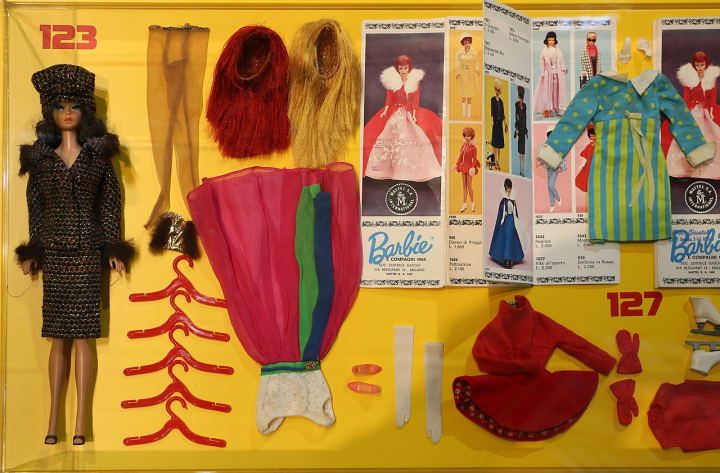
Despite the Cold War, after the Russian female astronaut Valentina Tereshkova went to space, Barbie sported a full astronaut's costume to celebrate and to show girls that if they wanted, they could do it too.
Much thanks to pop culture, we still imagine this tall busty blonde with not much inside her head when we hear the name Barbie, but it could not be further from the truth. From the very beginning, Barbie dolls were sold as blondes and brunettes, and in the late 60s redheads became part of the Barbie family too. More so, in 1967, the first celebrity inspired Barbie was born. Based on the British fashion model Twiggy, the celebrity Barbie had short hair, thus further expanding the idea of what a perfect woman should look like.
And the following year, to celebrate the equal rights movement, an African American Christie became Barbie’s new friend. However, despite there being dolls of different ethnic backgrounds all along, only in the 1980 they were finally introduced as Barbie dolls too, and not just Barbie’s friends.
Ran for President before Hillary Did
In the 80s and 90s Barbie went from being an independent career driven woman to the CEO and the President. Ever since 1992 Barbie has run the Oval Office in different costumes, hairstyles and backgrounds.
Also, Andy Warhol made her painting, fashion designer Oscar de la Renta created a clothing line for her, and in 2009 world’s top fifty designers created haute couture outfits inspired by the 50 years of Barbie’s life, and they were shown in a real fashion show.
In 2018, Mattel introduced even more culturally diverse Barbie dolls. But two years prior, the company, probably tired of constant criticism, introduced different body types of their Barbie doll. It stirred so much fuss that Barbie got to be featured on the cover of the Time magazine.
“Now, can we stop talking about my body?” - the heading on the cover read.
But let’s talk about it just a bit more.
Unhealthy Body Image or Just a Toy
Barbie's “enemies” are convinced that the unrealistic proportions of a her body negatively influence girls’ expectations when it comes to their own shapes and sizes. But is it really true, or do adults project their own insecurities onto a doll?
I remember my first Barbie. As a little girl, growing up in the Soviet Union, I mostly saw bulky and heavy plastic dolls, and let’s be fair, their proportions hardly ever resembled a human body. I was still in kindergarten when a family member from the US sent me a birthday present. It was a Barbie doll, but to me it meant nothing. I didn’t even know there was a world famous doll called Barbie.
All I saw was a smiling girl with a beautiful ballerina dress and long blond hair that I probably shouldn’t have washed and brushed as it turned into a dreadlock, but I still liked her.
Not even once did I wonder about why she had a body like that. Instead, I was most fascinated by how her knees could bend and how the whole figure moved. Barbie was no more than a toy that I loved, even with the haystack on her head.
Science Experiments on a Doll
However, Barbie’s shape and size has been such a controversial topic over the span of decades that even science got involved. Finnish scientists made a research which concluded that if Barbie was a real woman, the lack of her body fat would make it impossible for her to menstruate.

Does it really matter when we are talking about a toy? Sure, there are adult women who aim to become real life Barbies, but then again, we have examples of people turning their bodies into demons or even cats, yet we don’t blame the latter for being a negative influence.
Strangely, I myself was pleasantly surprised when I decided to write about the 64 years of Barbie’s life, and I can only say that this never aging old lady had quite a spectacular life in the constant spotlight, and despite the hate and constant criticism, she still holds the title of them most famous doll in the world.
And when it comes to fears of her being a negative influence, with all the strong and talented women we have in the world today, let the little girls see them as their role models, and let us teach them, so that dolls wouldn’t have to do our job for us.
..
About the Creator
GD Madsen
A historian by education, a former journalist by profession, now living in the French countryside writing books and articles.




Comments
There are no comments for this story
Be the first to respond and start the conversation.