
The Legendary Boeing B-52: A Timeless Symbol of Air Supremacy
By Prajesh Majumdar

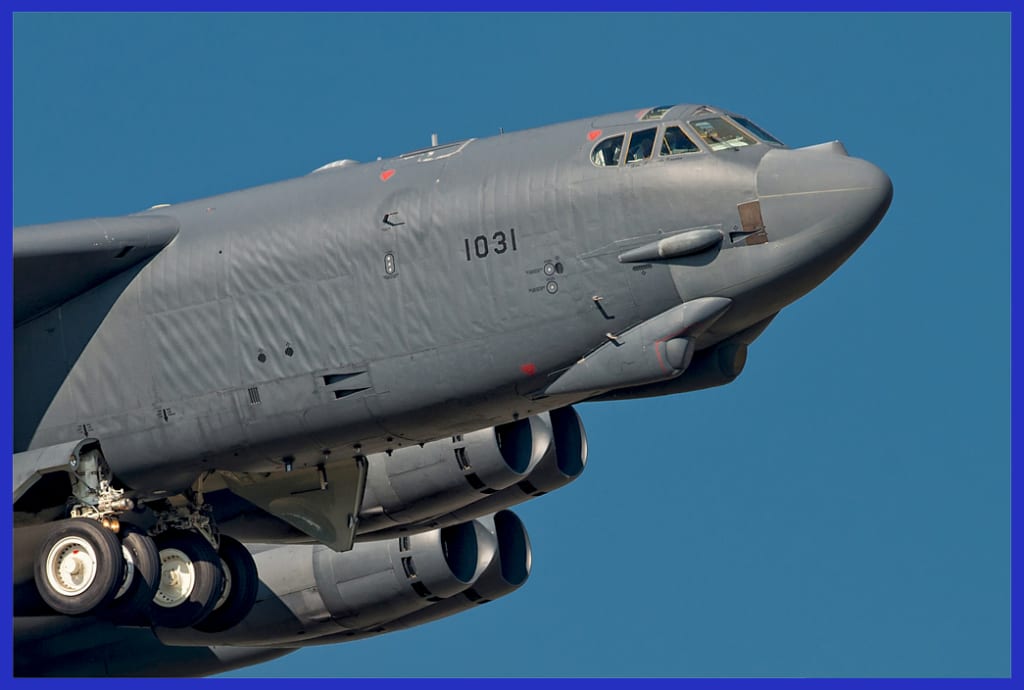
The Boeing-manufactured bomber, often referred to as the “Buff” (Big Ugly Fat Fellow), serves as a testament to the enduring excellence of American aviation. This article Unveiling the Best of the Boeing B-52 Stratofortress, is an iconic long-range, subsonic strategic bomber that has held a central position within the United States Air Force (USAF) since its debut in the 1950s. Engineered for both nuclear deterrence and conventional strike missions, the B-52 has played a pivotal role in shaping American military history.
With a length measuring 159 feet and a wingspan of 185 feet, it is propelled by eight turbojet engines. Notably, it boasts a maximum takeoff weight exceeding 488,000 pounds, solidifying its status as one of the heaviest combat aircraft ever constructed. Moreover, the bomber’s endurance stands out, showcasing an impressive unrefueled range of approximately 8,800 miles.

The USAF has maintained the B-52 in its fleet since 1955. As of the year 2022, there are a total of 72 B-52 aircraft in active inventory. Among these, 58 are under the operational purview of active forces, specifically the 2nd Bomb Wing and the 5th Bomb Wing. Additionally, 18 B-52s are under the management of reserve forces, specifically the 307th Bomb Wing. Approximately 12 of these aircraft are held in long-term storage at the Davis-Monthan AFB Boneyard.
In 2010, a significant transition occurred when all B-52 Stratofortresses were relocated from the Air Combat Command (ACC) to the newly established Air Force Global Strike Command (AFGSC). The B-52’s enduring service can be attributed to its remarkable performance capabilities at high subsonic speeds and its relatively cost-effective operation. This longevity stands in contrast to the introduction of more advanced strategic bombers like the B-58 Hustler, B-1 Lancer, and B-2 Spirit.

The B-52’s armament capabilities are highly versatile, allowing it to carry both nuclear and precision-guided conventional munitions. Throughout its history, it has undergone adaptations for various roles, including strategic nuclear deterrence, close air support, and maritime patrol. The aircraft’s remarkable flexibility and adaptability have enabled it to maintain relevance for several decades. In 2025, the B-52 will celebrate 70 years of continuous service with its original operator. Following the last major upgrades conducted between 2013 and 2015, the bomber is expected to remain in service well into the 2050s.
Notably, the B-52 has undergone multiple upgrades, encompassing avionics, engines, and weapons systems, all designed to ensure its continued effectiveness in modern warfare. Its longevity and adaptability have firmly established its status as an enduring symbol of American air power and a testament to Boeing’s engineering prowess. As the USAF continues to operate and upgrade the B-52, it maintains its vital role as a key component of the nation’s defence strategy.
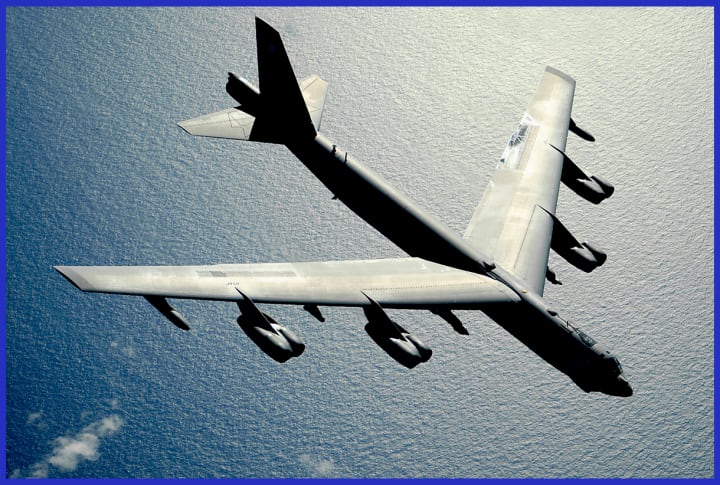
The Development Story of the Boeing B-52 Stratofortress: A Long-range Bomber
The development story of the Boeing B-52 Stratofortress is a testament to the enduring success of a strategic bomber that has stood the test of time. The B-52’s origins trace back to the late 1940s when the United States Air Force (USAF) recognized the need for a long-range nuclear bomber to deter potential adversaries during the early years of the Cold War.
Concept and Design
The development of the B-52 commenced in the early 1940s with the XB-52 prototype, an initiative undertaken by Boeing in response to a request from the USAF for a new bomber design. On November 23, 1945, the Air Materiel Command (AMC) outlined the desired performance characteristics for a novel strategic bomber, one that could execute strategic missions independently, without relying on advanced or intermediate bases controlled by other nations. Subsequently, on February 13, 1946, the USAF issued invitations for bids on the prototype, drawing upon various specifications. This led to the submission of proposals by Boeing, Consolidated Aircraft, and the Glenn L. Martin Company.

On June 5, 1946, Boeing’s Model 462, a straight-wing aircraft with six turboprop engines, was chosen as the winner. On June 28, 1946, Boeing was awarded a $1.7 million contract to build a full-scale mockup of the new XB-52 and conduct preliminary testing. However, concerns arose within the USAF about the aircraft’s size and meeting design requirements. Boeing responded with two models, the Model 464-16 for nuclear missions and the Model 464-17 for general-purpose bombing. To reduce costs, the USAF chose the Model 464-17, adaptable for nuclear strikes. Boeing was later instructed to explore technological advancements, including aerial refuelling, speed improvements, extended range, and more.
"Dive In and Explore the Complete Article"

About the Creator
Prajesh Majumdar
Hi there, I'm Prajesh, the creator of airpra.com
The site is dedicated to nurturing a community of individuals with a keen interest in exploring the intricate aspects of defence equipment and related news.
Keep reading
More stories from Prajesh Majumdar and writers in FYI and other communities.
Revealing the Pinnacle of the Northrop Grumman B-2 Spirit: A Glimpse into 2023's Finest.
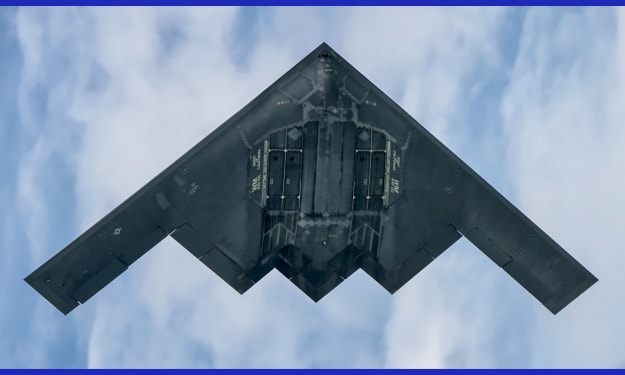
The world’s first stealth bomber, built using the Blended Wing Body (BWB) technology, is a symbol of sophisticated aeronautical engineering—a stunning synthesis of cutting-edge technology and strategic air might. Unveiling the Best of the Northrop Grumman B-2 Spirit, this slim, delta-wing aircraft epitomizes stealth characteristics, engineered to escape enemy radar detection and execute accurate attacks. Its unusual bat-like profile is composed of innovative composite materials and specific coatings that significantly reduce radar reflection, rendering it practically undetectable to enemies. Northrop constructed the plane, a subsonic flying wing with a crew of two, employing low-observable stealth technology designed to bypass extensive anti-aircraft defences.
By Prajesh Majumdar2 years ago in FYI



Comments
There are no comments for this story
Be the first to respond and start the conversation.