
Revealing the Pinnacle of the Northrop Grumman B-2 Spirit: A Glimpse into 2023's Finest.
By AirPra

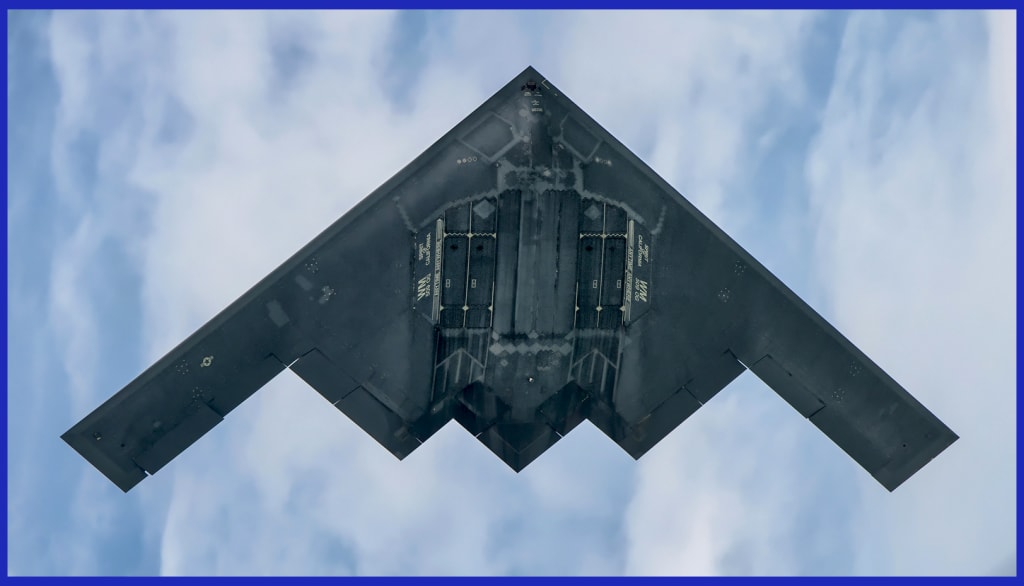
The world’s first stealth bomber, built using the Blended Wing Body (BWB) technology, is a symbol of sophisticated aeronautical engineering—a stunning synthesis of cutting-edge technology and strategic air might. Unveiling the Best of the Northrop Grumman B-2 Spirit, this slim, delta-wing aircraft epitomizes stealth characteristics, engineered to escape enemy radar detection and execute accurate attacks. Its unusual bat-like profile is composed of innovative composite materials and specific coatings that significantly reduce radar reflection, rendering it practically undetectable to enemies. Northrop constructed the plane, a subsonic flying wing with a crew of two, employing low-observable stealth technology designed to bypass extensive anti-aircraft defences.
The B-2 Spirit possesses an impressive range exceeding 6,900 miles and demonstrates the capacity to carry both conventional and nuclear payloads, including JDAM, JSOW, JASSM, and B83 nuclear bombs. Operating on a global scale with unparalleled accuracy in target striking, this bomber stands as a crucial element within the US military’s long-range strike capabilities. Its distinctive “flying wing” design enhances aerodynamic efficiency, accommodating a cutting-edge avionics suite and defensive systems.
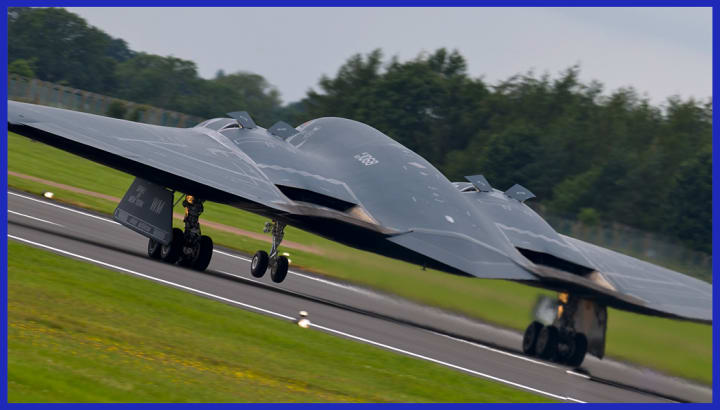
This empowers the aircraft to penetrate heavily fortified airspace, uniquely positioning it as the sole officially recognized operational aircraft capable of stealthily deploying significant air-to-surface standoff weaponry. Initiating its development under the Advanced Technology Bomber (ATB) initiative during the Carter administration, the program produced 21 B-2s at an average expense of $2.13 billion (in 1997 currency), covering development, engineering, testing, production, and procurement.
The construction cost for each aircraft averaged about $737 million, with the overall procurement expenses (inclusive of production, spare parts, equipment, retrofitting, and software support) averaging $929 million per plane. Particularly after the Cold War’s conclusion, the initially planned acquisition of 132 bombers was drastically reduced to a mere 21. As of 2023, the United States Air Force has 20 B-2s operational, as one was lost in a crash in 2008. These aircraft are expected to remain in service until 2032 when they will be entirely replaced by the Northrop Grumman B-21 Raider.
The Development Story of the B-2 Spirit: Subsonic Stealth Bomber
The development of the B-2 Spirit subsonic stealth bomber is characterized by several vital points that highlight its significance and innovation in the realm of military aviation:
Cold War Context: The development of the B-2 Spirit commenced during the Cold War in response to evolving defence requirements, particularly the need for a bomber capable of infiltrating heavily fortified enemy airspace while delivering precision strikes. Around the mid-1970s, military aircraft designers discovered a novel approach to evade missiles and interceptors, now known as “stealth” technology. The fundamental idea was to construct an aircraft with an airframe that could either deflect or absorb radar signals, resulting in minimal radar reflection.
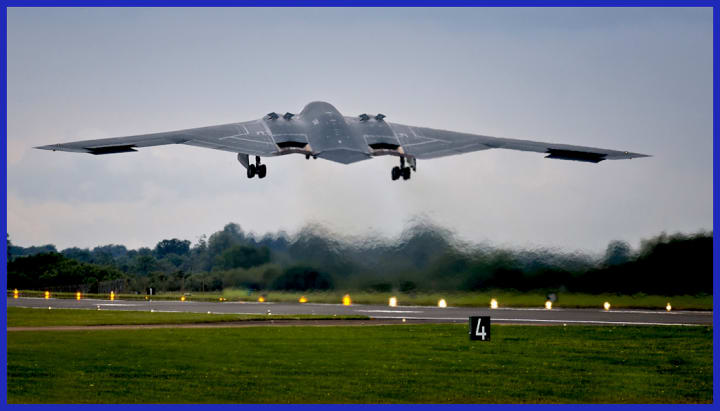
This feature would enable an aircraft to operate with near invisibility, rendering it susceptible only to non-radar-dependent weapons and systems. In 1974, DARPA solicited information from U.S. aviation companies regarding the largest radar cross-section (RCS) an aircraft could have while remaining effectively impervious to radar detection. Initially, Northrop and McDonnell Douglas were chosen for further advancement.
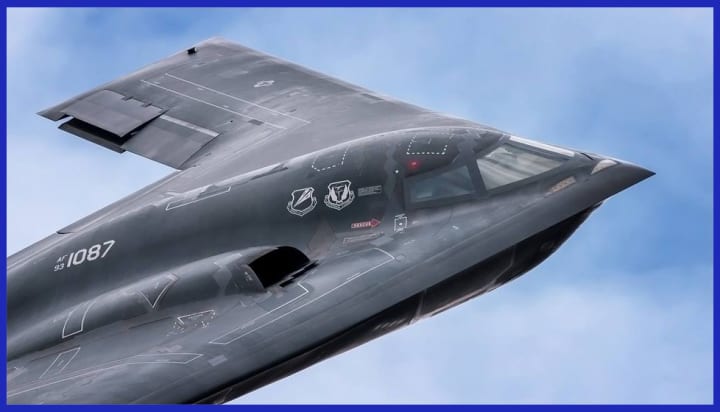
Stealth Emphasis: The design of the B-2 was intentionally geared toward prioritizing stealth capabilities over speed. Its unique flying wing configuration, referred to as the Blended Wing Body (BWB), coupled with the integration of advanced composite materials and radar-absorbing coatings, played a pivotal role in drastically reducing its radar cross-section. This design approach made it exceedingly challenging for enemy radar systems to detect the aircraft. As of 1976, these initiatives had progressed to a point where the development of a long-range strategic stealth bomber seemed feasible.
In 1979, the Advanced Technology Bomber (ATB) program was initiated. Subsequent to this, comprehensive development of the classified project commenced, funded under the covert designation “Aurora.” Following the evaluation of proposals from various companies, the ATB competition was narrowed down to two teams: Northrop/Boeing and Lockheed/Rockwell. Both teams embraced flying wing designs, with Northrop’s proposal code-named “Senior Ice” and Lockheed’s named “Senior Peg.”
"Welcome to AirPra! "Dive In and Explore the Complete Article"
About the Creator
Prajesh Majumdar
Hi there, I'm Prajesh, the creator of airpra.com
The site is dedicated to nurturing a community of individuals with a keen interest in exploring the intricate aspects of defence equipment and related news.
Keep reading
More stories from Prajesh Majumdar and writers in FYI and other communities.
Unveiling the Best Details of the B-1 Lancer Bomber
The Rockwell B-1 Lancer, widely recognized as the B-1 worldwide and referred to as the ‘Bone’ by USAF personnel due to its ‘B-One’ designation, stands as one of the cornerstones of America’s long-range bomber fleet. The article is Unveiling the Best Details of the B-1 Lancer Bomber which also constitutes the backbone of the nation’s long-range bomber capabilities and has the ability to deliver a substantial payload of both precision and non-precision weaponry, along with achieving supersonic speeds of Mach 1.25, the B-1 bomber excels at promptly engaging potential adversaries across the globe on short notice—a capability lacking in the other American bombers as of 2023.
By Prajesh Majumdar3 years ago in FYI
Woman Receives a $2.3 Million Bank Transfer by Mistake
Sometimes life throws the most unexpected surprises our way. For one woman, a routine day managing her finances turned into a situation she could never have imagined. A single bank notification changed everything, presenting her with an enormous sum of money that didn’t belong to her — and the decision she made next stunned everyone who heard the story.
By Shoaib Afridi7 days ago in FYI




Comments (1)
Very Informative!