
The "high fever" in the Arctic continues, the remains of prehistoric creatures appear one after another, and the bacteria under the ice may wake up
The "high fever" in the Arctic continues, will the germs under the ice wake up?

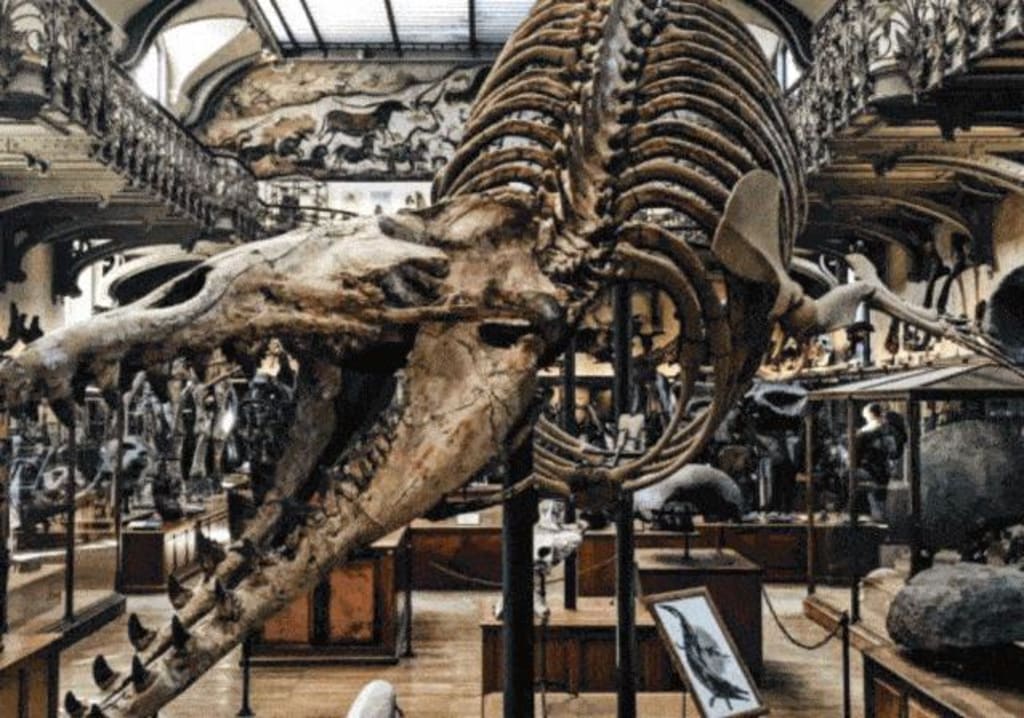
The discovery of dinosaur fossils is not uncommon for people on earth. However, if people find the remains of prehistoric creatures in glaciers and permafrost due to the impact of climate change on the ecological environment, will people be surprised? , and expressed concern.
The remains of these prehistoric creatures, buried under the Arctic ice, how were they discovered by humans? In fact, because the North Pole "fever".
Why does the Arctic "high fever" continue? What do the remains of prehistoric creatures gradually revealed because of the "high fever" in the Arctic? If those ancient germs buried under the ice layer wake up, what impact will they have on human beings? What natural disasters have humans encountered because of climate change?
The Arctic temperature is critical, the melting of glaciers is accelerating, the remains of prehistoric animals are slowly emerging as the ice and snow melt, and germs in deeper places may also wake up.
Arctic 'fever'
When it comes to the North Pole, it is no exaggeration to describe it as snowy, icy and snowy. If conditions permit, flying to the North Pole to escape the heat in the hot summer is really a fascinated pleasure. Today, however, temperatures in the Arctic are rising at alarming levels. Verkhoyansk, previously known as the coldest town in the northern hemisphere, however, in June 2020, this town located in the Siberian Arctic Circle detected the highest temperature ever recorded - 38°C, which undoubtedly sounded the alarm for mankind .
The Arctic region has also become unbearably hot. The occurrence of such abnormal extreme weather has attracted the attention of the World Meteorological Organization. The official spokesperson of the organization believes that this is due to the background of global warming. The warming of the Arctic, first of all, the sea ice has decreased significantly, the snow has melted, and some glacial mountains that were covered with ice and snow are now exposed to dark black rocks.
The survival of Arctic residents has also been problematic. They can no longer fish and hunt in their original places, and are forced to go to higher and more dangerous places to find food. The decline in animal resources has forced local residents to leave. In addition to the humans forced to leave, there are polar bears who have nowhere to go.
The abnormal Arctic climate has reduced the ice floes in the Arctic Ocean, and polar bears can no longer obtain delicious fish from those floes. The hungry polar bears begin to migrate and leave their original feeding areas. In 2019, in the city of Norilsk in northern Siberia, Russia, people saw a dirty polar bear rummaging through household garbage for food. It looked skinny and had no eyes. It should have been hungry for a long time.
In August 2020, polar bears were spotted hunting reindeer in Svalbard, Norway. Polar bears obviously feed on fish and seals in the ocean, so why would they hunt reindeer on land? The reason is that the ecological environment of the Arctic has been destroyed, the number of fish has plummeted, and the polar bears, who cannot find a source of food, have no choice but to go to land and hunt weak reindeer.
The World Health Organization has warned humans that the temperature rise in the Arctic has reached more than twice the global average. The first is polar bears, whose living space has been drastically reduced. If they continue to be left unchecked, polar bears may become extinct.
As the temperature in the Arctic region increases, the polar glaciers melt, and the permafrost in the polar regions also begins to melt, and the remains of some prehistoric creatures, along with their well-preserved fur, gradually emerge.
Prehistoric creatures frequently emerge
These ancient creatures, which are stored in glaciers and permafrost for tens of millions of years, are much more complete than the paleontological fossils formed under geological deposits on land. There are internal organs, not badly damaged. Most of these ancient creatures are mammals, birds, and insects. The period when these ancient creatures lived was the Ice Age 57,000 years ago. Mammoths, saber-toothed tigers, and giant ground sloths lived in the Arctic during the Ice Age.
Archaeologists once found a well-preserved woolly rhino in the permafrost of Siberia. This is an Ice Age paleontology that first appeared in the Pleistocene (more than 2 million years ago). The woolly rhinoceros is a herbivorous animal with thick fur covering its body. It is also a relative of the modern Sumatran rhinoceros.
Woolly rhinos use their long, curved horns to poke through thick snow to find turf and plant roots to eat. They were very active in northern Eurasia, and it still existed until the Paleolithic period when humans lived. People like to hunt. The woolly rhino gets its meat and fur. One might ask whether the hunting of woolly rhinos by humans caused the extinction of the species.
In fact, the woolly rhinos went extinct because of the end of the Ice Age. A study of a woolly rhino carcass found in Siberia revealed that it was drowned, which is not difficult to reminiscent of the precursors of the end of the Ice Age: rising temperatures, melting glaciers, rising sea levels, and animals being sunk to the bottom of the sea.
In addition to the discovery of the remains of woolly rhinos, mammoths hidden in the permafrost have gradually emerged. Some profit-seeking businessmen coveted the mammoth's two gigantic tusks, and the search for mammoth tusks caused greater damage to the Arctic ecology. In fact, apart from the ecological damage, no one knows whether this priceless mammoth ivory will carry some ancient germs. If these sleeping germs wake up, will it bring unforeseen results?
Sleeping germs may wake up
Imagine that meat placed in the refrigerator can stay fresh, just like the remains of ancient creatures sealed in permafrost. If taken outdoors, the meat will rot and stink due to exposure to bacteria in the air, and the permafrost The remains of the ancient creatures are now re-emerging, and exposure to the outside air and light will surely stimulate the production of some sleeping substances.
The first is that the corpse will emit a great smell of animal carcasses, seeping out body fluids, and the intuitive feeling is an unpleasant smell. Second, these ancient creatures may have suffered from diseases during their lifetimes, may have had wound infections, may have carried some ancient bacteria and viruses, and these germs may have also awakened as the corpses were excavated.
In 2016, a Bacillus anthracis outbreak occurred in the Yamal region of the Arctic that killed more than 2,000 moose. The source of the virus was a corpse that died of Bacillus anthracis many years ago. This reindeer was frozen for 75 years, which means that the bacteria anthracis successfully survived in the glacier for 75 years.
Bacillus anthracis itself is an ancient virus. If the Arctic permafrost continues to thaw in the future, more unknown organisms and possible germs will be released from ancient times. When they carry out the human ecological environment, it may have an inestimable impact.
Human beings have rapidly industrialized in recent decades, and a large amount of greenhouse gases are emitted from the exhaust of automobiles and produced from the combustion of fossil fuels. Global warming is an issue that plagues all human beings. If the climate problem is not properly resolved, it will in turn affect human beings and bring about many natural disasters, such as drought.
The climate issue should not be underestimated
Drought has a huge impact on crop yields. For my country, droughts often occur in summer and autumn in North China and East China, as well as in Yunnan, Guizhou and Sichuan. The impact of drought on my country's agriculture presents a trend of increasing area and more and more serious losses. Since the 1950s, the food loss caused by drought in my country's agriculture has reached as high as 2.5-3 million kilograms.
Frost damage is also a typical natural disaster. There are many forms of frost damage, including frost, cold wave, cold air, accompanied by strong wind, rain and snow. my country's central and northwestern regions are more severely affected by frost damage. Frost damage can cause delayed crop growth, frostbite, and affect crop harvests.
Extreme weather increases pests and diseases. Due to climate change, the impact of pests and diseases will change in latitude. Travel from low latitude to high latitude, and from high altitude to low altitude. Climate change will also cause diseased insects to grow faster and faster, shortening the time it takes to complete a single generation in a year. Climate change makes pests and diseases more and more difficult to deal with. Experts believe that the protection of ecology can enable beneficial insects to help humans resist pests and diseases, so ecological protection is everyone's responsibility.
The melting of Arctic glaciers and permafrost has brought new problems, the ecology of the Arctic is becoming more fragile, and the potential hidden dangers of germs also need attention. Natural disasters are not a joke that the earth gives to human beings. Humans appear so insignificant in the face of natural disasters. We must have the awareness of ecological crisis, and we need to mobilize more people to protect the earth's ecology and live a green life.
About the Creator
nally norris
Science needs fantasy, invention is expensive
Keep reading
More stories from nally norris and writers in FYI and other communities.
Is the speed of light really the fastest speed in the universe? In fact it's "slow as a turtle"
When the term "speed of light" is mentioned, I don't know what everyone will think of in the first place. In a short period of time, when the whole world is illuminated, I believe many people will sigh at the amazing speed of light transmission. And scientists are even more hopeful, and want to make the speed of human beings reach the speed of light successfully one day in the future.
By nally norris3 years ago in FYI



Comments
There are no comments for this story
Be the first to respond and start the conversation.