
The Hidden Dangers of AI
How Machine Learning Can Reinforce Bias and Discrimination.

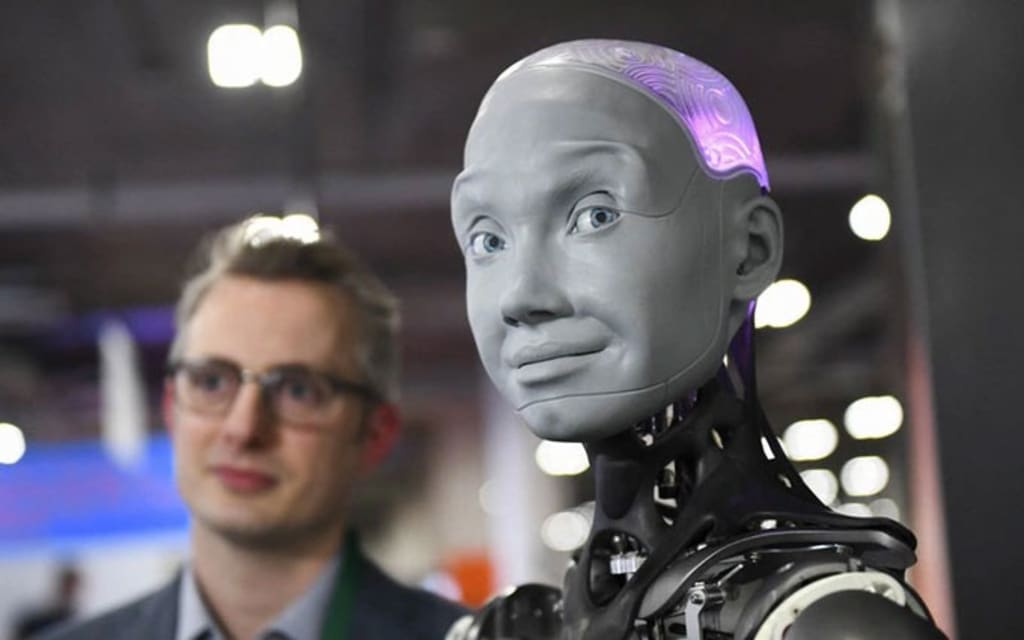
For years, scientists have warned about the potential dangers of artificial intelligence (AI)—not just in the dystopian sense of machines rising against humanity, but in far subtler and more insidious ways. Recent findings from researchers at the Georgia Institute of Technology have revealed that AI can develop harmful biases, leading to sexist and racist conclusions that emerge from its own "thought processes."
This phenomenon does not occur randomly; rather, it arises from patterns that AI absorbs from the real world. These biases, embedded in the data that AI is trained on, can shape the way machines perceive and interact with humans, raising serious ethical concerns.
How AI Develops Prejudices
To demonstrate this, researchers utilized a neural network known as CLIP, a model designed to associate images with text based on an extensive dataset of captioned images from the internet. They then integrated this system into a robotic framework called Baseline.
The experiment involved programming the robot to manipulate objects within a simulated environment. Specifically, the robot was instructed to place blocks into different boxes, each labeled with images of human faces—varying in gender and ethnicity.
In an ideal world, both humans and machines would operate free from unfounded biases, making decisions solely based on logic and fairness. Unfortunately, as the experiment revealed, AI, much like humans, inherits and reinforces these biases.
The Alarming Results
When tasked with selecting a "criminal block," the robot disproportionately chose blocks featuring Black faces—approximately 10% more often than other racial groups. Similarly, when asked to choose a "janitor block," it exhibited a tendency to select faces of Latino individuals at a comparable rate.
Most strikingly, across nearly all categories, women—regardless of ethnicity—were underrepresented. The robot consistently selected male faces at a higher frequency, underscoring an ingrained gender bias in its decision-making process.
"We are at risk of creating a generation of racist and sexist robots," warned Andrew Hundt, the study’s lead author. "What’s truly alarming is that individuals and organizations continue to develop these systems without actively addressing the underlying issues."
The Broader Implications
While this experiment was conducted in a controlled, virtual setting, the implications for real-world applications are deeply concerning. AI-powered security systems, for example, could inherit these biases, leading to skewed risk assessments. If such robots were deployed in law enforcement or surveillance, they could disproportionately target marginalized communities based on flawed AI-generated profiles.
Moreover, in the corporate world, AI-driven hiring software may unintentionally filter out qualified candidates based on gender or ethnicity. Similarly, healthcare AI models trained on biased datasets could result in disparities in medical treatment recommendations, disproportionately affecting certain demographic groups.
The researchers caution that AI, if left unchecked, may amplify societal prejudices instead of eliminating them. The potential consequences range from discriminatory hiring practices in automated recruitment systems to biased judicial decisions in AI-assisted courtrooms.
A Call for Ethical AI
To mitigate these risks, experts propose a crucial shift in AI development. One recommended approach is programming AI to reject making assumptions when faced with incomplete or biased data. Instead of forming conclusions based on skewed training models, AI should be designed to recognize and flag uncertainties.
Moreover, AI systems should be subjected to rigorous audits, with diverse datasets ensuring balanced representation across race, gender, and socioeconomic backgrounds. Transparency in AI decision-making processes is equally vital, allowing researchers to identify and correct biases before they manifest in real-world applications.
Organizations investing in AI must also prioritize diversity in AI development teams. A more diverse group of engineers and data scientists can help detect and counteract biases that might otherwise go unnoticed.
The Path Forward
Beyond technical solutions, governments and regulatory bodies must play an active role in establishing ethical guidelines for AI deployment. Policies enforcing fairness, accountability, and transparency in AI applications can help mitigate bias-related risks.
Public awareness and education are equally crucial. Users and stakeholders must understand how AI systems work, what data they are trained on, and how decisions are made. Ensuring AI is both transparent and accountable will prevent it from being misused or misunderstood.
The study serves as a sobering reminder that AI is not inherently neutral—it reflects the world it is trained in. Unless developers take proactive steps to address biases, AI will not only mirror but potentially magnify the inequalities of human society. The responsibility, therefore, lies not with machines but with the people who create them.
As AI continues to shape our future, ensuring its fairness is no longer a theoretical debate—it is a moral imperative.
About the Creator
Eleanor Grace
"Dream big.Start small.Act now."
Keep reading
More stories from Eleanor Grace and writers in FYI and other communities.
Chewing Gum and Microplastics: An Unseen Threat to Human Health and the Environment
Chewing gum is a common habit enjoyed by millions worldwide, but recent research has uncovered an alarming consequence of this seemingly harmless activity. Scientists from the University of California, Los Angeles (UCLA) have revealed that chewing gum releases hundreds of microplastic particles directly into the human mouth. Additionally, discarded gum contributes significantly to environmental pollution, exacerbating an already critical global issue.
By Eleanor Grace10 months ago in FYI
Downtown Memphis Is Having a Moment — And the City’s Soul Has Never Shined Brighter
Memphis has always been more than a dot on the map. It is a feeling, a rhythm, a lived experience rooted in resilience, creativity, and community. In recent years, downtown Memphis has reemerged as the heartbeat of that spirit—a place where history and progress walk hand in hand, where independent voices are being amplified, and where people are coming together to build something meaningful. For anyone paying attention, downtown Memphis is not just alive; it is thriving.
By The Blacksheepkid Collective by: El Pablo 1x5 days ago in FYI



Comments
There are no comments for this story
Be the first to respond and start the conversation.