
Chewing Gum and Microplastics: An Unseen Threat to Human Health and the Environment
Unraveling the Hidden Dangers in Everyday Habits

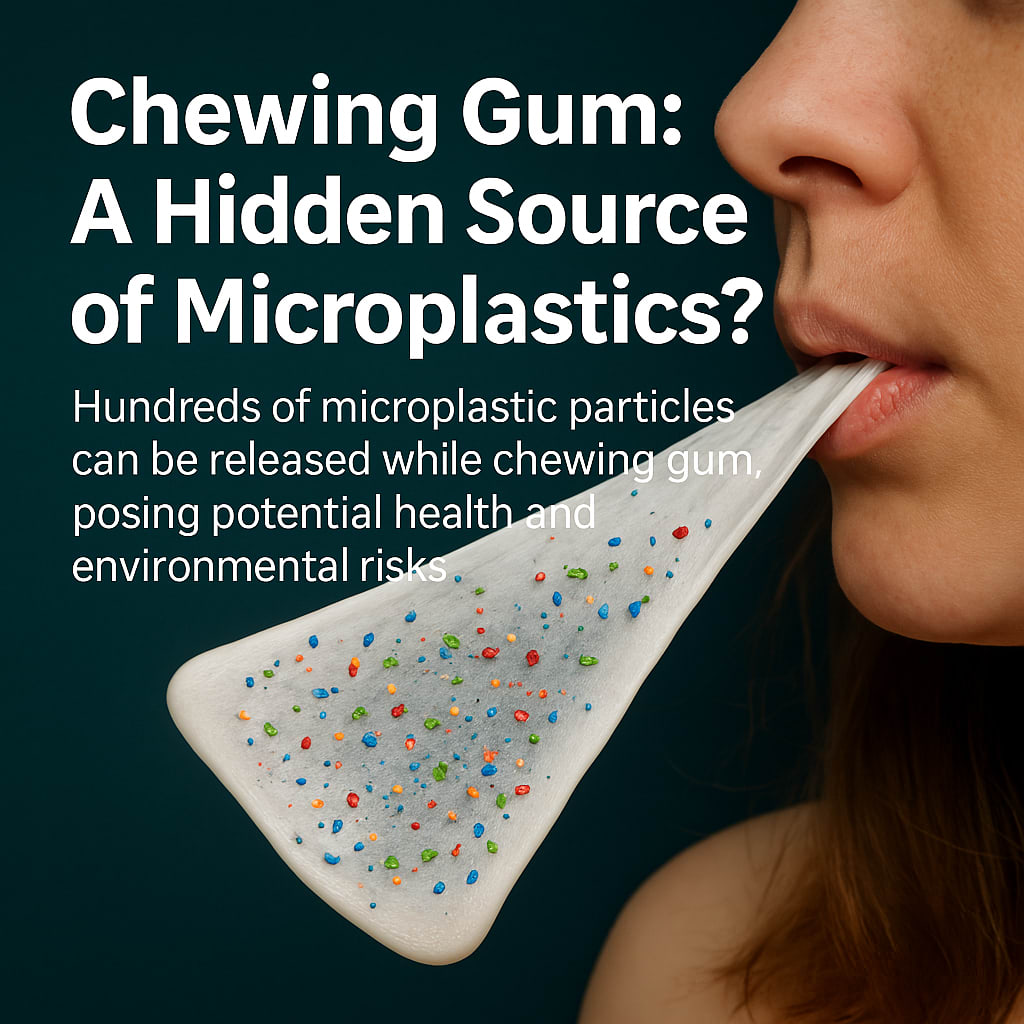
Chewing gum is a common habit enjoyed by millions worldwide, but recent research has uncovered an alarming consequence of this seemingly harmless activity. Scientists from the University of California, Los Angeles (UCLA) have revealed that chewing gum releases hundreds of microplastic particles directly into the human mouth. Additionally, discarded gum contributes significantly to environmental pollution, exacerbating an already critical global issue.
The Hidden Microplastics in Chewing Gum
Microplastics—tiny plastic particles less than five millimeters in size—have been detected in various elements of our environment, from the peaks of mountains to the depths of the oceans. However, the role of chewing gum as a source of microplastic ingestion has remained largely unexplored until now.
Dr. Lisa Loew, a Ph.D. researcher at UCLA, conducted an experiment where she chewed seven different brands of gum. Her saliva was then analyzed to determine the presence of microplastics. The results were shocking: on average, every gram of gum released approximately 100 microplastic particles into her mouth, while some brands emitted over 600 particles per gram. Given that a single stick of gum typically weighs around 1.5 grams, this translates to a significant intake of microplastics for regular gum chewers.
Based on these findings, individuals who chew around 180 sticks of gum per year could be unknowingly consuming approximately 30,000 microplastic particles. However, the study also highlights that this figure is relatively small compared to other sources of microplastic exposure. For instance, research from 2024 indicates that a single liter of bottled water contains an average of 240,000 microplastic particles.
The Presence of Microplastics in the Human Body
The discovery of microplastics in chewing gum adds to growing concerns about plastic contamination in the human body. Scientists have already identified microplastics in human lungs, blood, and even brain tissue, raising serious questions about potential health risks. Despite these alarming discoveries, direct evidence linking microplastic ingestion to specific health problems remains elusive.
While some experts believe that small amounts of microplastic exposure may not pose an immediate threat, the long-term effects remain uncertain. Professor Oliver Jones, a chemist at RMIT University in Australia, suggests that while consuming microplastics from gum might not be significantly harmful, the cumulative effect of microplastic exposure from multiple sources is a cause for concern.
The Environmental Toll of Chewing Gum
Beyond its impact on human health, chewing gum also poses a serious environmental challenge. Most commercially available gum is made from synthetic polymers derived from petroleum, giving it its chewy texture. However, these ingredients are rarely disclosed on packaging, leaving consumers unaware of what they are actually consuming.
In an effort to compare different types of gum, the UCLA team tested five brands of synthetic gum and five brands of natural gum made from plant-based polymers, such as tree resin. Surprisingly, both types of gum contained microplastics, suggesting that even natural alternatives may not be entirely free from contamination.
Additionally, discarded chewing gum contributes to urban pollution. Gum litter is notoriously difficult to remove from sidewalks and streets, often requiring expensive cleaning efforts. Improper disposal of gum further exacerbates plastic pollution, as it does not biodegrade easily and can persist in the environment for years.
Moving Forward: Awareness and Solutions
As scientific research continues to uncover the pervasive presence of microplastics in everyday life, awareness is crucial. Consumers should be informed about the potential risks associated with chewing gum, both for personal health and for the environment. Policymakers and manufacturers should also consider developing regulations and alternative products that minimize plastic contamination.
The UCLA study has been submitted for peer review and was recently presented at a meeting of the American Chemical Society in San Diego. As discussions about microplastic pollution gain momentum, further research is necessary to fully understand the implications and explore ways to reduce human exposure to these tiny yet pervasive pollutants.
While it may not be necessary to completely abandon chewing gum, individuals can make more informed choices by opting for brands that prioritize transparency and sustainability. In the fight against plastic pollution, even small changes in consumer habits can contribute to a healthier future for both humans and the planet.
About the Creator
Eleanor Grace
"Dream big.Start small.Act now."
Keep reading
More stories from Eleanor Grace and writers in FYI and other communities.
The Fascinating Mysteries of Pi: Beyond Randomness
Pi (π), the mathematical constant, is one of the most intriguing and enigmatic numbers in mathematics. Known as the ratio of a circle's circumference to its diameter, Pi's value is approximately 3.14, but its true beauty lies in its endless decimal expansion, which continues infinitely without repeating. With more than 13 billion digits calculated so far, Pi has captivated mathematicians for centuries, inspiring both awe and mystery.
By Eleanor Grace10 months ago in FYI


Comments
There are no comments for this story
Be the first to respond and start the conversation.