
The Headless Survivor: Nature’s Most Resilient Insect
How the Cockroach Lives for Days Without a Head — A Fascinating Glimpse into Nature’s Toughest Creature
Did You Know?
> There is a creature that can survive for a whole week even after its head is cut off!
As unbelievable as it sounds, it’s absolutely true. There exists a creature in this world that can live for days—even up to a week—without its head.
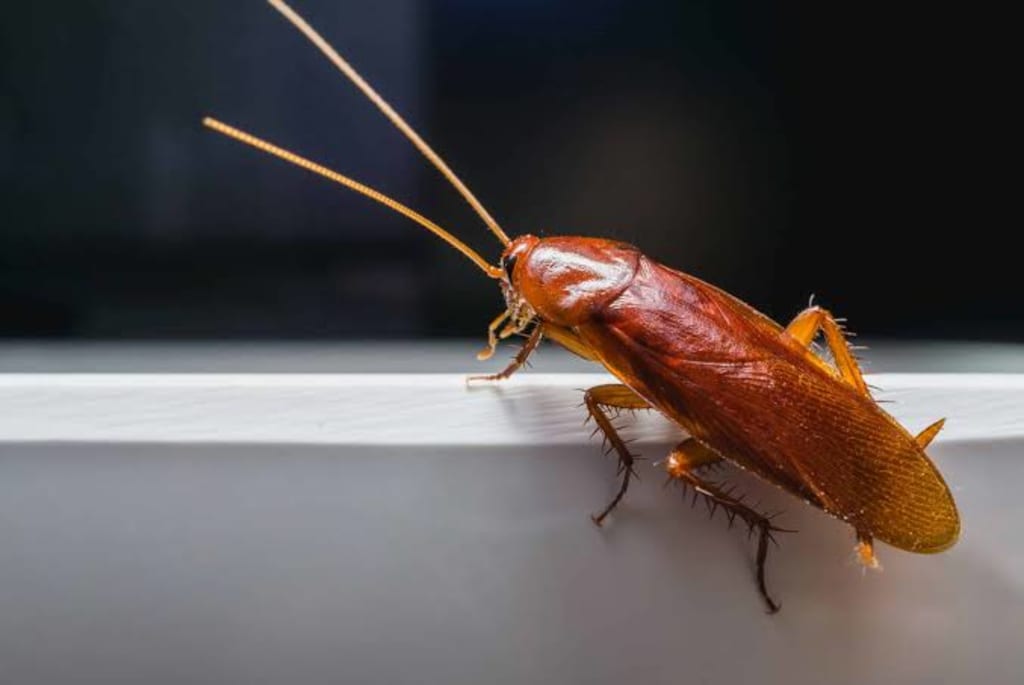
That creature is the cockroach. Yes, a cockroach can stay alive for several days, sometimes even a week, after being decapitated. It may sound astonishing, but there are fascinating scientific reasons behind this phenomenon.
---
How Can a Cockroach Live Without Its Head?
1. No Blood Pressure Like Humans
Cockroaches don’t have a circulatory system like humans. Their bodies don’t rely on blood pressure in the same way. Instead of a closed circulatory system (where blood is pumped through arteries and veins), cockroaches have an open circulatory system. This means their organs are bathed in a free-flowing fluid (hemolymph), which doesn’t require a heart to pump it forcefully.
So, when a cockroach loses its head, it doesn’t bleed to death the way a human would. Its neck simply closes off, and because there’s no pressurized system, the fluid doesn’t gush out uncontrollably.
2. Breathing Without a Head
One of the biggest reasons a cockroach can survive without its head is its unique respiratory system. Cockroaches don’t breathe through their nose or mouth. Instead, they have small holes called spiracles located along the sides of their body. These spiracles lead to a network of tubes (tracheae) that deliver oxygen directly to their tissues.
So, even if the head is removed, the body continues to absorb oxygen and release carbon dioxide—no lungs or central nose required. This allows the body to function for several days after decapitation.
3. A Simple Nervous System
Cockroaches have a decentralized nervous system. Their brain is relatively small and doesn’t control all bodily functions. In fact, many basic reflexes and survival mechanisms are managed by nerve clusters called ganglia located in different parts of their body, especially in the thorax and abdomen.
Even without a brain, these ganglia can control locomotion (movement), simple responses to stimuli, and even coordination. This is why a cockroach can still move, crawl, or twitch without a head. It's almost like a biological autopilot mode.
---
Then Why Do Cockroaches Eventually Die Without Their Head?
Despite these amazing abilities, headless cockroaches don’t live forever. The primary reason they die after a few days is that they can’t eat or drink.
With their head gone, they lose the ability to consume food or water. As a result, they eventually die of starvation or dehydration, not from the injury itself. This process usually takes about 5 to 7 days, depending on the surrounding temperature and humidity.
---
Why Is This So Fascinating?
This strange survival trait of cockroaches fascinates scientists and biologists because it reveals how evolution has shaped insects differently from mammals. It shows how some organisms can function without a centralized command center (like a brain), relying instead on decentralized systems that allow parts of the body to continue independently for a short time.
Additionally, this has inspired biomimetic research—where scientists study how to design robots or systems based on the cockroach’s biology. For example, researchers are developing search-and-rescue robots modeled on cockroach movement, especially for navigating tight or dangerous spaces during disasters.
---
Bonus: More Amazing Cockroach Facts
They can hold their breath for up to 40 minutes.
They can survive without food for over a month.
They’ve been around for millions of years, even before dinosaurs.
Some species can survive radiation levels far higher than humans.
---
Conclusion: A Humble Yet Incredible Creature
The cockroach may be one of the most disliked creatures in our homes, but its biological capabilities are truly remarkable. Being able to live without a head for days is not just a bizarre survival trick—it’s a window into how diverse life on Earth can be.
These insights remind us that even the smallest creatures possess powerful adaptations that can inspire science, challenge our understanding of life, and even push us to think differently about resilience, survival, and the boundaries of biology.
About the Creator
Keep reading
More stories from Ikram Ullah and writers in FYI and other communities.
The Electric Eel: Nature’s Living Power Plant
The Astonishing Creature That Generates Electricity: The Electric Eel Among the countless wonders of nature, the Electric Eel (scientific name: Electrophorus electricus) stands out as a truly fascinating and extraordinary creature. This amazing animal possesses the rare and powerful ability to generate electricity within its body—up to a staggering 600 volts! Such immense power allows it not only to stun or paralyze its prey but also to defend itself against predators. The electric eel is a living example of nature’s ingenious design, combining biology and bioelectricity in a way that scientists are still striving to fully understand.
By Ikram Ullah8 months ago in FYI
Miss Persephone's Manual to a Seemingly Ordinary Life
Miss Persephone was found at the dining table, her blue eyes swollen, her tears arriving and retreating like the tides of the ocean. Earlier that day, her family had visited her in the retirement home where she had lived for eight years. It was her eightieth birthday.
By Imola Tóth2 days ago in Fiction


Comments (1)
That's really interesting about cockroaches surviving headless. I had no idea they had an open circulatory system. It makes sense they don't bleed out like us. And their breathing through spiracles is pretty cool. Wonder how long they could last in other extreme situations? Do you think there are other insects with similar survival quirks?