

The Golden Ratio: Fact or Fiction?
The Golden Ratio, also known as the divine proportion or phi, is a mathematical concept that has fascinated people for centuries. It is a number that appears in many different areas of science and art, from architecture and music to biology and nature. Some people believe that the Golden Ratio is the key to understanding the universe, while others think that it is simply a myth or a product of our pattern-seeking brains. In this article, we will explore the evidence for and against the existence of the Golden Ratio in nature.
To begin with, let's define what the Golden Ratio is. It is a number, approximately 1.61803398875, that is derived from a sequence of numbers known as the Fibonacci sequence. This sequence begins with 0 and 1, and each subsequent number is the sum of the previous two (0, 1, 1, 2, 3, 5, 8, 13, 21, etc.). The Golden Ratio is found when you divide any two adjacent numbers in the sequence (e.g., 8/5, 13/8, 21/13), and as the sequence gets larger, the ratio approaches phi.
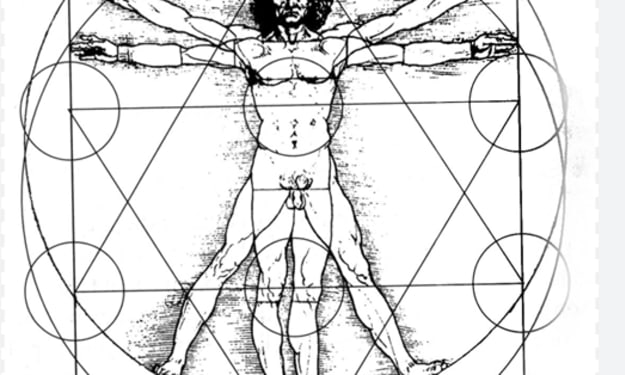
The question is, does the Golden Ratio really appear in nature, or is it just a coincidence? One of the claims is that the human body has a height-to-navel-to-feet ratio that is equal to phi. However, this claim is not supported by scientific evidence and is likely a product of our cultural ideas of beauty. The same is true for claims that ancient buildings, such as the Great Pyramid of Giza or the Parthenon, were built using Golden Ratio dimensions. While it is true that some of these buildings exhibit proportions that are close to phi, this is likely due to the fact that there are many ways to measure a building, and some of these measurements will inevitably be close to the Golden Ratio.
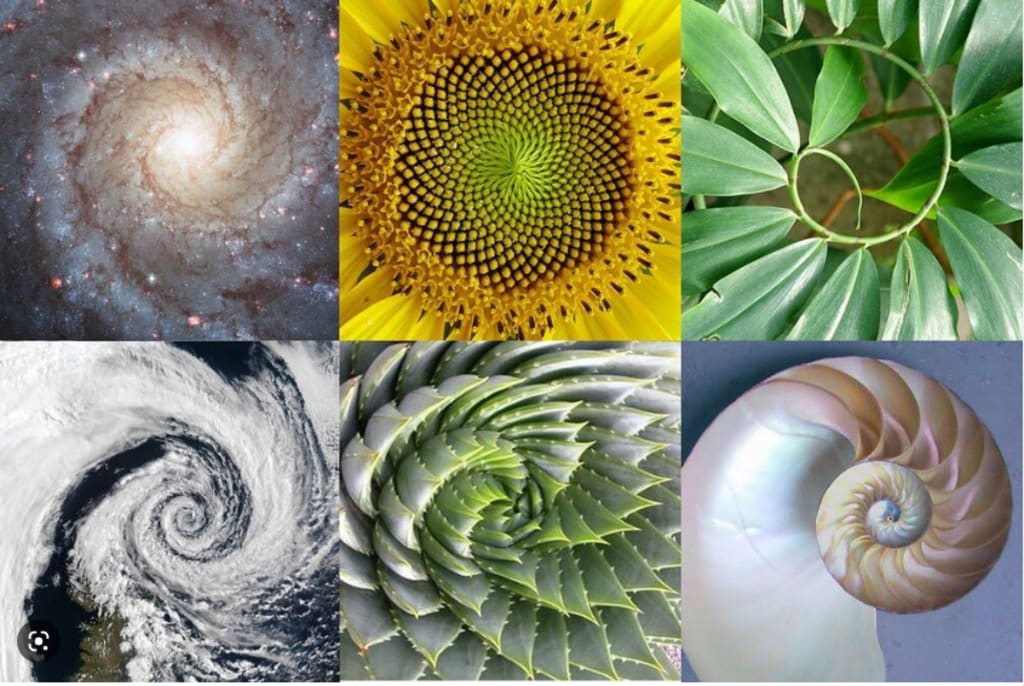
Another claim is that the Golden Ratio appears in the spiral patterns of shells, such as the nautilus shell. However, while these spirals are beautiful and intricate, they are not actually Golden Spirals. In fact, the ratios of the spirals in nautilus shells vary quite a bit, and they are examples of what is known as a logarithmic spiral, not a Golden Spiral. While the Golden Ratio does appear in the spirals of some plants, such as pine cones and sunflowers, this is not a universal pattern in nature and does not necessarily indicate that the Golden Ratio is a fundamental building block of the universe.
In conclusion, while the Golden Ratio is a fascinating concept that has inspired artists, mathematicians, and scientists for centuries, there is little evidence to support the claim that it is a universal pattern in nature. While it is true that the Golden Ratio appears in some natural phenomena, such as the spirals of pine cones and sunflowers, it is not a universal pattern and does not necessarily indicate that there is a deeper meaning behind its presence in these phenomena. Ultimately, the question of whether the Golden Ratio is fact or fiction remains open to interpretation, and it is up to each individual to decide for themselves whether they believe in its mystical properties or not.
About the Creator
Keep reading
More stories from Tsar Banks and writers in FYI and other communities.
The Golden Ratio (Part 1)
The concept of the Golden Ratio, also known as the divine proportion, is a fascinating topic that has captivated mathematicians, artists, architects, and scientists alike. It is believed to be the most perfect number, found everywhere in nature, and closely linked to beauty and harmony.
By Tsar Banks3 years ago in FYI
A Planetary Alignment will coincide with Mercury Retrograde
Double phenomena in the heavens Some people say in jest that the planets have aligned in their favor when life works the way they desire. Were you aware that there are seasons when things do line up in the heavens? There will be a planetary alignment AKA a planet parade, on February 28, 2026.
By Cheryl E Preston13 days ago in FYI
When Being “Ugly” Was a Crime: The Forgotten Laws That Targeted Disabled and Disfigured People in America
In modern times, the idea that someone could be arrested simply for being “ugly” sounds shocking and unbelievable. Yet, in the late nineteenth and early twentieth centuries, several cities in the United States enforced laws that effectively criminalized the public presence of people who were visibly disabled, disfigured, or deemed “unsightly.” These controversial rules, commonly known as **“Ugly Laws,”** reveal a troubling chapter in the history of discrimination against disabled individuals.
By Irshad Abbasi 4 days ago in FYI
Top tipple tricks
Been thinking a lot about drinking, lately. Not least because of a recent episode of over-indulgence and the inevitable after effects. Some readers may recall the earlier articles I wrote about beating the booze. Here I set out an experiment in techniques for cutting down on my alcohol intake. The experiment was successful, the techniques worked, and I have armed myself with an arsenal of weapons in the war against the demon drink. I have yet to fire the first round however. It's all a question of timing (perhaps procrastination).
By Raymond G. Taylora day ago in Psyche



Comments
There are no comments for this story
Be the first to respond and start the conversation.