
The Forgotten King
The Royal in England You Don't Know About

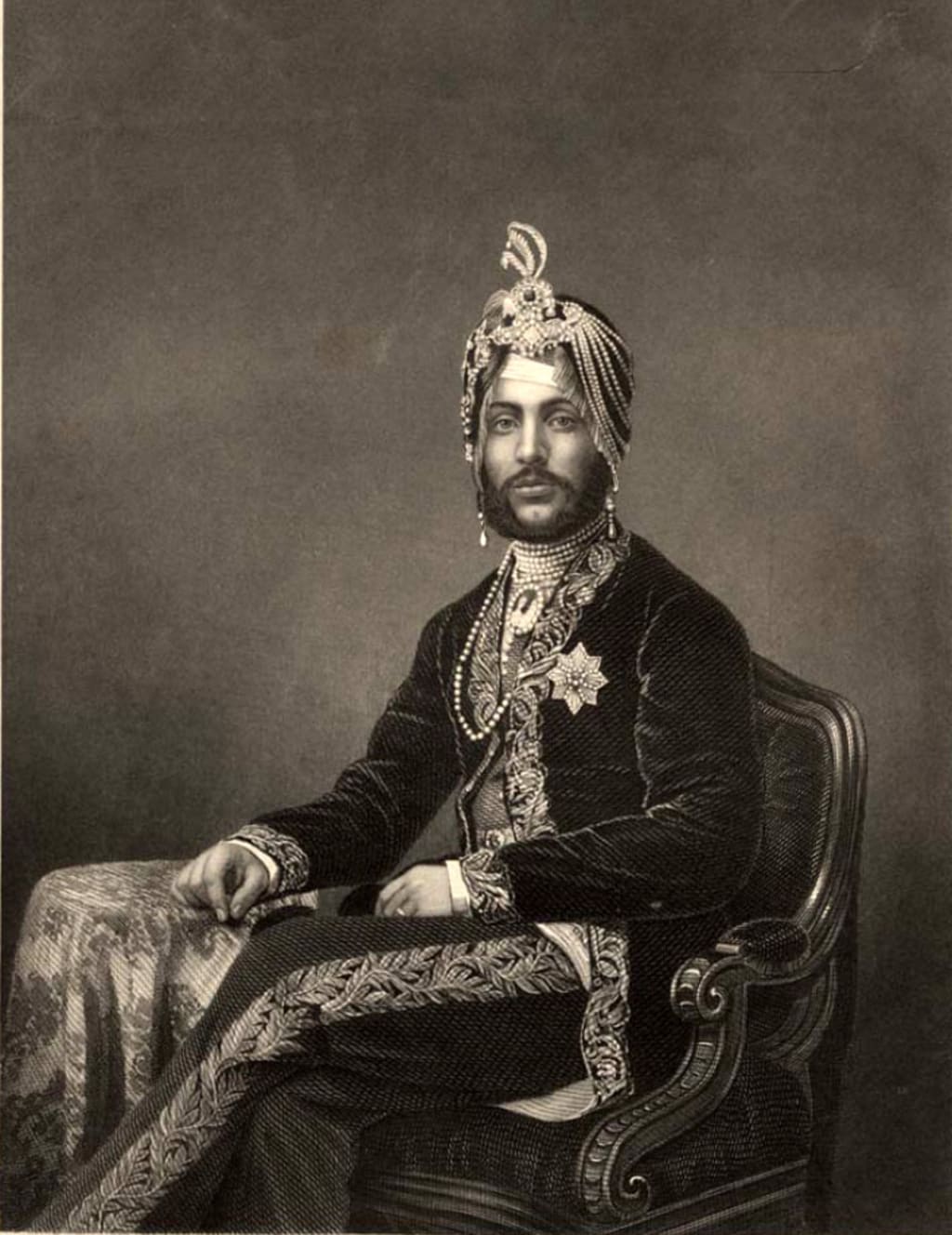
Before you read this piece, I believe it’s really important that I provide you with a disclaimer:
I tried extremely hard not to get frustrated when writing this, but despite my best efforts, it’s proved to be a near impossible task. I’ve read, re-read, deleted, re-written only to delete again so many times that I’ve lost count. What you’re going to read from this point forward is the best I could do, so I sincerely apologize if my frustration still manages to poke its head through the words I am about to share.
Here goes...
What if I were to tell you there’s a king in England that you've probably never heard of?
No, this isn’t a story about a scandal within Queen Elizabeth’s family, so if that’s what you were expecting, I guess I should do the right thing and issue a second apology here.
It’s not a fairytale either; there’s no happy ending. Rather, it’s a tale of heartbreak and despair. It involves a child who became a pawn - a victim of imperialism and greed, both of the British, as well as his own people.
His name was Maharaja Duleep Singh, and this is his story.
Duleep Singh was the youngest of Maharaja Ranjit Singh’s sons. Ranjit Singh ruled over the mighty kingdom of the Sikhs, one of the richest and most powerful empires in India. He was a brilliant and powerful leader, so much so that the ever-ambitious East India Company didn’t dare to attempt to quarrel with them in their quest for expansion in the resource-rich Indian subcontinent. The word “Maharaja” is a combination of two words, “maha”, meaning “great”, and “raja”, meaning “king”. While there could be many rajas, there was only one Maharaja: the greatest king of them all - Ranjit Singh.
All good things come to an end they say, and the same applied to the reign of Ranjit Singh. Like all great rulers before him, he may have conquered many lands and defeated many armies, but there was one foe he couldn’t overcome - death. In 1839, the great king drew his last breath, and not soon thereafter, mayhem ensued. After a series of assassinations and betrayals fuelled by greed and the self-interest of many of those involved, all of his heirs lost their lives - all but one, that is: Prince Duleep Singh, his youngest son.
In 1843, he was crowned the Maharaja of Punjab, with his mother ruling as Queen Regent on his behalf.
He was 5 years old.
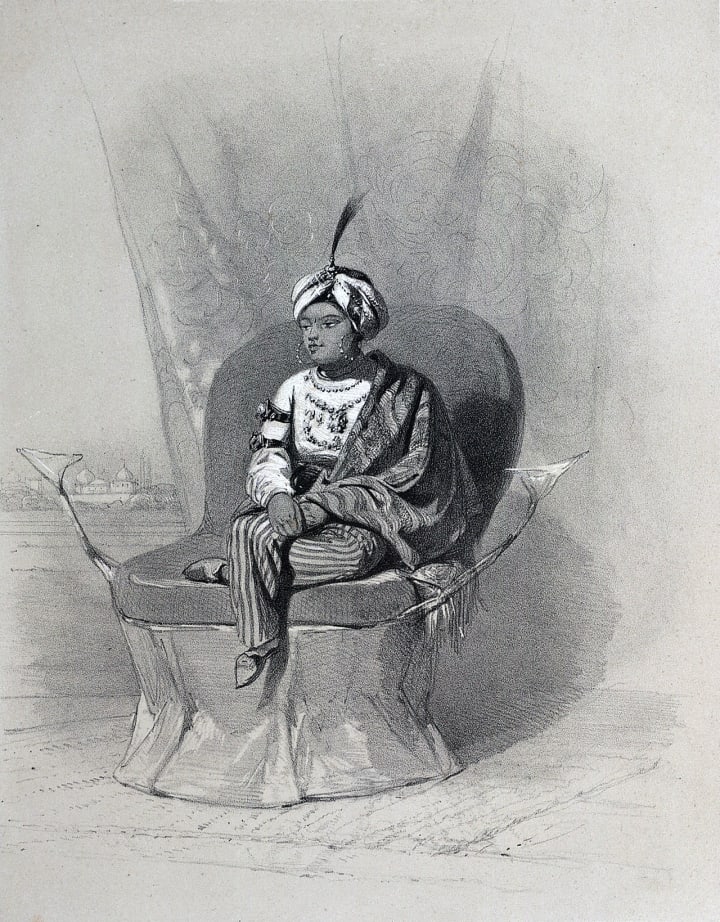
Seeing opportunity in the instability the death of Ranjit Singh caused, the British fought two successful wars against the the young Maharaja, the eventual outcome of which was the annexation of the kingdom and the removal of Duleep Singh as its sovereign. Separated from his mother, who was exiled to Nepal, Duleep Singh became a prisoner of the British. Eventually, he was put into the care of a Christian missionary.
He was 10 years old.
Under British watch, access to young Duleep Singh was tightly controlled and monitored. Cut off from his people, language and his culture, he was completely alone, with strangers. He was made to study Christianity, and converted shortly before being exiled to England.
He was 15 years old.
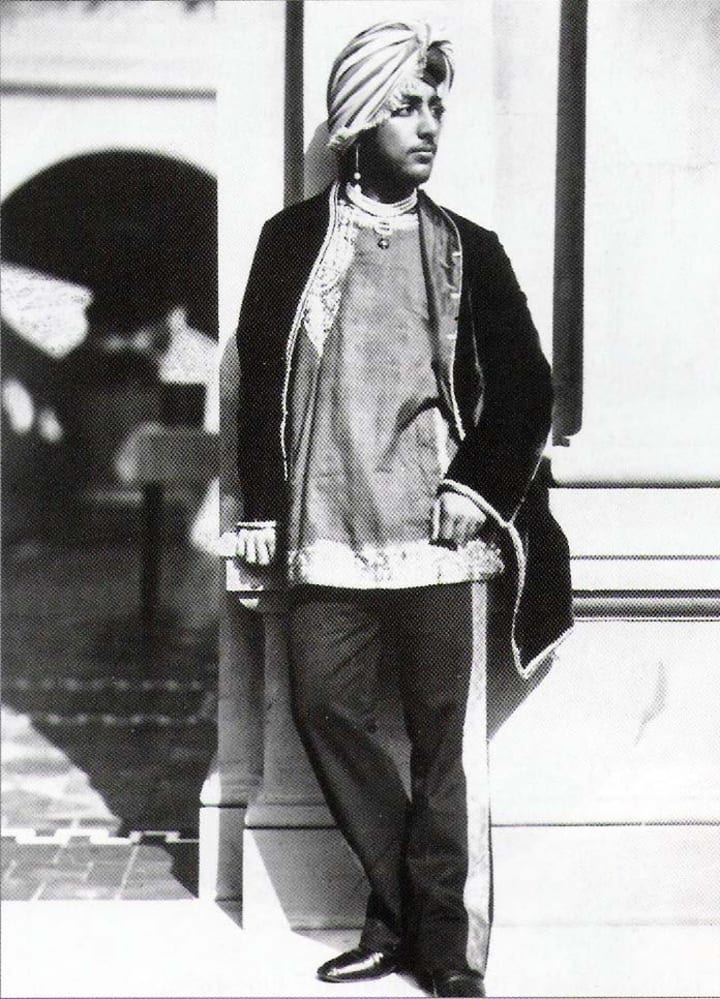
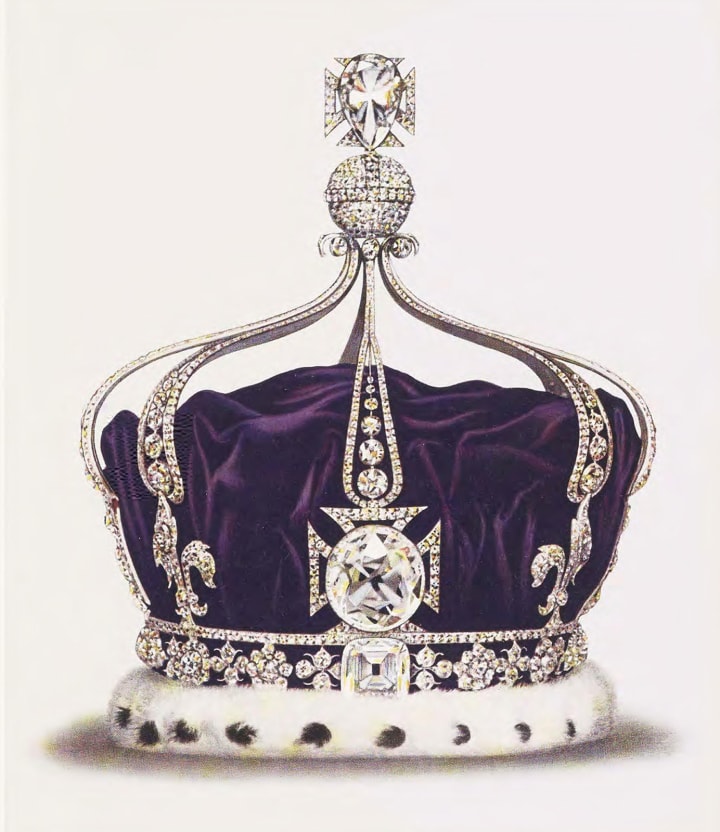
In England, Queen Victoria became quite fond of the young king. He lived the life of an English gentleman, and was commonly known as “The Black Prince” by the upper echelons of British society. It was during this time that the Kohinoor diamond, considered the largest diamond to ever be discovered, was presented to Queen Victoria by the young Maharaja as a gift. Many argue this was all just a show, for Duleep Singh really had no choice - he was essentially a captive of the British and was dependent on them. This beautiful treasure was then cut down to make it more appealing to European standards. A portion of this magnificent diamond now sits in the late Queen Mother’s crown. To this day, there is debate about who this precious jewel truly belongs to, with England, India, Pakistan and Afghanistan being among the countries claiming it to be rightfully theirs (I wouldn't feel right if I didn't apologize for a third time here, dear reader, because I've digressed from the original purpose of this piece. Let's get back to our story about the unfortunate life of Maharaja Duleep Singh).
Duleep Singh was given a generous allowance by Queen Victoria, and eventually provided an estate in Suffolk. There, the Maharaja lived with his wife and had multiple children. Unfortunately, none of his lineage survive today (some historians believe the British had a part to play in this), but at the sake of having to apologize for the fourth time, I'll just say that that’s a different story altogether.
Despite living a life of relative luxury, something in Duleep Singh still longed for his what he had left behind. He made several attempts at re-connecting with his exiled mother, all of which were denied by the British. When she was no longer deemed a threat, the British allowed Duleep Singh to travel to Nepal to retrieve his mother and bring her back to England, where she lived out the remainder of her days.
Duleep Singh also attempted to return to India multiple times, all of which were also stopped by the British. Throughout his lifetime, he was only allowed two tightly controlled visits to India, the first being to transit to retrieve his mother from Nepal, and the second being to return her ashes after her death.
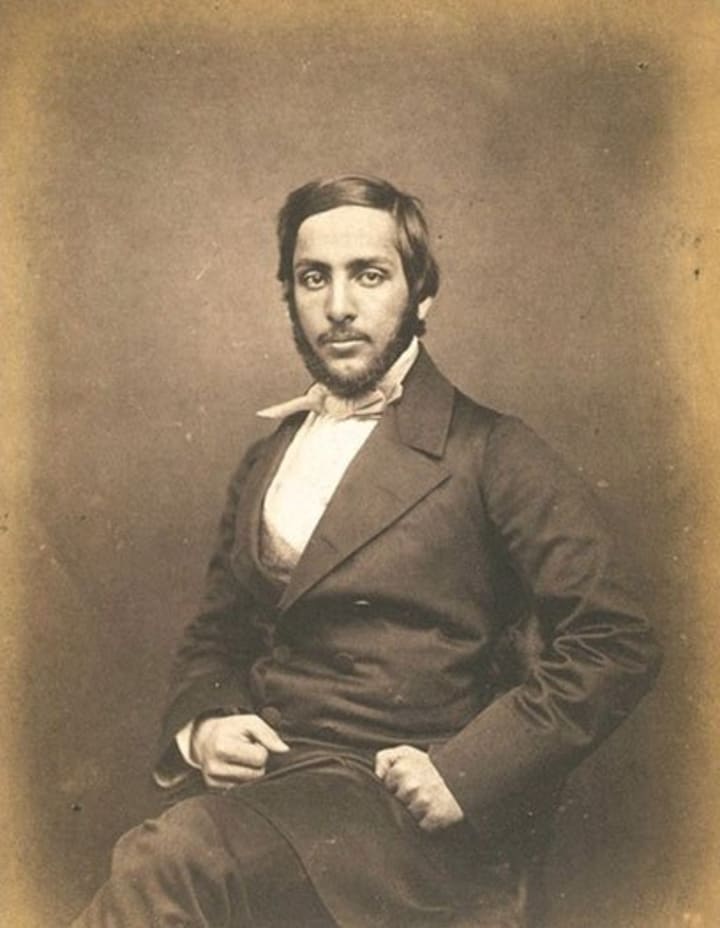
Eventually, realizing that he was nothing more than a puppet of the British, Duleep Singh re-embraced the faith of his forefathers, and began to organize a movement to attempt to get his kingdom back.
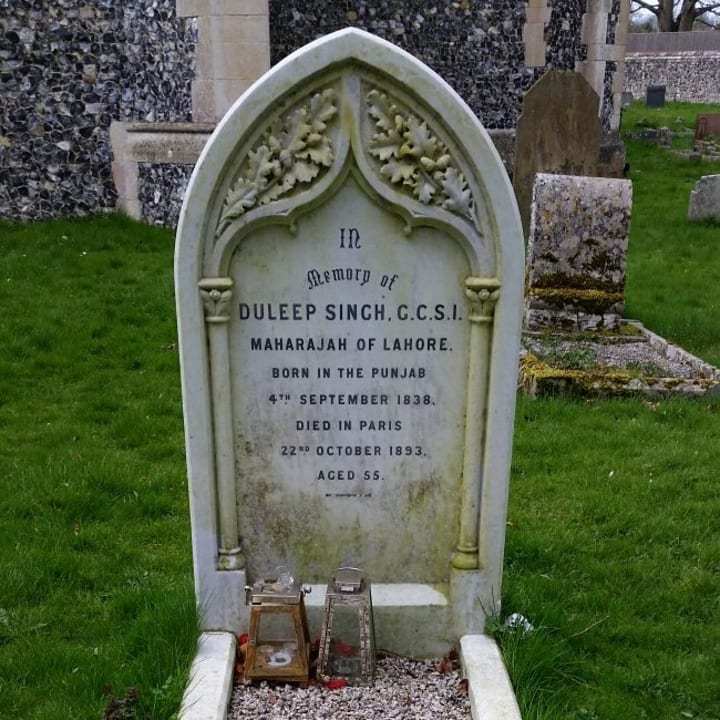
I wish this story had a happy ending, but as I stated at the outset, it doesn’t. I’d love to tell you that Maharaja Duleep Singh was restored as the head of the empire that was rightly his, but he wasn’t. Instead, he died broke and alone, in a run-down Paris hotel in 1893.
He was 55 years old.
Today, the rightful ruler of a once mighty kingdom is buried in the cemetery of Elveden Church, not far from the estate he once owned - thousands of miles from his true home. Whereas his father and other great kings in both India and across the world have elaborate mausoleums and temples to commemorate their final resting places, he has a simple tombstone.
On a visit to England in 2018, I had the great privilege of visiting his gravesite to pay my respects. As I stood before his grave, I couldn’t help but think of the tragic life this man had led. He was a king - my king, and the rightful heir to a mighty empire, yet here he was, buried in the English countryside.
I wondered what he would think if he was able to see what had happened to his people and land. His once mighty kingdom was split during partition in 1947, when the British left India. Half remained within India, but his capital (Lahore) was assigned to the newly formed country of Pakistan. Whereas his father had created a kingdom which by all accounts was one of equality, with Hindus, Muslims and Sikhs being encouraged to live in harmony, this partition resulted in horrific communal violence. Some estimate up to two millon people lost their lives, and up to twenty million were displaced. Neighbours who had lived in harmony for generations suddenly became enemies, solely on the basis of faith. People like myself who trace our roots back to his kingdom now have to cross borders when we visit the land of our ancestors, all to see places that played a key part in our community's history.
Hence my frustration. I don’t lay blame solely on the British for what happened to him, but they had a part to play. I don’t lay blame solely on those vying for control of his father’s kingdom either, but they too had a part to play. Duleep Singh was failed by so many people, on so many different levels. He became a piece in an intricate game of greed, and ended up living a life of lies, all by no choice of his own. He may now be gone, but people like myself will always wonder what things would look like had Maharaja Duleep Singh’s fate unravelled differently.
Now that you know this tidbit of history, try to make some time to pay your respects to Maharaja Duleep Singh if you’re ever in England. Take a drive through the English countryside and think about how strange this land must have been for him to look at when he first arrived.
Lay a flower on his grave.
Say a prayer.
Close your eyes and think of the pain he went through.
Pay your respects to this forgotten king of a once mighty empire, and hope that no child has to ever go through what he did.
About the Creator
Gurp H.
Meditations on life.
Twitter: @forgeofman
Crude Oil Prices and the Cost of Everyday Survival
Every morning, before most of us check the weather, global markets are already reacting to crude oil prices. The numbers rise and fall quietly on trading screens, yet they shape how we live. They influence how much it costs to drive to work, ship groceries across states, or heat a small apartment during winter.
By Muqadas khan5 days ago in FYI
"Scream 7" (2026): Running out of Fresh Screams
This is the seventh time we’ve had a Ghostface crisis. Scream 7 is the latest edition of the Scream franchise. Sydney Prescott and her family are under attack by another anonymous killer dressed in a Ghostface costume. While having issues with her daughter, Tatum, they run from the bloody murders, trying to determine who is behind it all.
By Marielle Sabbag6 days ago in Horror




Comments
There are no comments for this story
Be the first to respond and start the conversation.