
The Forbidden Mystery Beneath the Grand Canyon
Did an Ancient Underground City Really Exist in One of Earth’s Most Iconic Landscapes?

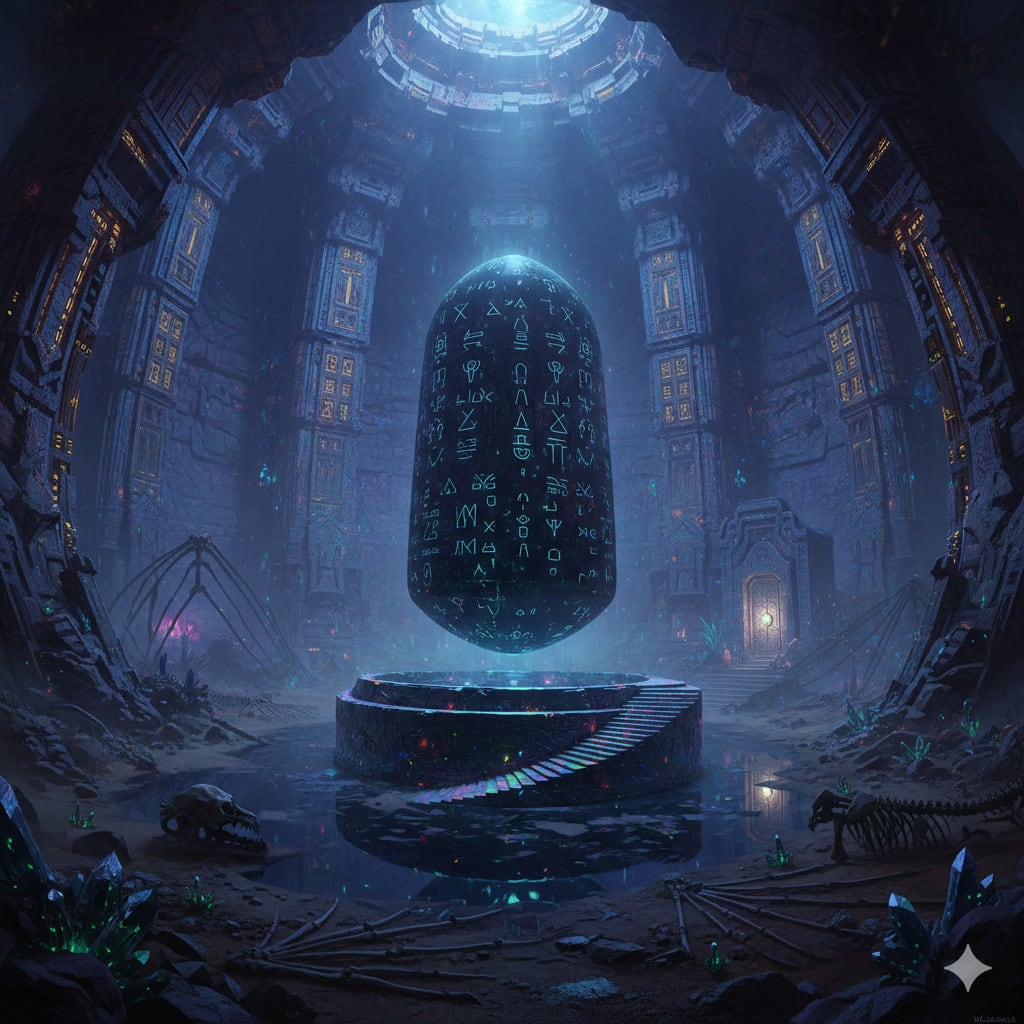
The Grand Canyon isn’t just massive, it’s mysterious.
Stretching 277 miles long, up to 18 miles wide, and plunging more than 6,000 feet deep, it’s one of those places that makes you feel small… and strangely curious. Many visitors describe a spiritual or unexplainable vibe, as if the canyon is quietly guarding secrets we haven’t uncovered yet.
And one story, buried in a 1909 newspaper, suggests it might be hiding something far bigger than we ever imagined.
A Lost Story from 1909 That Refuses to Die
On April 5, 1909, the Arizona Gazette published a front-page article that sounds more like science fiction than history. It claimed an entire underground city had been discovered inside the Grand Canyon, specifically in the Marble Canyon region.
The explorer behind the story was a man named G. E. Kincaid, who reportedly worked under the financial backing of the Smithsonian Institution.
That alone raises eyebrows.
The Discovery Deep Inside the Canyon Walls
According to the article, Kincaid was traveling alone along the Colorado River, officially searching for “minerals.” At the time, gold mining was forbidden in the Grand Canyon, so many believe this was simply a safer way to describe his true intentions.
While navigating the canyon, he noticed unusual stains and openings in the rock face, about 2,000 feet above the river and roughly 40 miles from Crystal Canyon.
What he found next was unbelievable.
Hundreds of Rooms Hidden Underground
Kincaid claimed the cave entrance led to a massive underground complex containing:
- Hundreds of interconnected rooms
- Long passageways carved with precision
- Rooms the size of modern living spaces, some as large as 30×40 feet
- Oval-shaped doors and advanced ventilation systems
- Walls over 3.5 feet thick
This wasn’t a natural cave.
It was designed.
Artifacts That Shouldn’t Exist There
Inside these rooms, explorers reportedly found weapons, tools, and copper instruments. But the most shocking discoveries were cultural items that didn’t belong anywhere near North America.
The article described:
- A large Buddhist statue, seated cross-legged with lotus flowers
- Ancient Egyptian artifacts, including urns, cups, and vases made of copper and gold
- Hieroglyphic carvings etched above doorways and into stone tablets
If true, this discovery would rewrite human history.
The Chamber of the Dead
One of the largest chambers reportedly contained mummified bodies.
Here’s what made it even stranger:
- All the mummies were male
- No women or children were found
- Bodies were wrapped in bark fabric and covered with clay
This led researchers to believe the area may have been a warrior barracks or ceremonial burial site.
The city was estimated to be large enough to house around 50,000 people.
Would This Change Everything We Know About History?
If ancient Egyptians, or Asian civilizations, reached the Americas long before Columbus, it would force historians to rethink:
- Who first reached North America
- Ancient seafaring technology
- The true scope of early global exploration
Surprisingly, evidence suggests this idea isn’t as impossible as it sounds.
Ancient Egyptians and the Open Ocean
In 2011, archaeologists discovered ancient Egyptian docks and ships along the Red Sea coast, proving they were capable of long-distance sea travel.
Even more intriguing are ancient wall carvings showing ships navigating rough ocean waves, carrying exotic plants and animals from a mysterious land known as Punt, or “The Land of the Gods.”
No one has ever definitively located Punt.
Some wonder, could it have been somewhere in the Americas?
Native American Legends That Echo the Same Story
The Hopi people, who have lived in the Grand Canyon region for thousands of years, tell legends of the Ant People, advanced beings who guided them into underground caves during times of disaster.
These beings reportedly:
- Provided food and shelter
- Taught advanced food storage techniques
- Lived beneath the earth
An eerie coincidence… or something more?
The Cocaine Mummy Mystery
In 1992, German researcher Dr. Svetlana Balabanova discovered traces of cocaine and tobacco in Egyptian mummies over 3,000 years old.
There was just one problem.
Both substances were native only to the Americas at that time.
Her findings were met with harsh backlash until Dr. Rosalie David, a respected Egyptologist, confirmed the results using the same tests.
So how did American plants end up in ancient Egypt?
Where Are the Artifacts Now?
When researchers contacted the Smithsonian Institution, officials denied any involvement, stating:
“No Egyptian artifacts of any kind have ever been found in North or South America.”
No official records of Kincaid or Professor S. A. Jordan exist within Smithsonian archives.
So what happened?
Cover-Up… or Just a Hoax?
If the story is real, some believe the discovery may have been suppressed to avoid:
Destabilizing established history
Undermining educational institutions
Forcing humanity to question everything it’s been taught
Or… it could simply be one of history’s most elaborate hoaxes.
So, What Do You Think?
Is there really a lost underground city beneath the Grand Canyon, or is this just a mystery that grew larger with time?
Either way, one thing is certain:
The Grand Canyon may still be hiding secrets we haven’t even begun to understand.
And maybe… that’s what makes it so fascinating.
.
.
.
.
.
.
.
.
.
.
.
.
.
.
Grand Canyon mystery, underground city Grand Canyon, Smithsonian cover-up, ancient civilizations in America, Egyptians in the Americas, Grand Canyon secrets, lost ancient cities, forbidden archaeology.
About the Creator
Areeba Umair
Writing stories that blend fiction and history, exploring the past with a touch of imagination.
Keep reading
More stories from Areeba Umair and writers in FYI and other communities.
Six Everyday Human Mysteries Science Still Can’t Fully Explain
Science has done some truly wild things. We’ve mapped the human genome, found water flowing on Mars, and even managed to play golf on the Moon. And yet, somehow, there are still everyday things happening inside our own bodies that scientists don’t completely understand.
By Areeba Umairabout 12 hours ago in FYI
The Local Business Growth Blueprint: Dominating Your Neighborhood in 2026
For many entrepreneurs, the digital world feels like a global stage. We’re told to "think big," reach across borders, and scale to the moon. But for the coffee shop on the corner, the boutique in the arts district, or the family-run plumbing service, the most important "world" is the ten-mile radius around their front door.
By Digistir360a day ago in FYI
📢 Raise Your Voice Thread: 02/05/2026
Our “Raise Your Voice Threads” are hosted most alternating Thursdays at 12PM ET to offer creators more avenues to uncover exceptional stories on Vocal. As we are continuously searching for fresh creators and inspiring stories, this thread provides an opportunity to exchange and discuss the stories that have moved and motivated us on Vocal.
By Raise Your Voice by Vocal6 days ago in Resources




Comments
There are no comments for this story
Be the first to respond and start the conversation.