
Six Everyday Human Mysteries Science Still Can’t Fully Explain
From sudden sleep jerks to contagious yawns, these bizarre human behaviors continue to confuse scientists even today.

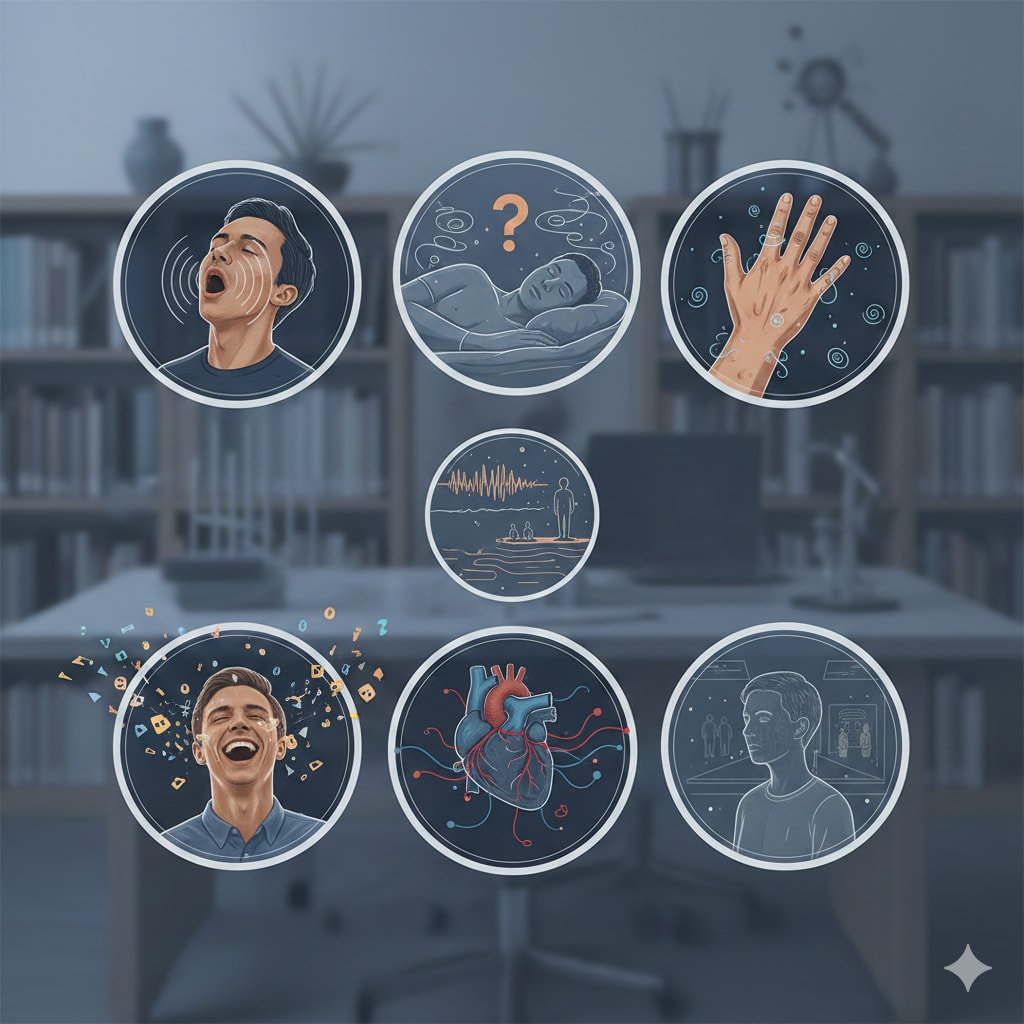
Science has done some truly wild things. We’ve mapped the human genome, found water flowing on Mars, and even managed to play golf on the Moon. And yet, somehow, there are still everyday things happening inside our own bodies that scientists don’t completely understand.
Yes, you are still a mystery.
Even now, researchers admit that several common human behaviors remain unsolved. Here are six strange things the human body does that science still can’t fully explain.
1. Hypnic Jerks: That Sudden “Falling” Feeling
You’re lying in bed. Or sitting in a boring meeting. Or pretending to pay attention in class. You start drifting off…
BAM. You feel like you’re falling, and your whole body jerks awake.
That’s called a hypnic jerk.
No one knows exactly why it happens. There are only theories.
One idea suggests it’s a misfire in the nervous system as your body transitions from being awake to asleep. Another, more evolutionary theory, claims it’s a leftover survival reflex from when our ancestors slept in trees, basically a built-in “don’t fall to your death” alarm.
Bonus fact: hypnic jerks are also unintentionally hilarious and have a strange way of breaking awkward moments. Sometimes, science delivers comedy whether it wants to or not.
2. Sun Sneezing: Why Bright Light Makes You Achoo
Ever walk out of a dark room into bright sunlight and immediately start sneezing?
That’s known as sun sneezing, or officially (brace yourself):
Autosomal Dominant Compulsive Helio-Ophthalmic Outburst, thankfully shortened to ACHOO syndrome.
Scientists believe this reflex is genetic, but the exact reason it happens is still unclear. The most popular explanation involves the trigeminal nerve, which connects the eyes and nose. When bright light overstimulates the eyes, the brain gets confused and triggers a sneeze.
Sounds harmless, right? Not always.
Since sneezing forces your eyes shut for a split second, this condition can be dangerous for drivers, pilots, athletes, or anyone doing something that requires constant visual focus.
3. The Placebo Effect: Healing With Belief Alone
The placebo effect might be one of the most mind-blowing mysteries in modern science.
In simple terms, it happens when a fake treatment, like a sugar pill or saline solution, actually improves a patient’s condition just because they believe it will.
Studies have shown that placebo treatments help with everything from pain and colds to serious medical conditions. Even stranger? Sometimes the placebo still works even when the patient knows it’s fake.
One famous 2002 study involving knee surgery found that patients who underwent sham surgeries (just an incision, no actual procedure) improved just as much as those who had real surgery.
The conclusion?
The human mind may be far more powerful than we currently understand.
4. Yawning: Why You Can’t Stop Once It Starts
Humans yawn. Animals yawn. Even unborn babies yawn in the womb.
And yet, no one knows exactly why.
One popular idea is that yawning helps keep us alert by increasing movement and physiological activity. But the weirdest part? Yawns are contagious.
You can “catch” a yawn just by seeing one, thinking about one… or reading about one (sorry about that).
Scientists still don’t know why yawning spreads so easily, but it may be linked to social bonding or empathy.
5. Blushing: A Uniquely Human Reaction
Humans are the only primates that blush.
Blushing usually happens during moments of embarrassment, shame, or when we’re caught lying, and it’s incredibly hard to control.
One theory suggests blushing evolved as a way to signal submission or appeasement in social situations. But that explanation doesn’t fully hold up, since everyone blushes, even confident or dominant individuals.
Why would evolution design such an obvious signal of vulnerability?
Science still doesn’t have a clear answer.
6. Sleep: The Biggest Mystery of All
We spend one-third of our lives asleep. Without it, we become irritable, confused, and eventually, we can die.
And yet, no one truly knows why we sleep.
Theories range from memory consolidation and brain maintenance to repairing cellular damage and promoting longevity. Some scientists even call sleep one of the greatest unsolved mysteries in science.
What we do know is this: sleep is essential, even if its true purpose remains frustratingly unclear.
Why It’s Okay That Science Doesn’t Have All the Answers
Some people get uncomfortable when they hear that science can’t explain everything yet. But honestly? That’s not a weakness.
It’s a reminder that mystery still exists, and curiosity is what pushes discovery forward. Science will figure out many of these things someday, but staying humble and open to the unknown is part of the journey.
And until then, we get to enjoy the weirdness of being human.
.
.
.
.
.
.
.
.
.
.
.
.
.
human body mysteries, things science can’t explain, hypnic jerk, placebo effect, sun sneezing, why do we yawn, why do humans blush, mysteries of sleep, strange human behaviors
About the Creator
Areeba Umair
Writing stories that blend fiction and history, exploring the past with a touch of imagination.
Keep reading
More stories from Areeba Umair and writers in FYI and other communities.
Did a 7-Year-Old Just Find Excalibur? A King Arthur Legend Comes Back to Life
Why King Arthur Is Everywhere Again Lately, it feels like King Arthur is having a serious comeback. Movies, reboots, and reimagined legends are popping up everywhere, from King Arthur: Legend of the Sword to Arthur & Merlin, and even unexpected appearances in big franchise films.
By Areeba Umair19 days ago in FYI
Analyse this!
Wanna know how to improve your writing? There is a simple, quick, tried and tested method. Tried and tested by who? By me, as it happens, and I can guarantee that it will work for you. I know what I am talking about. Not always, of course, but certainly in this case.
By Raymond G. Taylor4 days ago in Writers




Comments
There are no comments for this story
Be the first to respond and start the conversation.