
📝 The Empathy Deficit: Why We Feel Less in a Hyperconnected World
Social media brought us closer, but at the cost of our emotional bandwidth.

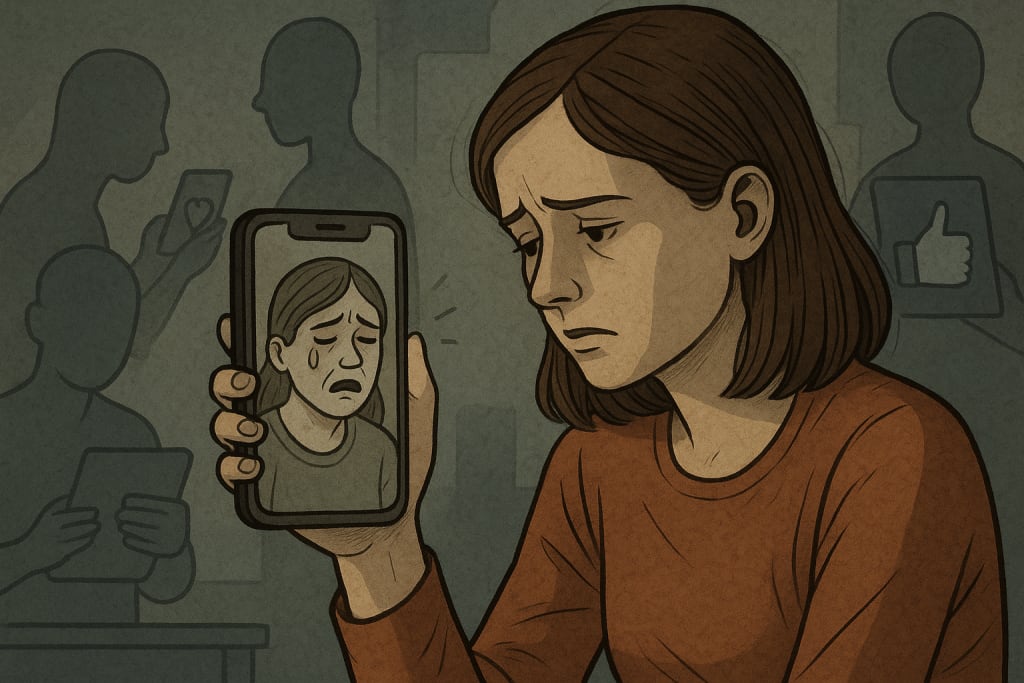
We have never been more connected—and never felt more alone.
With a tap, we can message a friend across the world. We scroll through hundreds of faces a day, double-tapping to "like" moments we were never part of. We share stories, emojis, and reactions. And yet, when something truly painful happens—loss, fear, grief—we often feel as though no one really understands.
Empathy, once the cornerstone of human connection, is now thinning under the weight of constant digital contact. We are surrounded by people, but rarely with them. In the era of hyperconnectivity, we’re not emotionally starving—we’re emotionally overloaded, and somehow still undernourished.
🤳 The Illusion of Intimacy
Social media platforms were designed to replicate and enhance our social lives—but they ended up distorting them. A carefully curated Instagram story or a TikTok about mental health may generate thousands of likes, but empathy isn’t measured in engagement metrics.
When we see someone crying on a screen, we may pause—but rarely reach out. We’re observers, not participants. We “feel bad,” but we don’t feel with.
This is what psychologists call empathy fatigue—when our exposure to emotional content outpaces our ability to process and respond meaningfully.
🧠 How Technology Hijacks Empathy
Empathy is neurologically complex. It relies on:
Mirror neurons (allowing us to feel another’s pain),
Cognitive empathy (understanding what others feel),
and emotional empathy (sharing their emotion).
But digital communication bypasses many of the nonverbal cues our brain relies on—tone, posture, eye contact. A crying emoji doesn't activate the same neural circuits as a trembling voice or teary eyes. The result? We misunderstand more, and care less.
Even worse, algorithms reward content that provokes emotions—not nurtures them. Outrage spreads faster than compassion. Misinformation gains more traction than nuance. And as we’re bombarded with tragedy after tragedy, crisis after crisis, we develop a defense mechanism: numbness.
🧍 Empathy vs. Exposure
In the analog world, when someone cried in front of you, your body reacted—your chest tightened, your face mirrored theirs. You felt compelled to respond.
But online, we scroll past a refugee crisis to a cat meme in two seconds flat. Our exposure to global suffering is constant, but fleeting. We’ve developed emotional calluses.
As author Roxane Gay puts it:
“The world is burning, and I’m clicking through it on my lunch break.”
📉 The Decline of Deep Listening
In a fast-scrolling world, silence is suspicious, and attention spans are shrinking. Conversations are fragmented by notifications. Even when we're physically present, we’re often mentally absent—our minds tugged by distant pings and vibrations.
This erosion of deep listening has real consequences. Empathy begins when we stop talking and start listening—not just hearing words, but noticing pauses, shifts in tone, and unspoken meanings.
But in digital communication, silence is awkward. So we fill it with gifs, “lols,” and pre-programmed reactions. We don’t respond to pain—we reply to content.
📲 The Empathy Economy
Ironically, tech companies know empathy is profitable.
Apps like Calm, Headspace, and even AI-powered therapists are being marketed as emotional relief tools in an overstimulated world. Influencers share vulnerable stories not just to connect—but to engage. Brands use “relatability” as a tactic, blurring the line between sincerity and strategy.
Empathy has become a performance.
We’ve learned to cry on camera, to share trauma as content, to capitalize on collective grief for viral visibility. But performance doesn’t always equal presence. And shared pain online doesn’t always lead to healing offline.
👶 What About the Next Generation?
Children are now growing up in a world where eye contact is optional, and most emotional cues are filtered. Studies show a measurable decline in empathic concern among teens over the past two decades—particularly among those with higher screen time and less in-person interaction.
If we don’t model real empathy—in disagreement, in boredom, in everyday silence—how will they learn it?
🧘 Can We Reclaim Empathy?
Yes—but it requires intentionality.
Empathy isn’t passive. It’s not simply “feeling bad for someone.” It’s the active work of imagining, engaging, and responding—even when it’s inconvenient.
Here’s how we start:
Be present: When talking to someone—put the phone down. Literally. Your undivided attention is rare, and it matters.
Listen to understand: Not to fix. Not to advise. Just to understand. Real empathy has no agenda.
Resist performative compassion: You don’t have to post your sadness to prove you care.
Seek nuance: Don’t reduce people to opinions or sides. Empathy lives in the complexity.
Practice curiosity: Ask, “What is this person really feeling beneath their words?”
🌐 The Paradox of Connection
In our pursuit of global connection, we’ve neglected local compassion. In our hunger for viral awareness, we’ve forgotten quiet care.
Technology isn’t the enemy of empathy. But without boundaries, it numbs the very thing that makes us human. We were never meant to feel everything all the time. That’s not empathy—that’s exhaustion.
So maybe the answer isn’t less technology—but more intentional humanity within it.
About the Creator
Ahmet Kıvanç Demirkıran
As a technology and innovation enthusiast, I aim to bring fresh perspectives to my readers, drawing from my experience.
Keep reading
More stories from Ahmet Kıvanç Demirkıran and writers in FYI and other communities.
📝 Memory for Sale: When Nostalgia Becomes a Business Model
Nostalgia used to be a fleeting emotion—a sudden warmth when you smelled your grandmother’s cookies or an old song on the radio that transported you to high school days. But in today’s algorithm-driven, consumer-focused world, nostalgia is no longer a personal feeling. It’s a commodity. A business model. A product line with a targeted ad campaign.
By Ahmet Kıvanç Demirkıran7 months ago in FYI
United States Glass Drinkware Market Size and Forecast 2025–2033
United States Glass Drinkware Market The United States Glass Drinkware Market is expected to reach US$ 7.99 billion by 2033, rising from US$ 3.7 billion in 2024, at a CAGR of 8.93% from 2025 to 2033. Growing consumer awareness of sustainability and reusable materials, the expansion of the hospitality and beverage industries, and the desire for high-end, fashionable glassware in both homes and foodservice settings are the main factors propelling the U.S. glass drinkware industry.
By jaiklin Fanandish7 days ago in FYI



Comments (2)
i love this
Brilliant 🦋🌼🦋