
The Dancing Plague of 1518
A Bizarre Historical Mystery

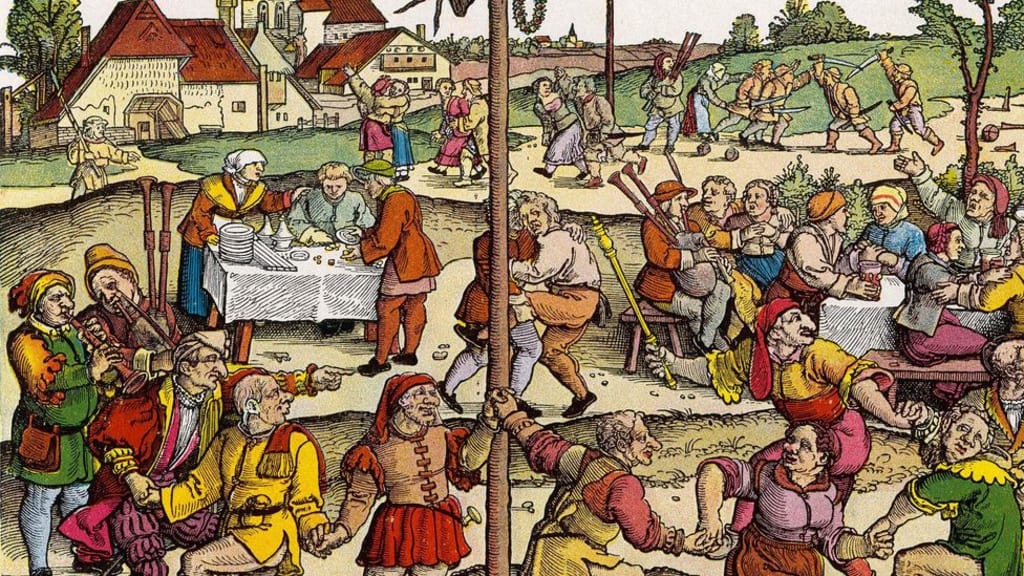
The Dancing Plague of 1518: A Bizarre Historical Mystery
Subtitle: Exploring the Unexplained Epidemic That Made People Dance Until They Dropped
In the summer of 1518, the city of Strasbourg in modern-day France witnessed a bizarre phenomenon that has puzzled historians and scientists for centuries. A woman named Frau Troffea began dancing uncontrollably in the streets, and soon, others joined her, dancing for hours and even days without rest. This mysterious event came to be known as the Dancing Plague of 1518, and it remains one of the strangest epidemics in history.
The outbreak of the Dancing Plague began in July 1518 when a woman named Frau Troffea began dancing in the streets of Strasbourg. She continued to dance for days on end, and soon, other people in the city began to join her. Within a week, over 30 people were dancing in the streets, and within a month, the number had swelled to over 400.
The dancers showed no signs of stopping, despite the fact that many of them were exhausted, dehydrated, and suffering from blisters and other injuries. Some of the dancers even died from exhaustion or heart attacks. The authorities in Strasbourg were at a loss as to what to do, and some even believed that the dancing was a form of divine punishment for the sins of the city.
To try and stop the outbreak, the city council decided to encourage the dancers to keep dancing, hoping that it would help them get rid of the "toxins" that were causing the illness. They even hired musicians and set up a stage to encourage the dancers. However, this only made the situation worse, and more people joined in the dancing.
So, what caused the Dancing Plague of 1518? There have been many theories over the years, but no one really knows for sure. Some historians believe that the dancing was a form of mass hysteria, caused by the stress and anxiety of living in a time of great social and political upheaval. Others have suggested that the dancers were suffering from ergot poisoning, a condition caused by eating bread contaminated with a fungus that can cause hallucinations, convulsions, and other symptoms.
Another theory is that the dancing was a form of protest against the social and political conditions of the time. Strasbourg was a city of great inequality, with a small ruling class controlling much of the wealth and power. The dancers may have been expressing their frustration and anger through their movements, as a way of protesting against the injustices of their society.
Whatever the cause, the Dancing Plague of 1518 remains a fascinating and mysterious historical event. It has captured the imaginations of artists, writers, and historians for centuries, and continues to be studied and debated to this day. While we may never know for sure what caused the outbreak, the Dancing Plague of 1518 remains a powerful reminder of the strange and unpredictable nature of human behavior, and the mysteries that still exist in our world.
One common myth about the Dancing Plague of 1518 is that the dancers were all women. While it is true that many of the dancers were women, there were also a significant number of men who joined in the dancing. In fact, contemporary accounts of the outbreak mention both men and women dancing in the streets of Strasbourg.
Another myth is that the dancers were all affected by some kind of supernatural or demonic force. While some people at the time believed that the dancing was caused by possession or witchcraft, there is no evidence to support these claims. Most modern historians and scientists believe that the outbreak was caused by a combination of physical and psychological factors, rather than any kind of supernatural influence.
Finally, there is a myth that the dancing continued for months or even years, and that the number of people affected grew to include thousands of individuals. While the outbreak did last for several months, it eventually subsided, and there is no evidence to suggest that it continued for any longer than that. Additionally, while the number of people affected was significant, it was still relatively small in comparison to the population of Strasbourg at the time.
About the Creator
Keep reading
More stories from Tsar Banks and writers in FYI and other communities.
The Theory of Six Degrees of Separation
The concept of six degrees of separation is a theory that suggests that everyone in the world is connected to each other through a chain of no more than six people. This theory originated in the field of social network analysis and has since become a popular concept in pop culture and everyday conversation.
By Tsar Banks3 years ago in FYI



Comments
There are no comments for this story
Be the first to respond and start the conversation.