
"The Curse of Tutankhamun: The Strange and Deadly Legacy of the Boy Pharaoh"
Tutankhamun's tomb: a glimpse into ancient Egyptian history

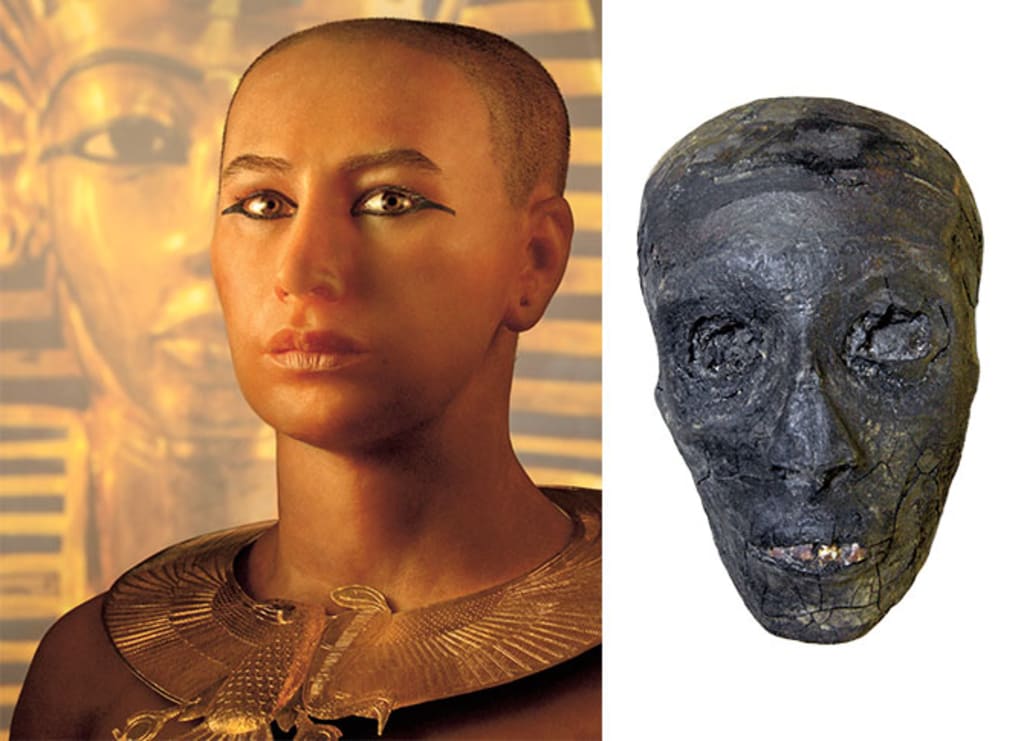
The story of Tutankhamun, the boy pharaoh who ruled Egypt for only nine years, is one of the most fascinating and mysterious stories of ancient history. But his legacy is not just one of wealth and power. Tutankhamun's tomb has long been associated with a deadly curse that seems to have claimed the lives of many who came into contact with it. In this article, we will explore the history of Tutankhamun and the curse that surrounds his tomb.
Tutankhamun was born around 1341 BCE and became pharaoh at the age of nine after the death of his father, Akhenaten. During his reign, Tutankhamun made many important changes to Egyptian religion and politics, including a return to the worship of the traditional gods and the moving of the capital back to Thebes.
Despite his importance as a ruler, Tutankhamun's reign was relatively short and he died at a young age, possibly around 19 years old. The cause of his death is still debated by historians and archaeologists, but it is generally believed that he died of illness or injury.
After Tutankhamun's death, he was buried in a tomb in the Valley of the Kings, near the city of Thebes. The tomb was filled with treasures and was intended to be a place where Tutankhamun's spirit could rest for eternity. But the tomb was also cursed, or so the story goes.
The idea of a curse associated with Tutankhamun's tomb was first popularized in the early 20th century, when a number of people associated with the discovery and excavation of the tomb died under mysterious circumstances. One of the most famous examples is that of Lord Carnarvon, the wealthy Englishman who financed the excavation of the tomb.
Lord Carnarvon died just a few months after the tomb was opened, from an infected mosquito bite on his cheek. Legend has it that when he died, the lights in Cairo went out and a strange howling noise was heard. The media seized on the story of the "mummy's curse," and soon people all over the world were talking about the dangers of disturbing the resting place of a pharaoh.
The reality, of course, is that Lord Carnarvon's death was most likely a result of the infection he suffered. But the idea of a curse associated with Tutankhamun's tomb has persisted, and many other deaths and accidents have been attributed to it over the years.
One of the most famous examples is that of Howard Carter, the archaeologist who discovered the tomb in 1922. Carter and his team had been working in the Valley of the Kings for many years, searching for Tutankhamun's tomb. When they finally found it, they were ecstatic, but also cautious. Carter is said to have told his team that they must be careful not to disturb the tomb's spirits.
Despite his warning, Carter and his team began to open the tomb, revealing the treasures that lay within. It was a moment of great excitement, but also great danger. As they worked, strange things began to happen. One of the workmen was bitten by a snake, and others began to fall ill with mysterious ailments. Even Carter himself was affected, suffering from a fever and a rash.
Despite these setbacks, Carter and his team continued to work in the tomb, uncovering more and more treasures. But as they did, they also became more and more convinced that the tomb was cursed. When Lord Carnarvon died, they were convinced that he had been a victim of the curse.
The idea of the curse of Tutankhamun has persisted over the years, with many more deaths and accidents being attributed to it. Some of these stories are undoubtedly true, while others are almost certainly exaggerated
One of the most famous stories of the curse is that of the American archaeologist Arthur Weigall. Weigall was an expert in Egyptian antiquities and was working in the Valley of the Kings when he heard about the curse of Tutankhamun. He scoffed at the idea, saying that he didn't believe in curses and that anyone who did was a fool.
But not long after making this statement, Weigall was involved in a car accident that left him severely injured. He was convinced that the curse had finally caught up with him, and he spent the rest of his life trying to convince others of the dangers of disturbing ancient tombs.
Other deaths associated with the curse include those of George Jay Gould, a wealthy American businessman who died of pneumonia after visiting the tomb, and the Egyptian prince Ali Kamel Fahmy Bey, who was murdered shortly after visiting the tomb.
Despite these stories, many experts believe that the curse of Tutankhamun is nothing more than a myth. There is no evidence to suggest that the pharaoh himself believed in curses, and many of the deaths associated with the curse can be explained by natural causes or by the dangers of working in the desert.
But even if the curse is not real, the story of Tutankhamun and his tomb remains one of the most fascinating and mysterious stories of ancient history. The treasures that were found in the tomb have given us a glimpse into the life of one of Egypt's most important pharaohs, and the story of the curse has captured the imaginations of people all over the world.
In recent years, there has been renewed interest in Tutankhamun and his legacy. In 2005, a team of scientists led by the Egyptian archaeologist Zahi Hawass began a new study of Tutankhamun's remains, using modern techniques to try to determine the cause of his death.
The study revealed that Tutankhamun had suffered from a number of health problems, including a broken leg and malaria. It is now believed that he died of complications related to these conditions, rather than from foul play or a curse.
Despite the debunking of the curse, the legend of Tutankhamun and his tomb continues to fascinate people all over the world. The treasures that were found in the tomb remain some of the most impressive artifacts of ancient Egypt, and the story of the curse has become a part of popular culture.
In the end, the curse of Tutankhamun may be nothing more than a story, a myth that has grown up around one of the most important figures in ancient history. But it is a story that has captured the imagination of people for generations, and it remains a fascinating part of the legacy of the boy pharaoh.
About the Creator
HEMA MALINI
"Wordsmith extraordinaire and content creator with a passion for storytelling and a commitment to delivering quality. Always striving to inform and inspire through the written word."
Keep reading
More stories from HEMA MALINI and writers in FYI and other communities.
"The Top Skincare Ingredients Every Woman Should Know About"
Skincare is an essential part of every woman's daily routine. But with so many products and ingredients available in the market, it can be challenging to know which ones to choose. The good news is that some skincare ingredients are more effective than others, and understanding their benefits can help you make better decisions about what products to use. In this article, we will discuss the top skincare ingredients every woman should know about.
By HEMA MALINI3 years ago in Blush
The Visionary Behind Modern Chhattisgarh
When Chhattisgarh was carved out as a separate state on 1 November 2000, the announcement marked only the beginning of a far more demanding journey. Creating a new state is not merely a political decision; it is an administrative test of the highest order. Systems must be built, institutions must be established, and continuity of governance must be ensured often under intense time pressure and public scrutiny.
By Muddasar Rasheed4 days ago in FYI




Comments
There are no comments for this story
Be the first to respond and start the conversation.