
The Church Above a Dragon's Lair and the Mysterious Rib It Holds
And it is not the only one in Italy

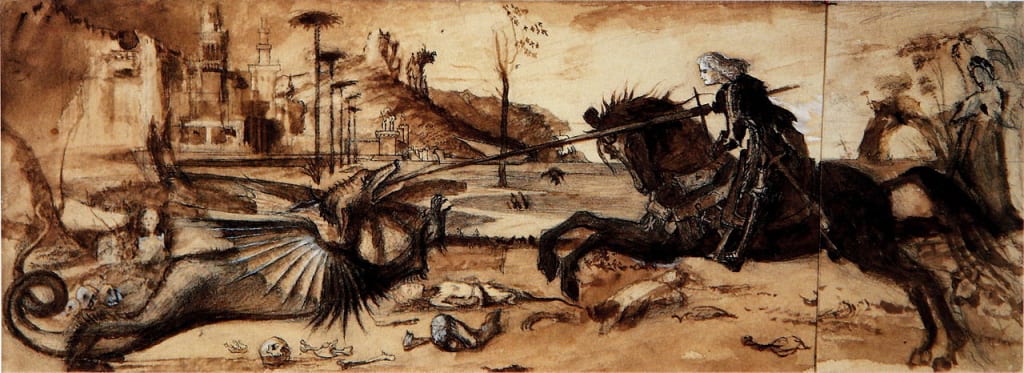
Saint George is probably the most famous dragon slayer, but he was not the only one. And unlike in his case, the other two slayings come with "proof".
The Dragon Problem
Once upon a time, there were two villages in Italy divided by a valley of river marshlands. The people of Ate and Tixa wanted to unite the lands and become one, but they had a problem. And no, it was not the lack of a bridge or a road.
You see, a dragon lived in those swamplands. To keep him appeased and away from their homes, villagers had to share their food and sacrifice their livestock.
Who knows how long this was going on. Years, decades, or maybe centuries... But one day both villages decided they had had enough and went on to look for a dragon slayer.
A Helping Hand
Saint Leucius of Brindisi was a priest and later a bishop who lived in the 2nd century. His origins remain unknown, but it is believed he was born somewhere in Eastern Europe.
However, he apparently grew up and received his education in Alexandria, Egypt. After his mother's death, Eupressius (his birthname) chose to follow a monastic path.
After the Virgin Mary appeared to him in a vision, Eupressius changed his name to Leucius and decided to preach the gospel to the pagan Romans. He traveled to the town of Brindisi in the Apulia region. His ability to summon rain during draught with prayers only soon converted locals and granted him the Bishop of Brindisi title.
This is probably where the villagers from Ate and Tixa found him. Why? Well, there were rumors that Leucius had successfully killed a dragon before, although nobody knows where or when.
So, the bishop arrived at the dragon's lair and managed to subdue it without any struggle. More so, Leucius leashed the dragon and brought it out for the villagers to see.
A Rib To Remember
For seven days, the poor chained dragon "entertained" people. On the eighth day, the bishop killed it, drained its blood, and gave the blood to the villagers to cure various diseases and fertilize the marshland that soon turned into prosperous farmland.
And finally, two villages merged into one.
Before parting ways, Leucius gave the people of Atessa one rib to remind them of the events. What happened to the rest of the dragon's body, is a mystery. However, that one bone is still on display in the church the villagers built on top of the dragon's lair.
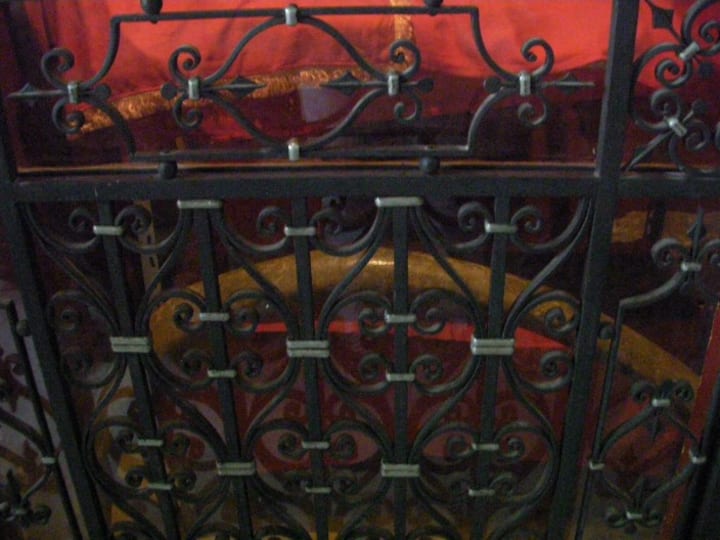
The rib that today lays in a glass box behind metal bars is widely considered today to be that of a mammoth. But it has never been tested, so everybody is free to believe what they like.
Meanwhile, the rib in the Cathedral of Saint Leucius is still a popular tourist attraction, and the dragon-slaying legend makes for an impressive story of Atessa's origins.

From South to North
As if one Italian church with a dragon's rib wasn't enough, there is actually a second one. And unlike Atessa's cathedral, the church of Santa Maria e San Donato near Venice holds not one but four dragon's bones.
Although it does not have a legend to tell, the church itself is an outstanding example of Byzantine architecture and one of the oldest churches in the Venetian lagoon. The church may have been built as early as the 7th century, and its still remaining mosaic floors date back to the 11th century.
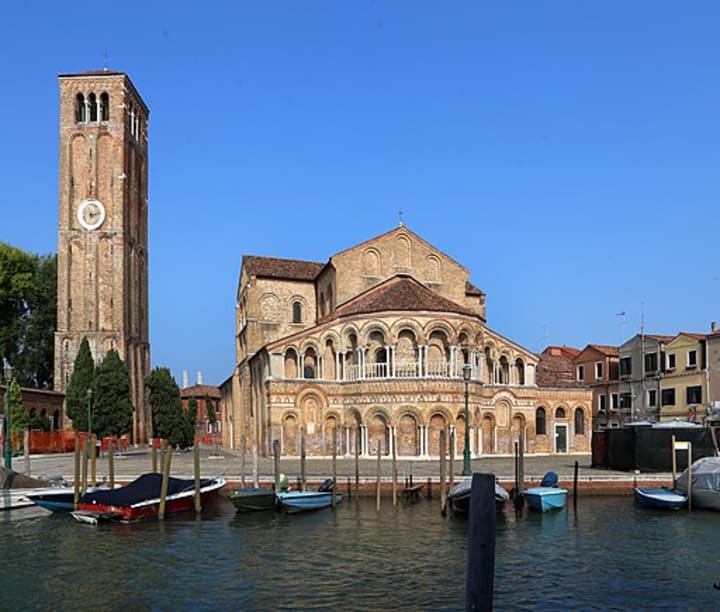
But how did the ribs end up there?
Apparently, the Church of Santa Maria was quarreling with a neighboring church about which one should be considered the "mother church" of Murano Island.
Until, in 1125, Venetian Doge Domenico Michele settled the conflict once and for all. He ordered the remains of a 4th century Greek martyr Saint Donatus of Euroea to be brought and placed as a relic in the church of Santa Maria. Having relics of a saint added an extension to its name and established its dominance.
And with Saint Donatus came the three ribs and a part of the vertebra of the dragon he supposedly killed.
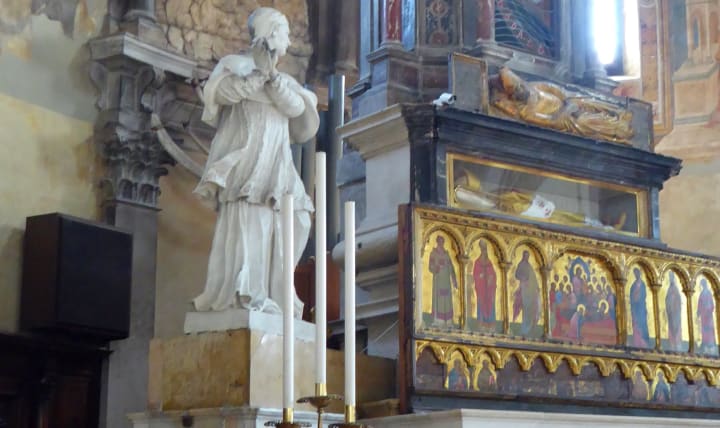
Today, over a meter long ribs and the vertebra that most likely belonged to a whale still hang behind the altar.
About the Creator
GD Madsen
A historian by education, a former journalist by profession, now living in the French countryside writing books and articles.



Comments
There are no comments for this story
Be the first to respond and start the conversation.