
The Art of Reading
Understanding the Brain’s Processing of Text

Introduction
In this essay, we will delve into the mysterious and fascinating world of reading. At first glance, reading seems to be a straightforward process. We look at letters on a page or screen, and we instantly recognize them as words. But what is actually happening in our brains when we read? How are we able to process complex ideas and emotions from a string of letters and words?
Reading is such a fundamental part of our lives that it is easy to take for granted. However, as we will see, the process of reading is far more complex than we might think. In fact, it involves a complex interplay of our eyes, brain, and the written word. In this essay, we will explore how the brain processes text, the role of illusions in reading, and how our brains have evolved to make reading possible.
The Illusion of Reading
Have you ever stopped to consider how your brain is processing the letters and words you are reading right now? When we look at letters on a page, our brain has to work hard to decipher what they mean. This is because there is an illusion at play that makes letters and words appear different than they actually are.
For example, consider the letters C and T. When we look at these letters, we assume they are the same height. However, if we lay them on top of each other, we see that the C is ever-so-slightly taller. The same is true for other letter pairs, such as E and S. The reason for this illusion is that letters with rounded tops have to be slightly taller than letters with flat tops in order to appear the same size. This illusion is present in just about everything we read, including different typefaces like Comic Sans.
Our brains are deceiving us when it comes to reading, but this illusion is necessary. Without it, words would look very strange, and our brains would struggle to make sense of them. We do not read with a ruler; we read with our brains. Our brains have evolved to interpret the written word in a way that makes it easy for us to understand.
The Müller-Lyer Illusion
Another well-known illusion that affects reading is the Müller-Lyer illusion. This illusion involves two lines that are the same length but appear to be different lengths due to the addition of arrows at the ends of one line. This illusion shows us that our brains can be easily fooled when it comes to visual perception.
What does this have to do with reading? It turns out that the Müller-Lyer illusion can help us understand how our brains process letters and words. If we turn the illusion on its side, we can see that the line with the arrows looks like the letter O, while the other line looks more like an I or a T. Our brains interpret round letters like O as being smaller than more square letters nearby. As a result, the O has to be made bigger to appear the same size as the other letters. This is just one example of how our brains have to work to interpret the written word.
How the Brain Processes Text
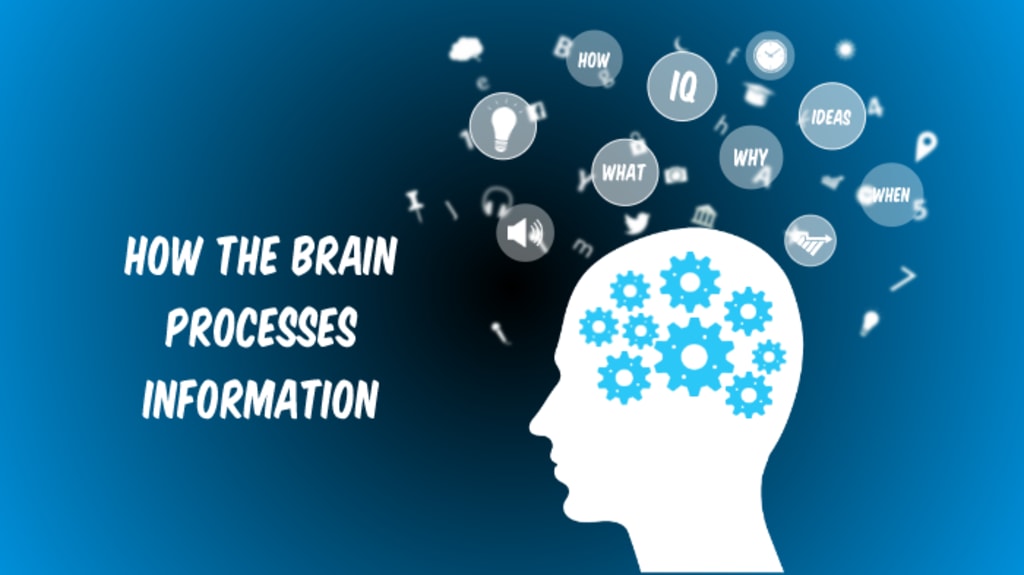
Reading involves several complex processes in the brain. When we look at a word, our eyes send signals to the visual cortex in the brain. The visual cortex processes this information and sends it to other parts of the brain, such as the language centers. The language centers decode the visual information and assign meaning to the word.
In addition to the visual cortex and language centers, other parts of the brain are involved in the reading process. For example, the Broca's area is involved in producing speech and is also important for language comprehension. The angular gyrus is involved in connecting visual information with language.
All of these areas of the brain work together seamlessly to make reading possible.
About the Creator
Keep reading
More stories from Tsar Banks and writers in FYI and other communities.
The Secret Life of Cats"
"The Secret Life of Cats" offers a captivating glimpse into the often unobserved behaviors and activities of domestic cats. When left to their own devices, cats engage in a range of intriguing behaviors that reveal their innate instincts and independent nature.
By Tsar Banks3 years ago in FYI
Wild Card Weekend Recap: What Happens Now?
I think I figured out why I love Wild Card Weekend so much. It's because it's the first playoff anything of the calendar year. The NFL season starts in the fall, and once upon a time, the champion was crowned either on or slightly before New Year's. The evolution of the NFL schedule has resulted in the playoffs starting just into the New Year, and currently, the final week of the season falls on the first weekend of the New Year, with Wild Card Weekend coming a week after that. So yes, chronologically, the NFL's Wild Card Weekend serves as the first playoff anything of the calendar year.
By Clyde E. Dawkins5 days ago in Unbalanced



Comments
There are no comments for this story
Be the first to respond and start the conversation.