

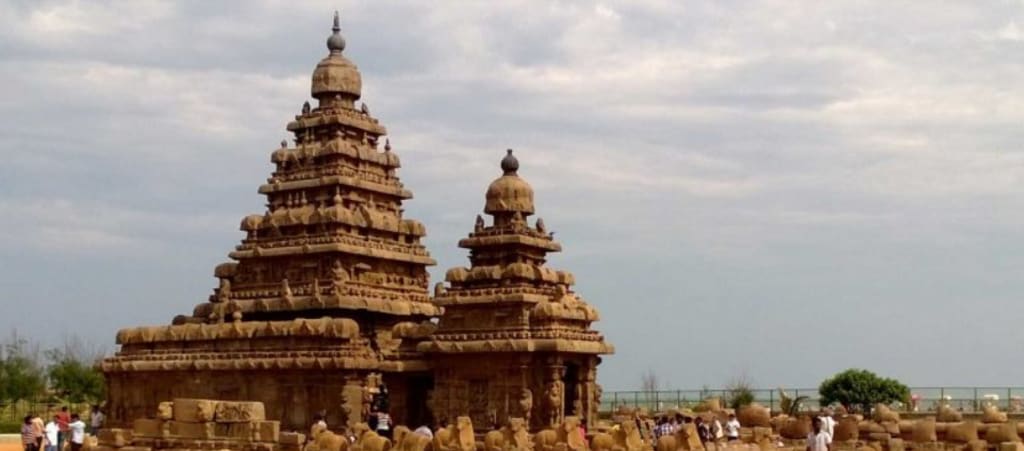
Once upon a time in southern India, there was a rich and vibrant culture called Tamil. It was a culture that valued family, education, and respect for tradition. The people of Tamil Nadu were proud of their heritage and passed down their customs and traditions from generation to generation.
One of the most important parts of Tamil culture was food. The people of Tamil Nadu were passionate about cooking and eating, and their cuisine was known for its bold and spicy flavors. They used fresh ingredients like coconut, tamarind, and turmeric to create dishes that were both delicious and healthy.
Another important aspect of Tamil culture was dance and music. The people of Tamil Nadu loved to dance and sing, and their traditional dance forms, such as Bharatanatyam, were an integral part of their cultural heritage. They used dance and music to tell stories, express their emotions, and celebrate life.
Tamil culture also placed a strong emphasis on education. The people of Tamil Nadu valued knowledge and believed that education was the key to success. They established schools and universities that were known for their high standards of learning, and many famous scholars and scientists came from Tamil Nadu.
Despite facing many challenges and changes over the years, Tamil culture has remained strong and vibrant. The people of Tamil Nadu continue to pass down their traditions and customs to future generations, and their culture continues to influence and inspire people all over the world.
As the years passed, Tamil culture continued to evolve and change. New customs and traditions were added, but the core values of family, education, and respect for tradition remained the same.
One of the biggest celebrations in Tamil culture was the festival of Pongal. This was a time for families to come together, share a meal, and give thanks for their blessings. People would decorate their homes with flowers, light candles, and prepare special dishes to mark the occasion.
Another important part of Tamil culture was the love for literature. The people of Tamil Nadu were passionate about reading and writing, and produced some of the greatest works of literature in the Tamil language. These works included poems, plays, and songs that celebrated life, love, and the beauty of nature.
As the world became more connected, Tamil culture began to spread beyond the borders of Tamil Nadu. People from other parts of India and around the world were exposed to Tamil customs and traditions, and many were inspired by the richness and beauty of the culture.
Today, Tamil culture continues to thrive and inspire people around the world. It is a testament to the strength and resilience of the Tamil people, who have worked hard to preserve their heritage and pass it down to future generations.
Tamil is a Dravidian language spoken by the Tamil people of India and Sri Lanka. It is one of the oldest surviving classical languages in the world, with a rich literary tradition spanning thousands of years.
Tamil has its own script, which is believed to be one of the most ancient writing systems in the world. It is used to write poems, songs, and other works of literature, as well as for everyday communication.
Tamil is known for its unique grammar, vocabulary, and pronunciation, which distinguish it from other languages in India and around the world. It has a complex system of conjugation and inflection, which allows speakers to convey a wide range of meanings and emotions.
Tamil is widely spoken in the Indian state of Tamil Nadu and in other parts of India, as well as in Sri Lanka and other countries with significant Tamil-speaking populations. It is one of the official languages of India and is recognized as a classical language by the Indian government.
The Tamil language has a rich cultural heritage, and it continues to play an important role in the daily lives of Tamil-speaking people. It is used to preserve and transmit their history, customs, and traditions from generation to generation.
About the Creator
Keep reading
More stories from Vinoth Sathiyavan and writers in FYI and other communities.
The Beauty of Becoming a Mother: Pavithra's First Pregnancy
Once upon a time, there was a young woman named Pavithra who had always dreamt of becoming a mother. She longed for the day when she would hold her little one in her arms, and finally, the day came. Pavithra found out she was pregnant and was overjoyed. She could not wait to start her journey as a mother.
By Vinoth Sathiyavan3 years ago in Motivation
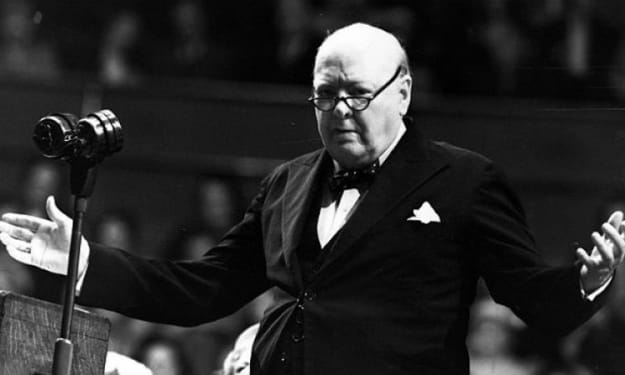
We Shall Never Surrender: The Speech That Turned Britain’s Darkest Hour Into Defiance
There are speeches that explain history, and then there are speeches that intervene in it. On June 4, 1940, Winston Churchill delivered one of the most consequential addresses ever spoken inside the House of Commons. Britain had just pulled off the miracle of Dunkirk—an evacuation that saved more than 330,000 Allied troops from annihilation. But make no mistake: this was not a victory. France was collapsing. Nazi Germany looked unstoppable. Invasion felt inevitable.
By Lawrence Lease7 days ago in FYI



Comments (1)
Nice one! Subscribe my channel also