Historical
4 Remarkable Lessons from a Legendary General
Once I heard an interesting question from a European colleague, regarding South-American languages: Why the 200 million Spanish speakers of the continent live in nine different countries, while the 220 million Portuguese speakers concentrate in one single country?
By Borba de Souza5 years ago in FYI
Alexander Severus, Emperor of Rome
Alexander Severus (who is also referred to as Severus Alexander) became Rome’s emperor when possibly aged only 11. To begin with he was only a figurehead for his dominating mother, and even in adulthood he found it impossible to assert his own authority.
By John Welford5 years ago in FYI
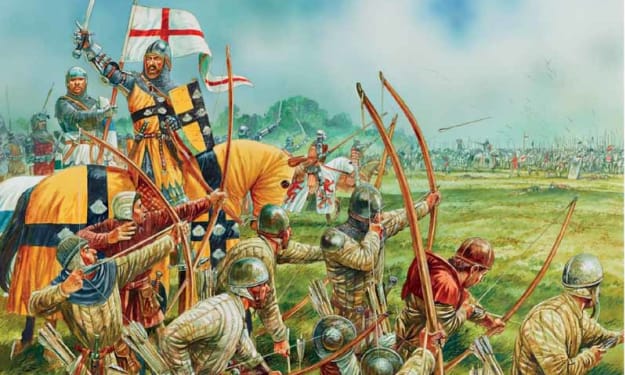
The Battle of Poitiers, 1356
On 19th September 1356 the English won a notable victory against the French at the Battle of Poitiers. This was one of many battles fought at various times during the period that has become known as the Hundred Years War. This is something of a misnomer because it actually lasted for 120 years and it was not a single war but a series of eight separate conflicts between the royal houses of England and France.
By John Welford5 years ago in FYI
Julian, a 4th century Roman Emperor
Julian was born in Constantinople in the year 331, being the son of Julius Constantius and a nephew of Emperor Constantine the Great. On the death in May 337 of Constantine, who had begun to convert the Empire to Christianity, his sons, Julian’s cousins, divided the Empire between them, although the youngest, Constans, was still a minor.
By John Welford5 years ago in FYI
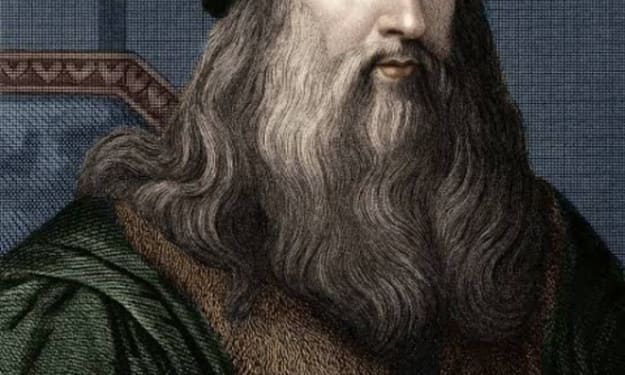
The Renaissance Man- Leonardo da Vinci
Leonardo da Vinci (1452-1519 CE) was surely one of the most intellectual and influential figures of Europe in particular and the World in general. He was a genius scientist, an expert anatomist, a perfectionist military engineer, a keen painter, and a philosopher. However, he is mainly popular because of his paintings.
By Natasha Matloob5 years ago in FYI
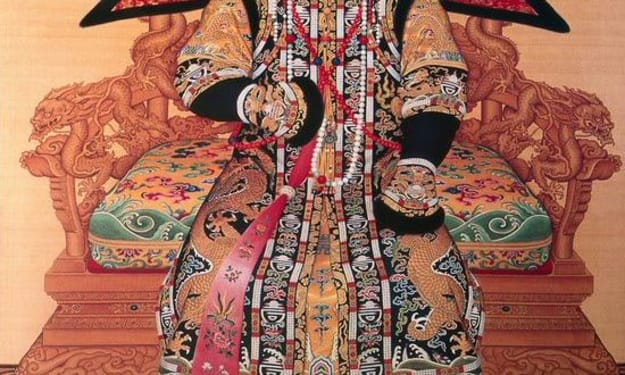
Women in the Forbidden City
The Forbidden City is one of the most popular tourist attractions we have on earth today. It always fascinates me that at one time in history, this “City” was home to thousands of people. So, what was life like for the “Women” who lived in The forbidden City?
By Ruth Elizabeth Stiff5 years ago in FYI
The History of the Oreo
In 1882, entrepreneur Jacob Loose bought a company that would eventually be known as Sunshine Biscuits. The company specialized in biscuits and candies and in 1908, it released a biscuit sandwich called Hydrox. The name was intended to remind consumers of hydrogen and oxygen and to be reminiscent of the sunlight of its company’s name. While the floral design of the cookie was revolutionary for its time, the name, unfortunately, reminded people of hydrogen peroxide instead of hydrogen and oxygen. It didn’t help that the coincidentally-named Hydrox Chemical Company, which sold hydrogen peroxide, was caught in a lawsuit because the term “hydrox” was used for coolers, sodas, and even ice cream brands. Meanwhile, in 1898, several baking companies merged to form the National Biscuit Company, which would later come to be known as simply Nabisco. In 1912, four years after the original Hydrox was released, Nabisco debuted their version of the Hydrox, which they named the Oreo. Food scientist Sam Porcello, an employee at Nabisco, developed the chocolate-covered and the white-chocolate covered Oreo, along with inventing the “stuf” in the Double-Stuf Oreo. In fact, he held five patents related to Oreos before his death in 2012 at the age of 76 and was so involved in the development of the cookie that people gave him the moniker “Mr. Oreo”. Around this time, Nabisco also debuted two other biscuits, the Goose and the Veronese, both of which have been lost to history.
By Jamie Lammers5 years ago in FYI
The U.S. President's Unexpected Legacy Thomas Jefferson: Paleontology
A wunderkind of the American Renaissance, Jefferson had his own academic pursuits. Known for such things as writing the Declaration of Independence; lesser known is that he used his collection of more than 6,400 books to help rebuild the previously burned Library of Congress. But his most unexpected hobby was collecting bones.
By Case_Cartercx5 years ago in FYI
Sherlock Holmes and the Cottingley Fairies. Top Story - May 2021.
Over a hundred years ago, in the small village of Cottingley, England, two young girls embarked on a silly prank that led thousands to believe in magic. It would not be fully debunked for over sixty years.
By Shell St. James5 years ago in FYI