Historical
Maximinus Thrax, Emperor of Rome
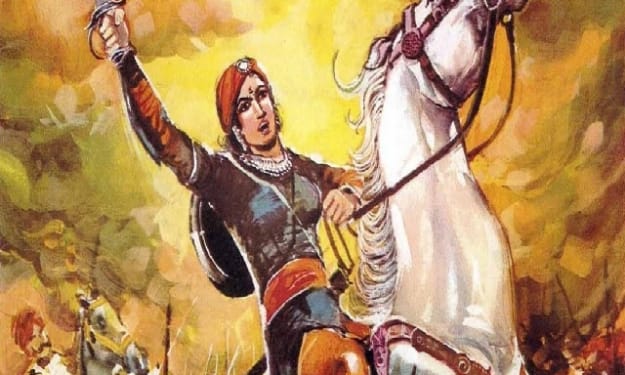
It would be difficult to imagine a greater contrast between successive emperors than when Maximinus Thrax (meaning Thracian) seized the imperial throne from Alexander Severus. The “mummy’s boy”, killed along with his mother on the orders of Maximinus, was succeeded by a former shepherd from Thrace (modern northern Greece and southern Bulgaria) who was a giant of a man reputed to have been eight feet tall and extremely sweaty.
By John Welford4 years ago in FYI
Matthew Webb: the first man to swim from England to France
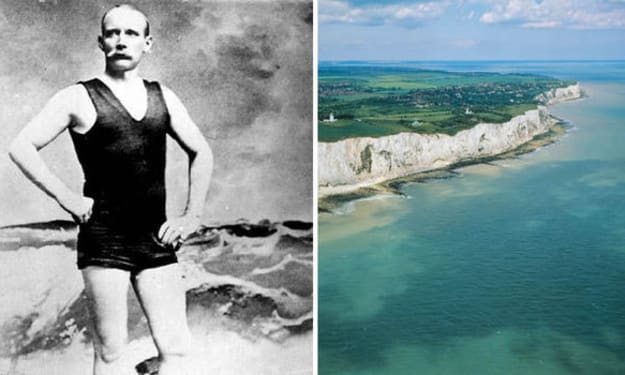
Swimming the 21 miles of the English Channel is now quite a regular event, with a large number of successful crossings made every year, whether as solo, team or relay attempts. However, this feat was believed by many people to be impossible before Matthew Webb achieved it in 1875.
By John Welford4 years ago in FYI
Galileo Galilei life biography
The New New Sciences (1638) is a summary of Galileo's life and work in motion science, energy, and materials. In addition to the telescope and its many mathematical and scientific discoveries, Galileo built a hydrostatic equilibrium in 1604 to measure small objects.
By Sita Dahal4 years ago in FYI
Louis Pasteur Life Biography
Louis Pasteur struggled to convince surgeons that germs do exist, that they cause disease, and that there is nothing wrong with the air, as popular opinion has suggested. Instead, he emphasized that germs spread through human contact with medical instruments and that pasteurization (fertility) were essential to prevent the spread of disease.
By Sita Dahal4 years ago in FYI
Constantine I, Emperor of Rome
Constantine was one of the most influential of all the emperors of Rome. His reign marked a definite turning point in the history of the empire, which would never be the same again. He must also be counted as the last “great” emperor of Rome. Nobody who followed was of anything like the same quality.
By John Welford4 years ago in FYI
History of the Olympics
While the modern Olympic Games go back to 1896, the ancient Olympic Games reach back as far as 776 B.C. and beyond. Though historians hang the beginning on that date, it seems the Games had been going on for several centuries before the 8th century B.C. Held originally in Olympia, Greece — a sister city of my town of Colorado Springs, the home of the U.S. Olympic Training Center — the games were dedicated to Zeus, father of the Olympian gods, and the site was one of the most important religious centers in Greece.
By Bill Petro4 years ago in FYI
Hanging Gardens of Babylon
Many ideas about the structure and location of the gardens continue. A study of the historical significance of the Hanging Gardens of Babylon, one of the seven wonders of the ancient world, has led Oxford historians to conclude that the foundations of the great Assyrian Empire Sennacherib, whose palace was a major rival of Babylon in Nineveh, show trees growing on the balcony of Babylon. Layard painter hired by bass authorized by Dr. Dalley, who imitated gardens and produced Layard's book Nineveh, published in London in 1853.
By Sita Dahal4 years ago in FYI
Commodus, Emperor of Rome
The Roman Empire was led by a series of thoroughly worthy emperors after the death of Domitian in 96 AD. According to the 18th century historian Edward Gibbon, there were then “five good emperors”, the last of them being Marcus Aurelius, who died in 180.
By John Welford4 years ago in FYI
Nobel Prize Winners of 2020
On Tuesday, the Nobel Prize in Physics in 2020 was presented to Roger Penrose (UK), Reinhard Genzel (Germany), and Andrea Ghez (USA) for a discovery that has influenced our modern understanding of the world and black holes. Drs. Penrose was honored for his work of discovering the existence of black holes, which is a direct result of Albert Einstein's theory of relativity. Meanwhile, Dr. Genzel and Dr. GheZ have been honored for decades of their research by gathering compelling evidence of large black holes in our galaxy.
By Sita Dahal4 years ago in FYI
Slaveowner Madame Lalaurie Tortured and Killed her Slaves for Fun
Madame LaLaurie whipped her slaves, gauged their eyes out, and poked holes in their skulls, leaving maggots to infest the openings. This is only the tip of the iceberg when it comes to the sickening acts of torture this eighteenth-century slave owner committed against her slaves. Why she was so cruel remains a mystery to many and perhaps the most tragic aspect of Madame LaLaurie’s life is that she never faced justice for her heinous acts.
By Perfectmess4 years ago in FYI