Historical
The Ship of Dreams
In the current epoch of humankind that we find ourselves part of, one cannot emphasize enough the unprecedented importance that must be placed on the process of documenting the history of the subjective reality that we find ourselves part of. We find ourselves at this junction as a direct consequence of countless variables that are placed therewithin as part of the technology that we use to catalog such information. Over the course of the last half a century or so this has become more relevant in how overly dependent we have become on the devices that we use, which become in part extensions of us to a certain degree. So, now, more than ever before in our history, must we be mindful of this fact in our day-to-day lives. We do live in a period of information unlike ever before; the most painstakingly obvious exemplification of which is found in the statistics alone, in that we as a people create over 2.5 quintillion bytes of raw data per day, which combined with such factors as the IoT, or Internet of Things have produced for more than ninety percent of the available knowledge in the last ten years alone.
By Aaron M. Weis4 years ago in FYI
Some Things I Can Say About Native American Medicine Wheel Teachings
I was born and raised in Minnesota. I am an enrolled member of the White Earth Nation, my enrollment is removal Fond du Lac. My people on my mother’s side came from there, the land of the Gitchigummi (Lake Superior) I adore.
By Denise E Lindquist4 years ago in FYI
The Jackal-Headed god: Anubis.
Few civilizations glorified the dead like the Ancient Egyptians. Kings were buried inside a giant, stone pyramids. Mythical monuments were raised around their tombs, and rituals prepared their souls for a treacherous journey into the afterlife, where a powerful god of death guarded the gates to a utopian sanctuary; but who was the god of death in Ancient Egypt?
By Bhagirath Vala4 years ago in FYI
How this Alternate World Faces Total Tragic Destruction with 2 Reality Lessons?
Herein, there may be parts and pieces that fit into our current world reality with relativity to manage our societies better. It’s a tale of 3 basic functions with intrinsic potential but possible disastrous misalignment known as geography, government and politics as a separate double-edged force with peaceful affinity as well as vengeful awful powers.
By Annemarie Berukoff4 years ago in FYI
Father Thomas Byles, the Titanic’s Hero Priest
April 15th, 2022 marks the 110th anniversary of the sinking of the Titanic. More than a century later, this story still captivates imaginations around the world, inspiring prolific fiction and nonfiction, movies and musicals. Maybe it’s because, in the words of James Cameron, director of the 1997 Titanic film, “It was like a great novel that really happened.” The sinking of the Titanic was a “lifeboat ethics” scenario involving actual lifeboats. Looking back on the disaster allows people to ask themselves, “Why did this passenger or crew member do what they did? What would I have done?”
By Ashley Herzog4 years ago in FYI
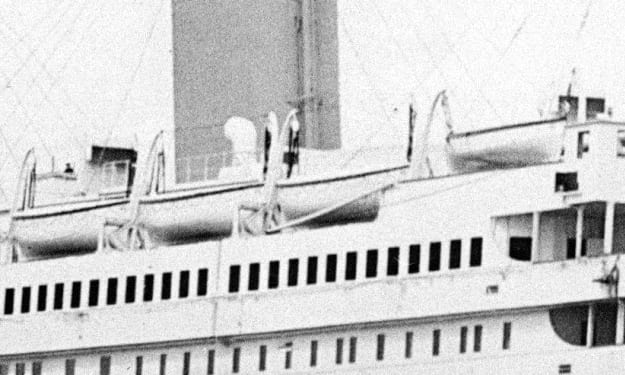
Titanic
Origins and construction In the early 1900s the transatlantic passenger trade was highly profitable and competitive, with ship lines vying to transport wealthy travelers and immigrants. Two of the chief lines were White Star and Cunard. By the summer of 1907, Cunard seemed poised to increase its share of the market with the debut of two new ships, the Lusitania and the Mauretania, which were scheduled to enter service later that year. The two passenger liners were garnering much attention for their expected speed; both would later set speed records crossing the Atlantic Ocean. Looking to answer his rival, White Star chairman J. Bruce Ismay reportedly met with William Pirrie, who controlled the Belfast shipbuilding firm Harland and Wolff, which constructed most of White Star’s vessels. The two men devised a plan to build a class of large liners that would be known for their comfort instead of their speed. It was eventually decided that three vessels would be constructed: the Olympic, the Titanic, and the Britannic.
By Malik Kashif4 years ago in FYI
Beauvoir In Biloxi Mississippi
On the gulf coast of Mississippi sits a piece of history that is not well known. When I moved to Mississippi as a junior in high school, I knew from history class what the civil war was, a war to end slavery. I didn’t know that the home of the president of the confederacy laid not far from our first apartment. On a trip to visit this historical place, I learned more about this man who quietly made history by standing up for what he believed. He worried about the rights of the states and at the end of the day, I learned that the civil war balanced on the rights of each state to change the course of their path, not a central all-controlling federal government. I also learned that the dynamics of the Civil War wasn’t slavery, though this was a component. Not to go into perceptions and interpretations of the past we know what is written and saved not actually what was happening at the time history was made. We are here to take a short little trip to Beauvoir and see what life was like in the 1800s
By Erika Wood4 years ago in FYI