Historical
Chera dynasty
The Chera dynasty was a Tamil dynasty that ruled in the present-day Indian state of Kerala and parts of Tamil Nadu and Karnataka. The dynasty is also known as the Keralaputras. The Cheras were a major power in South India from the early centuries CE, and they controlled a large territory that included the present-day districts of Thrissur, Palakkad, and Malappuram in Kerala, as well as parts of Tamil Nadu and Karnataka. The Cheras were known for their naval power and for their role in the trade and commerce of the region. They were also known for their patronage of arts and culture, and for their support of the Hindu religion. The capital of the Chera kingdom was located at Vanchi, near the present-day town of Kodungallur in Kerala. The dynasty came to an end in the 12th century CE, with the rise of the Cholas and the PandyasThe Chera dynasty is believed to have been founded by the legendary king Cheran Chenguttuvan, who is mentioned in the Tamil Sangam literature. The Cheras are mentioned in many ancient texts, including the Puranas, the Ramayana, and the Mahabharata.
By Mahendrarajah Mithusharan3 years ago in FYI
Pandya Dynasty
The Pandya dynasty was a royal dynasty in the southern part of India, who ruled over the region of Tamil Nadu and parts of Kerala and Andhra Pradesh. The dynasty was founded in the 6th century BCE and lasted until the 16th century CE, with a brief interruption in the 14th century. The Pandyas were known for their military prowess and their support of the arts, especially literature and music. They also played an important role in the trade and commerce of the region, with their capital city of Madurai being an important center for trade and commerce The Pandya dynasty was one of the three ancient Tamil dynasties, along with the Chola dynasty and the Chera dynasty. The Pandyas were known for their naval power and their control of the pearl trade. They were also a major player in the spice trade with the Roman Empire.
By Mahendrarajah Mithusharan3 years ago in FYI
Cholas
The Cholas were a powerful dynasty that ruled in southern India, particularly in present-day Tamil Nadu, during the 9th to 13th centuries. They were known for their military prowess and also made significant contributions in the fields of art, literature, and architecture. The Cholas built a vast empire that stretched from the southern tip of India to as far north as the Ganges Delta in present-day Bengal. The Cholas are also known for their naval power, and their naval expeditions led to the spread of Chola influence and culture to other parts of Southeast Asia. The Cholas were followers of Hinduism and the Shaivite tradition, and the Chola temples are some of the most impressive examples of Dravidian temple architecture in India. The Chola empire eventually declined in the 13th century, but the legacy of the Cholas continues to be felt in modern-day Tamil Nadu and beyond.The Chola dynasty was founded by Vijayalaya Chola, who reigned from 850 to 871. He established the Chola capital at Thanjavur and conquered several territories, including the Pallavas and the Pandyas. The Cholas reached the peak of their power under Rajaraja Chola I and his son, Rajendra Chola I, who ruled from 985 to 1014 and 1014 to 1044, respectively. Rajaraja Chola I expanded the Chola empire through military conquests and also made significant contributions to Tamil literature and architecture. He built the Brihadeeswarar Temple at Thanjavur, which is a UNESCO World Heritage Site and considered one of the greatest examples of Chola architecture.
By Mahendrarajah Mithusharan3 years ago in FYI
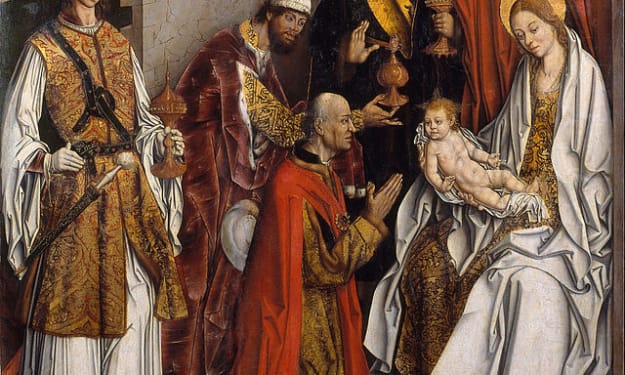
Epiphany/Three Kings Day on January 6 celebrates the Magi finding Christ two years after His birth
A different "Christmas" While most of the world observes the birth of Christ on December 25 there are those among us in Orthodox communities as well as Catholics and mainstream Christians who celebrate on January 6 with Epiphany or Three Kings Day. It's customary to see Nativity scenes with Shepherds and Wise Men at the manger but there are reasons that some say the Magi were not present on the first Christmas and observe a different date.
By Cheryl E Preston3 years ago in FYI
History of Epiphany and Twelfth Night
Twelfth Night is on January 5, the eve of Epiphany. Epiphany occurs in the Christian calendar on January 6, signifying the event of the Magi, or Wise Men, visiting the baby Jesus. It is known in some Latin cultures as the Feast of the Three Kings or Three Kings Day.
By Bill Petro3 years ago in FYI
4 Lost Letters Theodore Roosevelt Sent The Year He Died
Theodore Roosevelt has been studied, analyzed, scrutinized, torn apart, and pieced back together in efficiently digestible works. Today, we look back on Roosevelt one 150 years later and marvel at the complexity of his life during his short time here on earth.
By Alex Moliski3 years ago in FYI
10 Historical Facts That Took My Sleep At Night
1- The Great Pyramid of Giza The Great Pyramid of Giza is the oldest and largest of the three pyramids in the Giza Necropolis. It is also the oldest of the Seven Wonders of the Ancient World, and the only one to remain largely intact. The pyramid was built around 2550 BC as a tomb for Pharaoh Khufu. It is 147 meters tall and consists of over 2 million blocks of stone, each weighing an average of 2.5 tons.
By Ghani Mengal3 years ago in FYI
The most obscure trivia fact I have at the ready
The most obscure trivia fact I have at the ready You Won't Believe This Crazy Obscure Fact I Know! Do you like trivia? Are you looking for something that few other people know about? If so, this post is for you! I'm about to reveal an obscure trivia fact that you probably won't find anywhere else. It's something crazy and unexpected, and it's sure to surprise even the most die-hard trivia buffs. So, without further ado, let's get right to it - you won't believe this crazy obscure fact I know!
By Raphael Joseph3 years ago in FYI