Historical
Tyrants of Ancient Greece!
Tyrannies occurred everywhere in Greece, from city-states to the islands of Sicily and Samos. Most historians place the Great Age of Greek Tyranny between 750 and 500 BCE, concluding with Hippias' deposition; however, other writers extend the period into the 4th century BCE, covering Cassander's dictatorial rule in Macedonia as well as the tyrannies of Dionysius I and II in Syracuse.
By Father of History3 years ago in FYI
What is dinosaur?
I. Introduction A. Definition of dinosaurs: Dinosaurs are a group of extinct reptiles that lived during the Mesozoic Era, which lasted from about 252 to 66 million years ago. They were characterized by their bipedal or quadrupedal posture, and the presence of a skull with a single occipital condyle, a feature that distinguishes them from other reptiles.
By King of Earth3 years ago in FYI
What is Gold?
Introduction: Gold is a chemical element with the symbol Au (from Latin: aurum) and atomic number 79, making it one of the higher atomic number elements that occur naturally. It is a dense, soft, malleable, and ductile metal with a bright yellow color and luster that is considered attractive, which is maintained without tarnishing in air or water. Gold is a good conductor of electricity and does not react with most chemicals. It is found in nature mainly as the free metal and in various ores such as argentite and electrum.
By King of Earth3 years ago in FYI
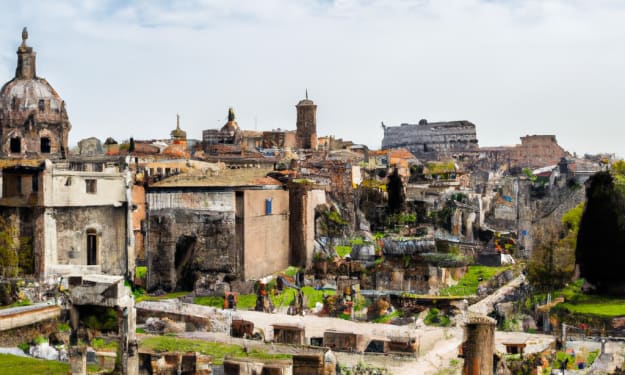
Roman City
The Roman city was a complex and sophisticated urban landscape that played a key role in the Roman Empire's political, social, and economic life. At the heart of the Roman city was the forum, a large open space that served as the city's center of political, legal, and commercial activity.
By Architect Yogesh3 years ago in FYI
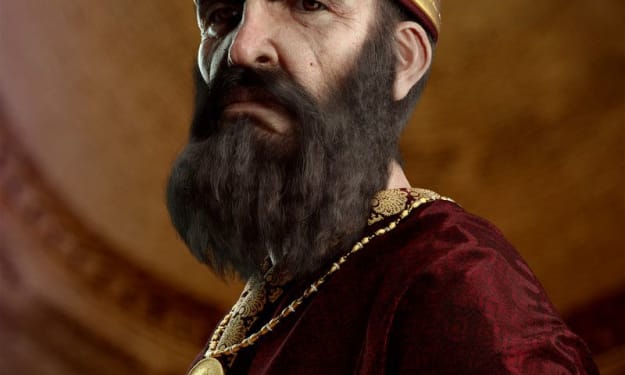
Xerxes the First's Life and Rule: 9 Facts!
Xerxes I signifies the beginning of the Achaemenid Empire's downfall, with a reign marked by revolts. Ruler Xerxes is possibly the most prominent Achaemenid Persian king, best notable for his inability to conquer Greece. Xerxes I was known for severe penalties, womanizing, and depleting the Persian empire's resources. He created massive palaces and other buildings at Persepolis, leaving his imprint on both European and Asian history. Here are nine facts regarding King Xerxes' life and reign.
By Father of History3 years ago in FYI
History of Australia Day
Did you know that the history of European Australia has ties to the American Revolutionary War? When the 13 American Colonies were part of the British Commonwealth, it was convenient for England to transport its convicts to the Colonies. Indeed, it was considered more humane to “transport” prisoners than to execute them, and there were getting to be so many convicts.
By Bill Petro3 years ago in FYI
Uncover the Fascinating Facts of Ancient Greece
The Olympics: A Tradition that Dates Back to 776 BC The ancient Olympic Games were a series of athletic competitions held in honor of the Greek god Zeus. These games were of great importance to the ancient Greeks, and were held every four years in the city of Olympia. The first Olympic Games were recorded to have taken place in 776 BC, making it one of the oldest recorded sporting events in history.
By Brad Williams3 years ago in FYI