
Spontaneous human combustion: The mystery of the horrifying soul-eating Flame
Have you ever heard such a sensational thing? A young woman dancing suddenly burst out of her body with flames, and then her whole body became a ball of fire, and instantly a burnt corpse. An old woman sitting leisurely on a sofa is suddenly reduced to a heap of ashes; a man suddenly bursts out of the fire like a burning candle, and in a few minutes there are only fragments of bone and an intact left foot. Over the last four centuries, more than 200 cases of such spontaneous human combustion have been reported around the world. This gruesome way of dying has been a source of confusion and debate for centuries, with some arguing that spontaneous human combustion is a myth, but it has been proven time and again to exist, and today researchers are still trying to find the real answer.
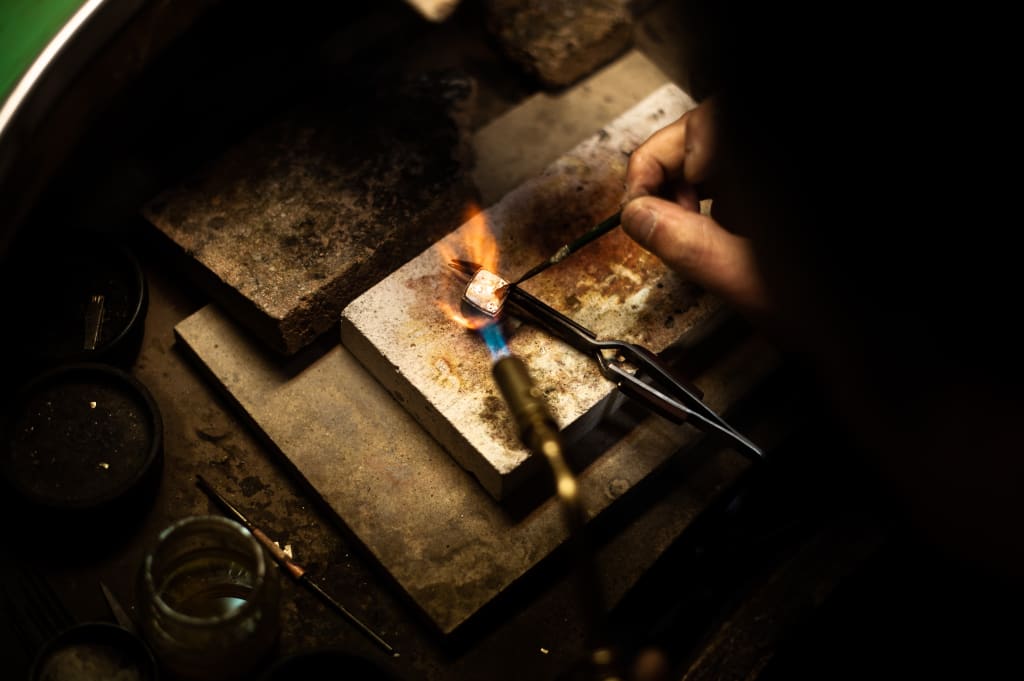
The mystery of spontaneous combustion of the human body
At the beginning of the movie Detective Dee and the Mystery of the Sky, Jia Yi, a servant of the Ministry of Works, accompanies foreign envoys to visit the Tongtian But under construction. His body suddenly bursts into flames and turns to ashes. Xue Yong, minister of Dali Temple, was ordered to investigate the case of Jia Yi's death but died of spontaneous combustion in the training ground on the way to the palace.
As it turned out, a highly venomous beetle that feeds on yellow phosphorus, the Red Flame Turtle, was the culprit. When the sun shines on its poison, it will automatically burst into flames and turn to ashes. There is no supernatural force at work.
Carl Sagan said, "If we are much more interested in the truth than the 'truth' we are comfortable with, we will be much more rigorous in our requirements for evidence." Maybe everything that seems mysterious is just because we haven't figured out the cause yet.
On the morning of December 22, 2010, Mr. Mann, of Galway, Ireland, was woken by a rapid smoke alarm. He thought his house was on fire and quickly got up to look for the source of the fire, only to find that everything was fine and that the smoke alarm had been set off by the smoke from the house of a neighbor, Mr. Michael Faherty.
When firefighters opened the door to Father's house, they were stunned by what they saw:
Mr. Fahti, 76, collapsed in front of the fireplace in his living room, his body nearly burned. But the floor beneath him and the furniture around him, and the ceiling above him, were almost intact!
It's so hard to understand! The human body is not flammable at all, and it is almost impossible to set it on fire without a large enough flame to provide enough heat.
After nearly a year of investigation, Medical Examiner Sharan McLoughlin announced to the media on September 23, 2011, that the "Fathi incident" was a rare case of "spontaneous human combustion." He told the BBC it was the first time he had reached such a conclusion in 25 years of practice. He looked at many sources and concluded that the scene of Fahti's death resembled what some researchers call a "spontaneous human combustion" event: there was a fire nearby, and furniture and other objects were not damaged.
The incident cheered many mystery enthusiasts, who saw it as official recognition of the existence of "spontaneous human combustion," despite the fundamental difference between what forensics call "spontaneous human combustion" and what they call it.
"Spontaneous combustion of the human body", as the scientific community often calls it, refers to a series of small but thorough human combustion events with unknown causes. It is not a mysterious phenomenon that the human body catches fire without any source of fire and is burned to ashes instantly.
"You can't use the term 'spontaneous combustion' because it always happens near the fire." Professor Mike Green, who is retired, said: "In other cases where the source of the fire was not found, it is likely that the remains were so badly damaged that kindling (cigarette butts, matches) and clues were burned away." He has long been concerned with the phenomenon of "spontaneous human combustion".
The first description of spontaneous human combustion was written by the French writer Pierre El Lisle. In 1800, he blamed the spontaneous combustion of the human body on alcoholism, and this didactic view has flourished ever since. In 1853, the Victorian magazine Record and Question listed 19 incidents of spontaneous combustion between 1692 and 1829. The author, a doctor named Linsley, wrote that the dead were "habitual alcoholics" and "alcoholics."
The first scientist to investigate spontaneous human combustion was the German chemist Eustis von Liebig. He studied 50 cases of spontaneous combustion and noted that even if the body contains as much as 70% alcohol, it does not burn up easily. Liebig also did an experiment in which he injected ethanol into mice, but the mice were no more likely to ignite. Liebig's experiments strongly refuted the idea of a relationship between alcoholism and spontaneous combustion, but the belief that alcoholism causes spontaneous combustion is still widespread.
The phenomenon of spontaneous human combustion continues to occur, and scientists continue to try to understand the truth about it. In the 19th century, researchers generally attributed spontaneous combustion to habitual drunkenness or drinking too much alcohol. But the German chemist Justus von Liebig, after conducting experiments and analyzing data, showed that even when dissected specimens were increased to 70 percent alcohol, they did not spontaneously burn. He has injected ethanol into rats and still failed to make them burn spontaneously. This essentially negates a causal link between binge drinking and burning.
After the 1960s, the "candlestick effect" of spontaneous human combustion became very popular. In 1961, Gavin Thurston, the coroner of London, published an article in the Journal of Forensic Science entitled "Abnormal Burning of the Human Body". In the article, Thurston describes a so-called "wick effect" that can cause spontaneous combustion in the human body. Human fats burn at about 250 ° C, he says, but if they are molten, they can be ignited with a wick at room temperature. To test this idea, Thurston wrapped some fat in gauze. He showed how the heat of a flame melted the fat and made it burn continuously like a candle.
The candlestick effect, while plausible, was quickly questioned anew: clothes burn quickly and the candle wick is gone, whereas some people spontaneously combat for 12 hours or more; Moreover when researchers work with pigs, they often leave intact bones, which are mostly incinerated in what is thought to be spontaneous human combustion. None of this can be explained by the candlestick effect.
Researchers have finally discovered that there is another flammable substance in the human body whose concentration can be greatly increased under certain conditions: triglycerides. Triacylglycerol, also known as a triglyceride, is the most abundant type of lipid in the human body. Most human tissues can use its decomposition products -- fatty acids and glycerol to provide energy, among which fatty acids can produce an important metabolic molecule, acetyl-CoA, which plays A pivotal role in energy metabolism in the human body. The three nutrients, sugar, fat, and protein, converge into A common metabolic pathway through acetyl-CoA, through which carbon dioxide and water are thoroughly oxidized to release energy.
However, under certain circumstances, acetyl CoA in the human liver is converted to acetone, and too much acetone can lead to ketosis. Things like binge drinking, a poor diet high in fat and low in carbohydrates, diabetes, and even teething can lead to ketosis. And acetone is highly flammable. Researchers speculate that it is acetone that causes spontaneous combustion.
To test this hypothesis, the researchers soaked pork tissue in acetone, then shaped it into a mannequin, dressed it in clothes, and set it alight. Within half an hour, the mannequin had been incinerated, with the remains of human limbs sticking out of the ashes -- a striking resemblance to the photos of the spontaneous combers. Why do legs remain when the human body burns itself every time? The researchers think this is because there is too little fat in the area to produce much acetone.
This is the first time that scientists have successfully tested spontaneous combustion experimentally, and it may be the closest thing to a true explanation for spontaneous combustion in humans.
So does this mean that people with ketosis are at risk of becoming victims of spontaneous human combustion? It's a possibility, but it's very low. The history of the spontaneous combustion phenomenon is not many people, only one or two hundred people, which shows that this situation is extremely rare. However, people with ketosis should also be more careful not to smoke, drink too much alcohol, and wear chemical fiber clothing to avoid accidentally spontaneous combustion.
Some people claim that the burning of the human body is triggered by an external source of fire, while others believe that it is caused by the reaction of moisture such as sweat and urine with chemicals on clothes. But why do human bodies burn so violently that they turn to ashes? The vast majority of the victims were not exposed to any source of the fire.
At present, there is a widely accepted view that spontaneous human combustion is caused by ball lightning in nature. Ball lightning is a small fireball that can go through doors, crawl under covers, squeeze into coffins, and follow passers-by like a ghost. Sometimes explosions, equivalent to the energy emitted by a 10-kilogram explosive blast, damage buildings and cause human and animal casualties. On its way, it is indestructible but does not burn the combustible things around it. It can burn through metal walls in an instant, and the human body to ashes in an instant can be understood.
The above explanation is only speculation, human spontaneous combustion is still a mystery.
With more in-depth investigation and scientific advances, scientists believe they will soon be able to unravel the centuries-old mystery.
★ Spontaneous combustion of the human body through the ages
Combustion is a common chemical phenomenon, usually provided that the following three conditions are present: combustible material, sufficient oxygen, and temperature at the ignition point. People and other animals are no exception, so at the scene of a fire, you can often see the scene of various kinds of debris. But can the human body spontaneously combust? It's perfectly possible in theory, but it's inconceivable that it would happen in real life. However, according to the record, history does occur too many indescribable "human spontaneous combustion" phenomena.
The first recorded case of spontaneous human combustion dates back to 1641 when Thomas, a Danish physician, and mathematician, described an incident. One night in 1470, a man was drinking at his home in Mira, Italy, when he spontaneously burned to death. In 1663, the French writer Bartoland wrote about a Parisian woman who burned herself to death, but the mattress beneath her remained intact. And in 1745, the journal of the Royal Society, The Proceedings of the Society of Natural Sciences, published an article describing a 62-year-old countess who, after dinner, felt bored and heavy and went to bed. The next morning her maid found a pile of ashes on the sofa, in which the poor countess's unburned legs remained.
The Italian priest Bedoli was one of the few victims of spontaneous human combustion who survived for several days. Dr. Battaglia, who treated him, reported the incident in a Florence journal in October 1776. Bedolla was traveling around the country during the incident. One night, I arrived at my brother-in-law's house and was led to a temporary sleeping room by my brother-in-law. As the shirt he was wearing was made of horsehair, which shaved his shoulders uncomfortably, he asked for a handkerchief as soon as he entered the room to separate his shirt from his shoulders. Then he remained alone in his room to pray. A few minutes later, a cry of pain came from the room, and the whole house rushed into his room. They saw Bedoli lying on the ground, surrounded by a flame, which, as they came to examine him, gradually subsided and died out. The next morning, Bedolla was examined by Dr. Battaglia. He found that the skin of the injured man's right arm was almost completely detached from the muscle and hanging off the bone. The skin from the shoulders to the thighs was also damaged. The worst burned part was the right hand, which had begun to rot. Battaglia treated the victim immediately, but his condition worsened. He was always thirsty for water and his body convulsed. The chair in which he sat was said to be covered with "rotten and disgusting substances". Bedolla suffered from fever and vomiting and died in a coma on the fourth day. Dr. Battaglia couldn't find any signs of infection in Bedolla. Worst of all, before he died, his body had a stench like rotting flesh. Dr. Battaglia also said that bugs had been seen crawling from Bedoli onto the bed and that his fingernails had fallen off.
Since the 20th century, there have been a lot of cases of spontaneous combustion of the human body recorded, and many scientists have been constantly opposed to this kind of spontaneous combustion of the human body, but the phenomenon of spontaneous combustion of the human body has been reported from time to time.
In 1673, an Italian medical document records a curious incident in which a man named Parisian drank heavily for three years. Once he lay down on a bed of grass, which turned to ashes. All that remained were the bones of his skull and fingers, but the bed remained intact except where he lay.
On December 15, 1949, a 53-year-old woman named Cottris was burned to death in her home in New Hampshire. Manchester police found it during their investigation. The horrible, inhuman corpse lay on the floor of the room, but the objects in the room had not been damaged in any way, and the fireplace had not been used, and there was no fire anywhere else. "The woman must have been a fireball as she burned," the Associated Press reported. But the fire did not burn any wood in her house." The fact is astonishing.
In 1951, Mrs. Leese of St. Petersburg, Florida, was found incinerated in her house, which was also undamaged. In this case, investigators used a variety of modern scientific methods to determine the ins and outs of this mysterious accident. But despite a year of collaborative research involving FBI arson experts, fire department officials, and pathologists, the story has yet to unravel.
There was no serious damage to the furniture at the scene of the accident, except for the chairs and the side coffee table, but inside the house, there was a strange phenomenon: the ceiling, curtains, and walls four feet above the ground were covered with a nasty smell of soot, but not the walls four feet below. The paint on the wall next to the chairs had dried a little yellow, but the carpet where the chairs were placed had not been burned through. In addition, a mirror hanging on the wall 10 feet away may break due to thermal effects; Two candles on a dressing table twelve feet away had melted, but their wicks remained intact in their holders; Plastic outlets located more than four feet above the wall had also melted, but the fuses had not blown and the current was still flowing, so that the electrical outlets for the wadding panels had not been damaged. An electric clock connected to a melted socket had stopped, indicating exactly 4:20. When the clock is connected to an intact socket in the wainscot, it can continue to move. Nearby were some flammable items such as a table on the newspaper and tablecloth, and curtains, but all unharmed.
On December 5, 1966, in Pennsylvania, such a case occurred: Owen Bentley's doctor's home hall filled with a strange smell of blue smoke, the ceiling burned a wide 0.6m, 0.9m long hole, underground a pile of ash. Half a leg by the burning hole upstairs, Dr. Bentley burned to death.
Coroner Herman Moschi concluded that Dr. Bentley had been smoking in bed when he accidentally burned his pajamas, woke up, hurried to the bathroom, and collapsed, causing the floor to catch fire, killing the doctor. But the fire chief thinks it was spontaneous human combustion. Then, the dispute about the spontaneous combustion of the human body began.
Normally, a body needs to be incinerated at 2200 degrees Celsius for at least one hour, with bones in fragments, and Dr. Bentley's entire body turned to ash, except for one of his lower legs, without extreme heat. But the maximum temperature of the house fire is not more than 800℃, it is strange that the house not only did not burn down, even the remaining legs of the rubber shoes are intact. Therefore, the reasonable explanation is human spontaneous combustion. Below is THE CONDITION THAT DOES NOT CONTACT EXTERNAL FIRE sources NAMELY, HUMAN BODY BURNS SUDDENLY FROM INSIDE, INSTANTANEOUS WHOLE HUMAN BODY IS REDUCED TO ASH, AND THE COMBUSTIBLE MATERIAL OF ADJACENT CAN AVOID DISASTER, HOWEVER.
On the evening of May 25, 1985, 19-year-old Polly Lesley was walking down the street in London, England. Suddenly, he felt hot all over. He looked around and saw that his body was spitting fire. The fire burned in his upper body in an instant, and unbearable heat and pain rushed over him at the same time. Lesley covered his face with his hands, hoping to save his eyes. But the fire was so fierce that his chest, back, and wrists ached as if they had been burned with a soldering iron, and his brain felt as if it were boiling. He tried to run but fell heavily before he could take more than a few steps. As death closed in on him, the flame was suddenly extinguished completely. A few minutes later, the searing pain came back to him. Lesley bit his teeth and walked to the nearby hospital. Because he was young and strong, he received timely treatment after the burn, and he did not get a bacterial infection during the treatment, and he was finally treated and discharged from the hospital a few weeks later. He is one of the lucky modern survivors of spontaneous human combustion.
On April 15, 1990, Tang Jiang, a four-and-a-half-year-old boy in Hunan Province, suddenly saw smoke and flames in his crotch at about 8 o 'clock in the morning. His legs were burned and his pants were burned through. At about 8:50, the same part of the fire and caused underwear to burn. Around 9 o 'clock, lying on the bed, a 1cm big fireball appeared on the right thigh, the blue flame fell on the bed sheet, the bed sheet burned through, the left leg had bubbles, and the whole body had sparks like a cigarette lighter. Concerned EXPERT INVESTIGATION, THE CONCLUSION IS: INDOOR DOES NOT HAVE ANY FLAMMABLE chemical drugs, ALSO did not find any fire source, can only be human spontaneous combustion.
In 1992, a chili eating competition was held in Durango, Mexico. Contestant Ganmuth is munching on 12 chilies. Five minutes later, he was blowing smoke from his mouth, then from his nostrils and ears, and soon from his neck and hands: in the blink of an eye, his whole body was on fire, and in 20 minutes, his clothes, his shoes, his muscles, and his bones were all ashes.
2002 New Year's Day, Brussels suburb, Belgium, there were several witnesses of the "human spontaneous combustion" incident. Victims, Adele, he's playing on the beach for a long time, pick up a lot of beautiful shells, then drove home, however, on the way, she suddenly found the flames on his thigh, fortunately, their counterparts promptly helped her to extinguish the flame, but she suffered severe burns from the waist to the knee, doctors feel puzzling, don't know why she had such a strange experience. This may be the only case of "spontaneous human combustion" witnessed by eyewitnesses.
Mark Begich and his team rushed to the site after the incident, and after a detailed survey of the site, they found traces of sodium metal in the area of the beach where Adele had been active, leading him to speculate: Fireworks scattered on the beach in preparation for some celebration may be mixed with sodium metal in the residue of the fireworks. Sodium may stick to the surface of the shells. When sodium meets water, it generates heat, and in some cases, this heat can cause the object to burn.
More than 200 cases of spontaneous human combustion have been documented. Women suffer slightly more than men, but it is more likely to happen to obese older women, alcoholics, and smokers. The oldest is 114 years old and the youngest is just four months old. Spontaneous combustion of the human body can occur when sleeping, and some can also occur in the process of walking, boating, driving, eating, and even dancing.
What was most striking was the spontaneous combustion of the bodies inside the coffin. On December 7, 1973, in Wisconsin, the United States, when people held a funeral for a woman about 50 years old, the coffin filled with smoke, to open the coffin, the body was reduced to ashes, all around the combustible things are intact.
China also has such incidents.
According to Qingzhou Capital Records, in the 17th year of the Jiajing Reign, a local man named Liang Pu, who had been married for more than a month, went to bed one night with his wife, who had just returned from her mother's home, and did not get up the next day. His brother, a doctor, broke the door open and saw that the two were still in bed, the wife had been burned to ashes, the husband was dead, but the body was not burned, just a few hot blisters, and the bedding was intact. The villagers all ran to see, finally saying that the "Yin fire" burned the couple.
Another case appeared in the Annals of Nanfeng County · Anecdote. The situation was almost the same as the previous one. It was said that on the eve of the twelfth year of Daoguang, a couple surnamed Wu in their 60s in the east of the city did not get up the next day after going to bed.
Because the record is very simple, we have no way to confirm the authenticity of these two events, want to add a lot of ingredients. Ancient techniques for solving crimes are so simple that even if these were two murders, the county magistrate would not be able to find them out. When I read the first story, my first reaction was: maybe the brother and his brother's daughter-in-law committed adultery, murdered the younger brother, and then got a female corpse, first burned it, and then moved it to the side of the brother's body, so that the younger brother's daughter-in-law spontaneously burned the body.
The second one was originally in the category of "anecdotes", which is even less reliable. Maybe the two people just burned the Kang so hot in winter that they set the bedding on fire, and because they were too old to be sensitive to the smoke, they suffocated to death first and then burned their remains. The lie of spontaneous combustion was made up by the family members who were afraid of being criticized for their negligence in causing their elders to burn to death. In my hometown, bedding was often set on fire because old people burned Kang too hot. Why old people? First, because the old people are afraid of cold, they always overheat the Kang, and second, because the old people are not very sensitive to hot, smoke, etc. Often the smoke from the old man's room woke up the young man who lived in the same yard, and the old man was still asleep by the fire, completely awake.
On April 15, 1990, the Department of Basic Medicine of the First Affiliated Hospital of Hunan Medical University (now Affiliated Hospital of Xiangya Medical College of Central South University) reported an incident of "spontaneous human combustion". The article was published in Hunan Medicine, Vol. 7, No. 6, 1990, titled "A Case Report of" spontaneous combustion "burns on the body surface of a boy", and the authors were Zeng Jingyou, Xiao Guilin, and other 5 people.
The injured man, a three-and-a-half-year-old boy named Tang Jiang, caught fire four times in front and back of his body between 8 PM and 11 PM that day and was admitted to the First Affiliated Hospital of Hunan Medical University at 5 PM for treatment. After the doctor's examination, he had many burns on his body, dry without discharge. His physical condition is completely normal, but there is static electricity on the surface of his body. The instantaneous current is as high as 37 microamps, and the highest is 0.49 microamps for children of the same age. The maximum surface voltage is 197 millivolts, compared with 96 for a child his age. He recovered after 21 days in the hospital, and when he was discharged, all his indicators had returned to normal.
Later, the doctor went to Tang Jiang's home to investigate, that he was scalded at home when there is no fire source, speculation may be related to the day of the sun's radio burst at 11:32. A few months later, Tang's father found flashes of light on the floor of his home at night and burned his fingers after touching it. After an investigation by Zeng Jingyou and others, they found that there was yellow phosphorus on the ground of Tang Jiang's room, which may have come from his well water. The yellow phosphorus accumulated over time, seeping into his clothing and skin. Finally, they believe that the solar magnetic storm may have caused Tang Jiang's human body electromagnetic abnormalities, igniting the yellow phosphorus on his body and clothes, and causing deep burns. Although the exact cause is unknown, it is certainly not the "internal fire" that mystics want to hear.
Science left, legend right
To this day, modern science and medicine deny the idea of spontaneous combustion of the human body. Although some theories have been put forward, there has never been reasonable physiological evidence to explain how the human body could spontaneously combust or even turn to ashes, because if the bone marrow and tissue of the human body were to be destroyed, this would be possible only in a high-pressure crematorium where the temperature is over 3000 degrees Fahrenheit. The charred remains of undamaged clothing, or the remains of intact skin, are all the more mysterious.
Spontaneous combustion is due to the combustible mixed gas (or steam) own heat or no spark, no flame of the hot surface contact, so that the temperature rises, and the rapid growth of the chemical reaction caused by the ignition phenomenon. In combustion theory, spontaneous combustion is divided into thermal spontaneous combustion and chain spontaneous combustion. According to the theory of thermal spontaneous combustion, the heat rate of the chemical reaction of combustible mixed gas exceeds the heat dissipation rate of the system, so there is excess heat to heat the combustible mixed gas so that the chemical reaction will accelerate rapidly with the increase of temperature, and then the temperature of the mixed gas will rise rapidly until the combustion of the mixed gas is caused. The theory of chain spontaneous combustion holds that the acceleration of chemical reactions does not necessarily depend on the accumulation of heat, but on the rapid increase of activation centers through chain reactions to accelerate the reaction until ignition and combustion. Spontaneous combustion is a complex chemical and physical phenomenon. A certain temperature is always needed for the spontaneous combustion of combustible mixed gases.
We live in a dangerous world with all kinds of flammable and explosive things around us. So, can our bodies burst into flames? This KIND OF idea EXISTS ALREADY LONG, A few indescribABLE combustion phenomena also proved the OCCURRENCE of human body spontaneous combustion IT seems. Is spontaneous human combustion a real event or a fabrication? Believe it or not, we're going to examine the evidence together to see how science and the supernatural collide.
A typical case in the United States
Mrs. Rieser's last visit was on a Sunday evening, July 1, 1951. The visitors were her son Richard and landlady Carpenter. At 21, the two said goodbye, leaving Mrs. Ritzer, 67, alone in her comfortable easy chair in her Florida apartment.
At 5 am the next morning, Mrs. Carpenter was woken by smoke, which she thought was caused by an overheated pump in her garage, so she turned off the pump and went back to sleep.
At eight o 'clock in the morning, a telegram arrived for Mrs. Ritzer. After Mrs. Carpenter signed for it, she gave it to Rizer. When there was no answer, Carpenter tried to open the door and got a shock -- the handle was hot. She retreated and shouted for help.
After a nearby painter helped her pry the door open, a wave of heat swept over her. There was no doubt that there was a fire, but as far as the eye could see, the only part of the room that was badly burned was the one where Mrs. Rizer was sitting. All that remained of the armchair were a few charred springs, and all that remained of Mrs. Rizer was a head, a vertebra, a slipper on her left foot, and a small pile of ashes.
The remains of Mrs. Rizer, who weighed 77kg, now weigh less than 4.5kg and her head was reduced to the size of a teacup in the flames.
The walls of the room above 1.2m were covered in a layer of smoky oil, a mirror cracked, a plastic socket in the bathroom melted and only the wicks were left of two candles on the dresser. Below 1.2 meters, the only area where Mrs. Ritzer was sitting was damaged, a melted socket connected to a dead clock that read 4:20.
What could have burned Mrs. Rizzer so thoroughly without causing much damage to her surroundings? Experts point out that only a temperature of 2,500 degrees Celsius can set a person on fire like this, and cigarette-burning clothing would never create such a high temperature. The easy chair is made of a slow burn, and the electrical outlet melted after the fire, so it's unlikely to be the source of the fire. FBI pathologists tested gasoline and other catalysts and found nothing. There was no lightning in St. Petersburg that night, so that factor was ruled out.
A few months later, the police issued a statement attributing the accident to Mrs. Rizer falling asleep while smoking. The official announcement meant the investigation was over, but that was not convincing. Some believe that Mrs. Ritzer's death was a classic case of "spontaneous human combustion".
Several early speculations
The popular word "spontaneous combustion of human body" refers to the rapid combustion of the human body in the absence of a source of fire. As far-fetched as it sounds now, there was "good" reason to believe that such an event existed a few hundred years ago.
First of all, the principles of combustion are not well understood. Every farmer working on a farm knows that, under certain circumstances, hay spontaneously burns, but no one can explain why. Because of these examples, people have some interesting ideas. In 1667 Johann Joachim proposed the existence of a burning "phlogiston". When something catches fire, phlogiston is released. The higher the phlogiston content in this thing, the faster it burns and the more intense it burns. The purpose of breathing is to get rid of the accumulated phlogiston in the body. Following this line of reasoning, it might be possible to conclude that if phlogiston accumulates enough in the body, spontaneous combustion may occur.
Secondly, death by fire is not uncommon, however, it is well known that to burn a body into a pile of ashes requires a large amount of fuel, generally at least two wheelbarrows of wood. In some cases of "spontaneous human combustion," the victim is reduced to ashes or a few bones, but the surrounding area is not burned, and sometimes limbs are left. These characteristics are different from normal cremation. The burning would require supernatural intervention to explain it.
In the early days of exploration of the phenomenon of "spontaneous human combustion", there was also an argument that the more flammable substances humans ingested, the more likely they were to spontaneously ignite. In 1717, JohnHenryCohausen repeated the same "spontaneous human combustion" example to prove this assertion. In this case, the victim was a woman who drank heavily and had not drunk less than a liter a day for almost three years. She ended up in a pile of ashes and a few skulls.
The Candle Wick Effect
It wasn't until at least 1783 that a scientific explanation for "spontaneous human combustion" emerged, in which the victims' fat was used to support the burn, and their clothing was used as a twist. This is known as the "candlestick effect".
It is well known that in a candle, the wick serves as kindling. When the wick burns, the wax underneath it melts and burns along the flame of the wick. The wick burns and the wax melts until the whole candle is burned out. And when a person's clothes burn slowly, it will slowly melt the body fat, the fat into the clothes, providing new fuel for the fire, like a candle, slowly burning the body. If true, that would explain the bizarre burning: when the body burns, it is mostly covered in clothing, which absorbs liquid fat. Most of the fat is in the victim's torso, which usually burns into a pile of ash.
Opponents of the "candlestick effect" argue that burning fat doesn't produce enough heat to turn a person to ash, let alone bone. Moreover, the candlestick effect burns so slowly that even fools and drunks are not immune to it. Finally, although many people die when their clothes catch fire, few are incinerated. Therefore, "human spontaneous combustion" when the flame and clothing burning flame is not the same.
With the advent of the 19th century, people began to understand burning better. The scientific community also has new answers and ideas about spontaneous human combustion, and some mysteries have been solved.
Previously, women, the elderly, and alcoholics were thought to be among those at risk of spontaneous combustion, but as more cases were analyzed, it became clear that spontaneous combustion was not restricted to specific groups of people.
In 1888, a "spontaneous combustion" incident occurred in Aberdeen, Scotland, and the face of the deceased veteran can still be identified. Dr. J. Machenziebooth set out to investigate. After looking at the bodies, he reviewed previous similar cases and concluded that in most cases the victims did not react to the fire, as previous researchers had found, but assumed it was too fast to react. According to Booth, the victims were already dead before the blaze, most likely due to asphyxiation. Most of the victims were too drunk to react to the fire.
The fact that the human body is more prone to spontaneous combustion in winter than in summer also provides evidence for a scientific explanation of spontaneous combustion, because people are closer to the fire in winter, so they are more likely to catch fire. Women usually do housework at home, such as cooking, and inevitably come into contact with fire, so they are more likely to suffer from fire.
In 1890, there was another sensational case of "spontaneous combustion" in Massachusetts. By the time Dr. H.B.Hartwell, a witness to the incident, reached the scene, the woman was already dead, but her body was still burning. The flames were shooting up about 40 centimeters.
The victim was 49 years old, in good health, with regular life, and did not like to drink alcohol. She died when she accidentally set fire to her clothes while burning some tree stumps. It had just rained, and the fire had not destroyed the leaves or anything under her, so it could be inferred that the main fuel for the fire was her body.
Dr. Hartwell concluded that the woman's burning was caused by the "candlestick effect". In addition, he gave another example of an elderly woman who fell in the night and the lamp oil ignited the floor. She was found dead, and the fire that killed her, after using up the room's oxygen, went out of its way, damaging little else in the room. Despite these observations, Dr. Hartwell cannot conclude that most bodies burn in this way. As a result, he suspects, some people may burn fat more easily than others.The experiment speaks for itself
JohnDeHaanSaidNurbakhsh was in charge of a live experiment of the "candlestick effect" broadcast on BBC television in 1999. A similar experiment with pigs instead of humans also proved the "candlestick effect," but the water in the pork made the flame small and short-lived. So they decided to do it again.
This time, they prepared a pig that was similar in size and weight to a human. The whole pig is wrapped in a cotton blanket to increase the area covered by the candle wick. They started the fire with a little gasoline, then watched the flame ignite the cotton blanket on the pig's body, gradually roasting the pig's fat. When the gasoline and cotton blanket had burned away, the pig's body burned for more than four hours, fueled by its fat tissue. Of course, the pig could burn for longer, but the purpose of the experiment had been achieved, and it was a waste of time to keep burning.
The experiment also found that the flame fluctuated with temperature, which made bones more brittle than a single, stable heat source. After more than four hours of burning, the experimental pig was burned in two. The temperature in the lab was low throughout the burn, allowing the experimenter to come and go as he pleased, even filming alongside the burning pig.
Of course, this kind of experiment is not entirely convincing, and some people have questioned that experiments on pigs often leave many bones intact, and in cases of "spontaneous human combustion," bones are mostly reduced to ashes.
In any case, although there is still disagreement about the phenomenon, there is a growing belief among professionals and the general public that spontaneous human combustion is not supernatural. They are also more likely to agree with the more plausible explanation of the "candlestick effect".
Related links.....
Someone who can set things on fire with their eyes
In late 2007, an Italian human research institute received a request for help from a family in Rome. This originally happy family was defeated by sudden misfortune when their child, Banned Tosapi, was 10 years old.
At the time, the sugar-addicted young Sapiju developed dental caries, and the pain made it difficult for him to sleep every night. To keep him in good shape in class, his father took him to the dentist on weekends. They got the numbers in the back.
Like the other children waiting, Sapi Chu picked up a comic book and began to read. Soon, he was deeply attracted by the wonderful plot and funny characters. Then Sapiju's father smelt a burning smell.
He put down his book and turned to see his son's comic book on fire. He was furious and thought his son had set the comic book on fire with a lighter.
The reproachful Sapiju felt so wronged that his explanation did not win the trust of his father. There was no one to testify on Sapizu's behalf, and they were alone on a bench against a wall in the waiting room.
And so it went. At that time, young Sapiju only felt wrong but did not take things to heart. It wasn't until two years later that he woke up in the morning and stared at his pajamas out of boredom. The pajamas started to burn for no reason. Screaming, he rushed to the bathroom to douse himself with the burning pain and told his parents.
The parents couldn't believe the absurdity, so they decided to try it out. This time, Sapiju was staring at a plastic box. As a result, the plastic box slowly began to melt. So my parents turned to biology professors at a local university. However, when the professors arrived at Sapizhu's house with great enthusiasm, his ability was gone. In the years that followed, the family discovered that Sapizhu could indeed set something on fire with his eyes. So he often had to wear a pair of sunglasses.
It was not until Sapizhu began living on campus that this life became infinitely larger. He had to turn to the Italian Institute of Human Studies.
Scientists at the Institute of Human Studies in Italy have been tracking Sapi Chu. They recorded his eyes lighting objects on DV.
On examination, the scientists found that Sapizhu's eye structure was different from normal people's. His pupils and retina had slight dents. The scientists think that the sunlight may have formed a focus in Sapizhu's eyes, similar to a concave lens so that things could reach the point of ignition and burn.
To test this theory, they conducted experiments in basements on the best days of the day and the darkest days. In a jaw-dropping scene, Sapichu's experiment of lighting a sheet of photocopier paper in daylight fails, but in the darkness of the basement, it succeeds.
Although the secret of Sapizu's eyes breathing fire has not been completely revealed, the research is still ongoing, but the Italian Institute of Human Studies has thus concluded that the human eye has a temperature, and this temperature can be transmitted to another person under different emotions.
They speculate that the peculiarity of Sapizu's gaze on igniting objects lies in the fact that, during his mood swings, the temperature of his gaze rises, converging through the concave spots, causing the object to ignite.
It's fair to say that in the future if you feel someone staring at you with a burning stare that makes your face feel hot, it's not all because you're shy. The heat of his gaze is indeed transmitted to your skin.
About the Creator
Indonesia Furniture Market: Housing Demand, Design Trends, and Manufacturing Expansion
According to IMARC Group’s latest research publication, the Indonesia furniture market size reached USD 9.1 Billion in 2025. Looking forward, the market is expected to reach USD 15.2 Billion by 2034, exhibiting a compound annual growth rate (CAGR) of 5.82% during 2026–2034.
By Abhishek Rastogi7 days ago in FYI



Comments
There are no comments for this story
Be the first to respond and start the conversation.