
Sleep Practices Around the World: How Different Cultures Catch Their Z's
From Spanish Siestas to Japan’s Inemuri—Discover Unique Global Sleep Traditions That Help People Rest Better


Now imagine if I told you that as you snuggle in your duvet, people across the world are doing utterly different sleep rituals. You have the place where people take afternoons just to sleep in Spain or take a power nap on public transport in Japan. In short, the culture of sleeping varies from country to country. And this is not the only positive; all these lead to one thing: a well-rested body and mind. So how do the rest of the world catch their Z's, and what can we learn from them?
Let's take a sleep-filled tour around the globe without ever leaving your bed—and yes, no passport is necessary.
Sleep Practices That Cross Borders
1. Siesta in Spain: The Art of Afternoon Napping
A midday nap in Spain is no luxury but part of the tradition. After lunch, people usually take a break from work and catch themselves a short refreshing nap at noon—that's known as siesta. While current working schedules have trimmed it, the tradition of resting during the hottest part of the day lingers on.
Imagine getting out of the office to catch up on some much-needed sleep in the middle of the day. Now wouldn't that make the rest of the workday go a lot easier?

2. Japan's Inemuri: Sleeping with Your Head Held High
In Japan, sleep isn't confined to the bedroom. "Inemuri," sleeping while present, is an accepted practice. Sit in a meeting and watch a coworker fall asleep. On a train, patrons nod off. It's hardly a condition indicating laziness, but rather dedication. People are so serious about work that they need to catch a few winks wherever they can.
Can you really envision falling asleep at your work desk without being judged? For the people of Japan, it is nearly a sign of how committed you are to your work!

3. Scandinavian Fresh Air Naps: Babies in the Cold
Scandinavian countries like Norway and Sweden bundle their babies up and leave them outdoors to sleep, even in freezing temperatures. According to them, fresh air always helps build immunity in kids and leads to better sleep, and amazingly, it works, for Scandinavian babies are known to sleep soundly!
Though we may fret at the mere notion of napping in sub-zero temperature, Scandinavian parents swear to it. That is just a cool sleep experience!

4. Indian Pattern of Biphasic Sleep: The Two-Sleep Custom
Hence, bipolar sleep in two periods has been the historical sleep habit of Indian houses. In the ancient times, people used to take their sleep in the early hours of the day. People woke up in the dead of night and came to say their prayer or to meditate or do something else and went to sleep for another long sleep. And it goes with the concept that it does not need only one long-lasting nap to be able to get enough sleep.
Would you feel more focused and rested if you got up at three in the morning to practice yoga or meditation?

5. Riposo: Siesta in Italy Is Not Just a Rest
This "riposo," literally a midday break to rest, is Italy's equivalent of Spain's siesta. Most corporations and retail establishments close their doors for a few hours, and people relax, retire, or take some precious time with loved ones. We all need to promote living life at a slower, more deliberate speed.
Italians give in to the quick siesta postlunch instead of fighting it. Isn't that cool?

Lesson from these sleep practices
Different cultures approach sleep in unique ways, but the one thing they all have in common is understanding the importance of rest. Whether it is Spain's mid-afternoon recharge or Japan's quick public power naps, the world knows that sleep is crucial for good productivity, health, and happiness.
Maybe it's time we drew from the pages of other countries. Who doesn't want a scheduled nap time or a guilt-free midday snooze?
How You Can Apply Global Sleep Hacks to Your Routine
- Take a Siesta: If you feel the afternoon slump, try taking a 20-minute nap. That might be enough to power you through the rest of the day with more energy and focus.
- Take a Quick Nap Anywhere: Adopt inemuri, Japan's way of sleeping wherever, and start taking a quick nap at your workplace. If it is good enough for the busiest workers in the world, it might just be good enough for you!
- Sleep in Fresh Air: It may not be possible for one to snooze outside at freezing temperatures, but a well-ventilated bedroom full of fresh air can achieve the above.
Resting the Global Way
From Spain's siestas to Japan's public power naps to Scandinavia's outdoor snoozing, it is evident that everyone sleeps-things just differ in practice. Perhaps the time has come to rethink our relationship with sleep, borrow a few international habits, and then take our sleep game to the next level.
Final Thought: Sleep is not the one-size-fits-all way, but if we take some inspirations from all over the world, it is just possible that we can discover the perfect routine that will become sleep-sational for us. After all, if everyone else is doing it, why not?

About the Creator
Keep reading
More stories from DEVASENAN SUBRAMANI and writers in FYI and other communities.
Recharge Your Day: How Power Naps Boost Productivity
Ever found yourself nodding off in the middle of the day, with your eyes sagging, brain fog thick enough to rival the Grey London morning, and no amount of coffee seems like enough to lift you? Guess what: there's a simple, scientifically-backed way of transforming your energy and productivity, in just 20 minutes? Yep, I'm talking about the magic of power naps.
By DEVASENAN SUBRAMANIabout a year ago in Lifehack
Water wells the key of our future
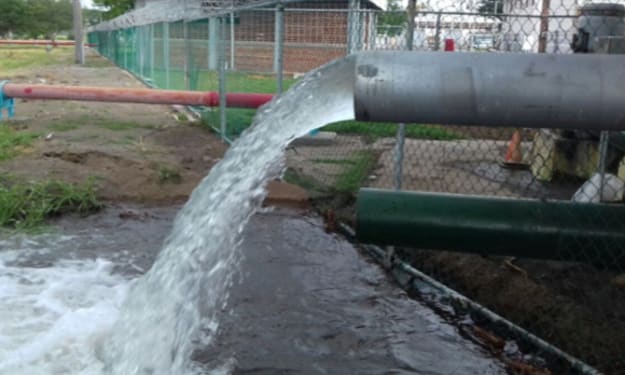
The average lifespan of a water well ranges from 25 to 40 years if it has carbon steel piping. Other steel alloys can increase the well's durability; however, a crucial point is sustainability. This means that over the years, the well continues to provide a constant and sustainable flow of water. To achieve this, it largely depends on the underground aquifers not being overexploited and on the recharge rate being greater than or equal to the extraction volume. However, today most aquifers are overexploited due to the large amount of water extracted each year. Another important factor that will ensure the sustainability of water wells is the periodic maintenance that the user must perform to keep them free of sediment and at their full depth. This includes minimizing corrosion of the steel casing pipe, thus extending its lifespan. Continuous monitoring of static and dynamic water levels in the well is also crucial, as is annual water quality analysis to identify any potential partial or total aquifer contamination.
By Ximena Ramirezabout 8 hours ago in FYI
Early March 2026: 4 Goals Accomplished
It's early March and I've now accomplished my 4th writing goal for the year of 2026. Before diving into the behind-the-scenes of it... why not tell you up front what that accomplishment was? I was published in a 2nd publication for this year. Published in Helix Literary Magazine out of Central Connecticut State University. You can read it for free right now!
By Stephen Kramer Avitabile7 days ago in Writers



Comments
There are no comments for this story
Be the first to respond and start the conversation.