
She Sparked a Civil War and Inspired Alexandre Dumas
Only loyal to herself, Lucy Hay survived one of the most turbulent periods of English history

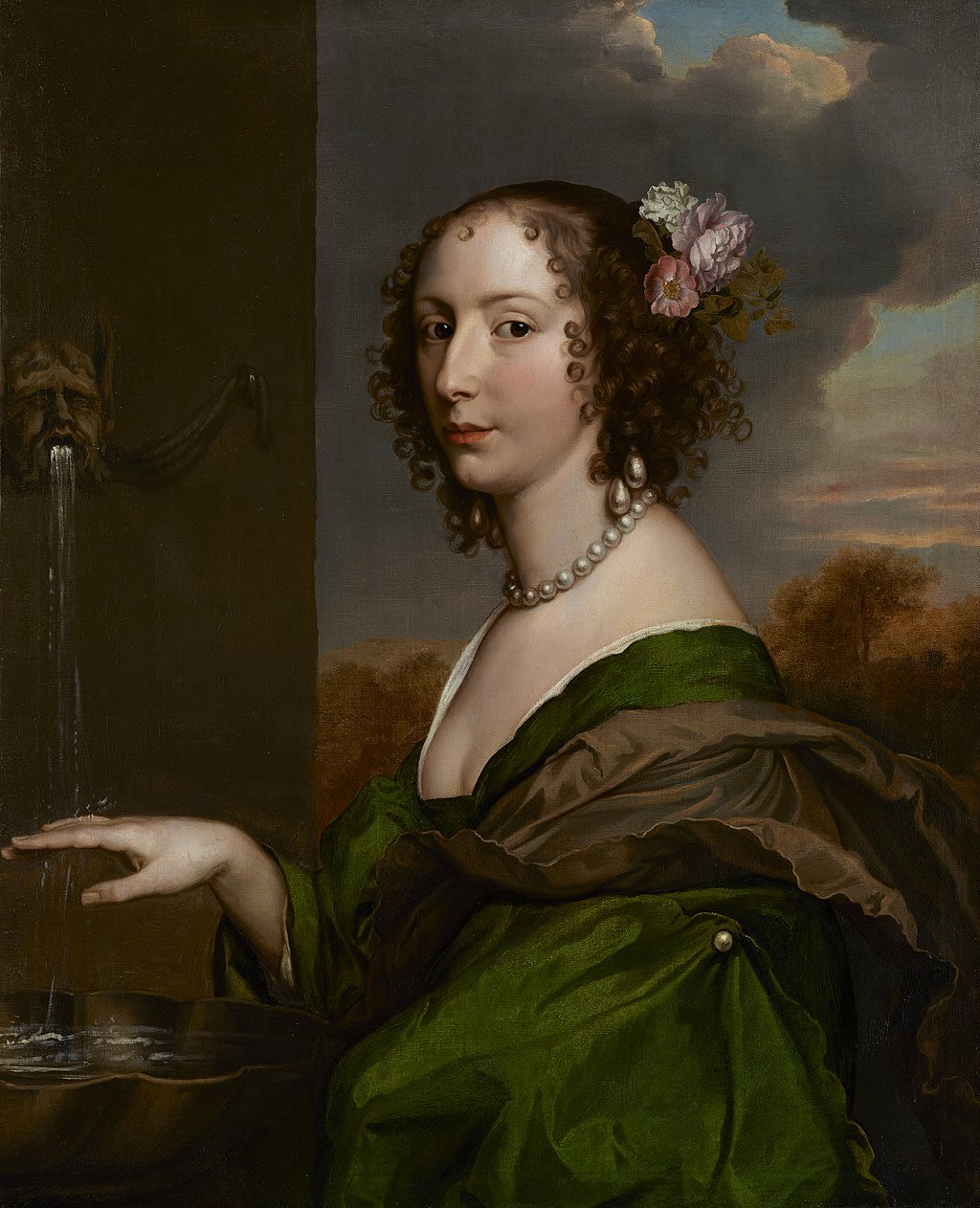
The arch-nemesis of the three musketeers is by far one of the most remarkable villains ever written. Milady de Winter used beauty and intelligence to manipulate, deceive, and lure men into her skillfully crafted traps. And her real-life inspiration was no less remarkable.
Born in Rebellion
Lucy Percy, despite her name not sounding very posh, was born into wealth and titles. Her father Henry was the famous "Wizard Earl" of Northumberland, an avid supporter and fan of astronomy.
Her mother, Lady Dorothy Devereux, although born noble, had gotten herself in trouble with Queen Elisabeth I. All because of one mistake she and her first husband Sir Thomas Perrot made. They conveniently forgot to ask the queen's permission to get married.
This was unacceptable, but what's worse, Dorothy's mother did the exact same thing before her. She secretly married no other than the queen's favorite Robert Dudley (Yes, that same Robert played by Joseph Fiennes in "Elisabeth").
So, when Dorothy did the same thing, it was like pouring salt over the queen's wounds. She banned the couple from the Royal Court. Only after Thomas was arrested, convicted of treason (unrelated to the marriage feud), and executed was Dorothy allowed to return.
The second marriage to the Wizard Earl (with the queen's permission, of course) eventually facilitated her way back into the ranks of Elisabeth's Ladies-in-Waiting.
Childhood Lessons
All was good for a while, but then Henry got entangled in a scheme to blow up the Parlament with the King James I of England (Elisabeth's successor) inside.
Historians assume that Henry's involvement was either minimal or merely limited to knowing the people implicated. It was, however, enough to send the earl to the Tower of London when Lucy was just six years old, and he remained there for 16 years.
All along, Lucy saw her mother looking for ways to get her husband out of jail. She observed how Dorothy used her royal connections and favors, learning from an early age how deals were made behind closed doors. Dorothy was successful enough to solicit the new queen to personally put in a good word on behalf of the earl and his wife.
Although the monarch refused to release her father, this situation taught Lucy the importance of having high-ranking liaisons in the Court. She just needed to get there first.
How She Married Her Way In
Once Lucy reached adulthood, her beauty and vibrant personality were like a magnet for suitors. Still, she remained indifferent to their charms and poems, until James Hay, the king's gentleman of the bedchamber, came along.
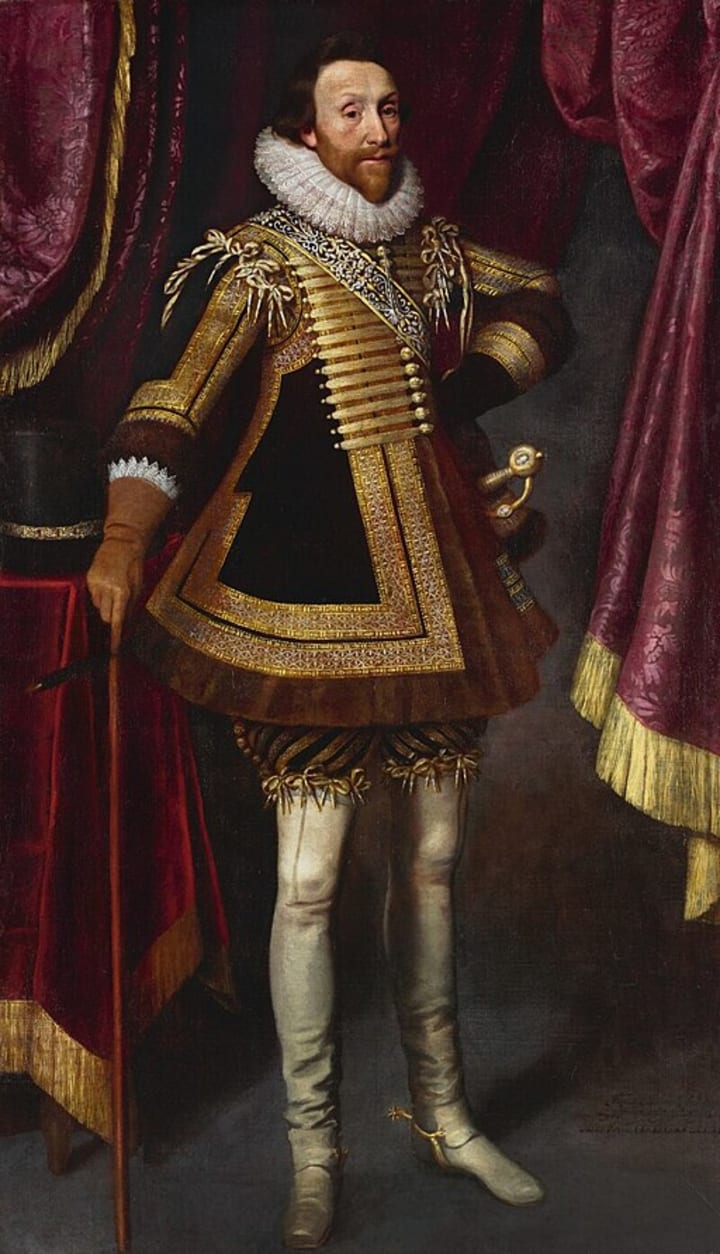
The only problem was Lucy's father. James Hay was an older gentleman previously married and with a son from the first marriage. But it was not Earl's main concern.
His possible son-in-law was Scottish... This bothered Lucy's father so much that he even offered to pay her money to not marry James and ordered Lucy to live with him in the Tower.
But like the women before her, Lucy ignored the objections and married James in 1619.
The doors to the Court opened wide. The couple, and especially Lucy, was gaining popularity fast. But things turned even better when, five years into the marriage, the king endowed his loyal servant with the title of the Earl of Carlisle, and Lucy Hay became the Countess of Carlisle.
Lucy was enjoying the attention and admiration. And admired she was. So much so, that after she contracted smallpox, the entire Court feared the disease would leave Lucy's beautiful face scarred.
While she wore a mask during the healing process, other women in Court began copying her. The mask became a new fashion trend, and Lucy learned just how much influence she possessed.
And, she was not the only one to notice it.
The Power of a Mistress
When Charles I succeeded to the throne, along came his close friend George Villiers, also known as the 1st Duke of Buckingham. Yes, that same Duke who was in love with the French queen in Dumas's Three Musketeers.
George may have admired the Queen of France at some point, but before her, there was Lucy.
The moment Buckingham laid eyes on Lucy, he had plans for her. And those plans reached farther than just having the beautiful Royal Court's favorite in his bed. Buckingham wanted Lucy in the queen's bedroom as well. Literally.
You see, Buckingham distrusted his friend's new wife Henrietta Maria of France. The queen equally disliked Buckingham, and she was less than amused when Lucy was appointed her lady of the bedchamber.
Henrietta Maria was certain this was Buckingham's doing - to place his mistress close to the queen so he could spy on her. Evermore so, the queen was convinced Buckingham was also trying to push Lucy into the king's bed.
She officially petitioned her husband to remove Lucy from her new duties, but Charles dismissed his wife's complaints. However, he also omitted Lucy's charms, and Buckingham started to look for a new catch.
Here is where fiction and facts entwine, all thanks to the memoirs of Lucy and Buckingham's contemporary Francois, Duc de La Rochefoucauld.
In the memoirs, he wrote about how Buckingham fell in love with the Queen of France, and how, impressed and flattered by the affection, she gave him her diamond studs. When Lucy found out, she stole the diamonds from her former lover out of spite.
And then came the trouble. The King of France one day demanded that his wife wear the studs, but they were nowhere to be found. How Queen Anne got them back remains untold, but according to the memoir author, she had them returned to her and wore them for her husband.
Whether the theft story was true or not, we may never know, but it was enough to pique Alexandre Dumas's curiosity centuries later. He borrowed the narrative and turned Lucy into his famous villain Lady Winter.
A Resourceful Wife
In reality, Lucy was not much of a villain. Not yet, at least.
After Buckingham was assassinated and there were no more reasons for Henrietta Maria to suspect Lucy of spying, the two became close friends. Lucy was even invited to participate in the queen's theater plays. More so, she was allowed to establish a salon where writers, poets, and political figures would gather. Lucy would mingle with them, learning new things, and creating new liaisons.
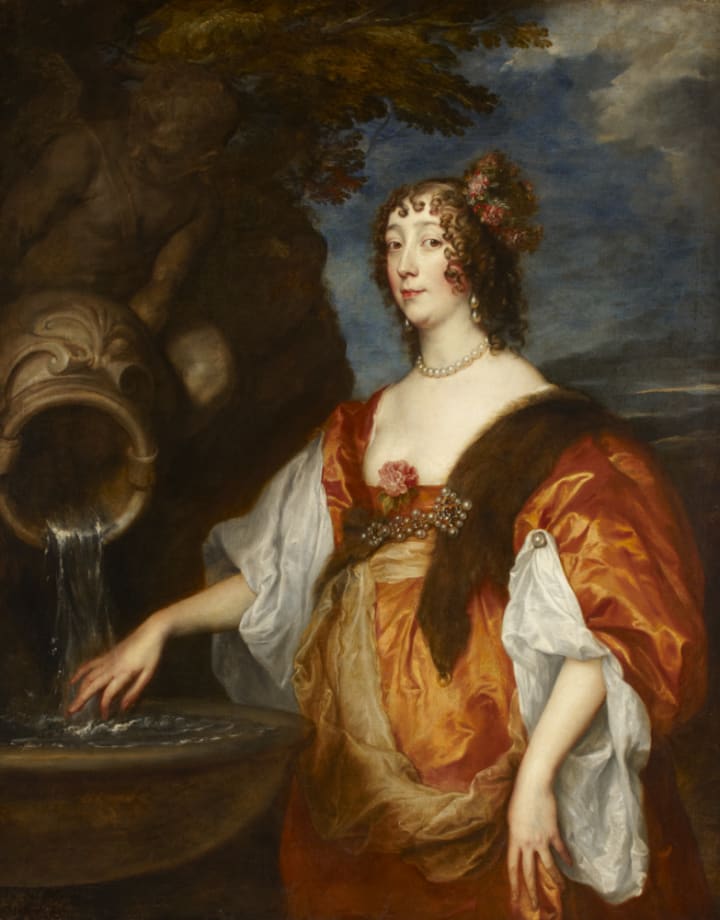
James, the husband we almost forgot she still had, was in her shadow by then. He solemnly focused on political matters, dedicating all he had to facilitate deals for the king, including his wife.
One of those occasions brought Thomas Wentworth, the Earl of Strafford into the picture. As the tension between the King and the Parliament grew, James sent his wife to persuade the avid supporter of the Parliament to switch sides.
We can only guess how Lucy approached him, but facts remain facts - Stafford sided with the royalists and kept Lucy close after.
Switching Sides and Beds
About a year later, James died, and Lucy became a wealthy and influential widow. In her mid-thirties, she decided to not remarry. Instead, she and Strafford, who became one of the king's most trusted advisors, remained lovers until he found himself behind bars.
Long (and messy) story short, the Parliament impeached Strafford, accusing him of treason, and when the impeachment failed, they passed the bill of attainder that allowed the Parliament to convict someone without a trial. Unwilling to escalate the conflict, Charles betrayed his avid supporter and signed the bill that condemned Strafford to death.
And Lucy did the same.
Once trouble started brewing, she distanced herself from her lover. After all, she had seen firsthand what happens to people close to political enemies of the state. She had no desire to end up like her father and jumped onto the wagon going in the opposite direction.
More so, Lucy sided with the very man who pushed the bill that led to Strafford's death. Some speculate that secretly siding with John Pym was her way of payback for the king's betrayal. After all, she was still close to the royal family, and their secrets now became Lucy's weapon.
How to Start a War
The Countess of Carlisle grew into the spy Buckingham would have loved to have.
In 1642, she learned of the plan to arrest the Parliament's five most prominent leaders, including her new lover Pym and her cousin Robert Deveroux. Through him, Lucy alerted the men concerned, and they managed to escape.
When Pym returned to London a week later, he and his followers were more than ready for a fight. And so the civil war began.
Switching Sides Again
Despite her ties with Pym, Lucy retained her royal relations throughout the first part of the Civil War. After all, she liked luxury and wealth and was not ready to say goodbye to it all so fast.
Once the Puritan faction of the Parliament started gaining substantial influence and threatening her lavish lifestyle, Lucy switched sides again.
She went as far as selling her super expensive pearl necklace to raise funds for the royal family in exile. She also acted as a messenger between Henrietta Maria and the royal supporters on the frontline.
However, in 1649 Charles was captured and executed, and a few months later, Lucy was arrested and thrown into the Tower. The countess was threatened with torture if she didn't spill more royal secrets she clearly knew, but the woman refused to cower.
Not only did she remain silent, but she also secretly communicated with the heir to the throne Charles II. They exchanged letters written in code that Lucy's brother helped deliver, and her capturers never learned about it.
Turbulent Life and Quiet Death
Eighteen months later, Lucy was released from prison on parole. She still worked on helping the future king but never returned to the spotlight.

Was Lucy worth the villain's title? Probably not. Sure, she was only loyal to herself and switched between enemies and friends in the way that suited her best. But then again, she saw firsthand how blind loyalty could lead to an untimely death.
Villain or not, she was undoubtedly a remarkable woman who used her beauty and wits to survive and thrive in a world of intrigues, lies, and conflict.
About the Creator
GD Madsen
A historian by education, a former journalist by profession, now living in the French countryside writing books and articles.
Becca
"Everything is so... flat." Denille said stupidly as she looked around her new neighborhood. She looked around at the muted desert where even the smallest sign of life seemed to have given up. The plant life was shrubs that were half cooked by the heat and where there should have been a lawn, a mess of white rocks laid glistening in the sun. Even the sky looked stretched thin, like the sun had ironed it smooth. She’d moved from Riverside, where at least there were hills, but here in Barstow, everything felt baked and brittle.
By Sara Wilson7 days ago in Fiction


Comments
There are no comments for this story
Be the first to respond and start the conversation.