
Second Hand Furniture Market Set to Cross US$ 74 Billion by 2033: Affordability, Sustainability, and Urbanization Driving Growth
From thrift stores to online marketplaces, the global second-hand furniture market is transforming consumer habits and promoting eco-conscious living worldwide.


Global Second Hand Furniture Market Overview
The Second Hand Furniture Market is projected to reach US$ 74.19 billion by 2033, up from US$ 36.5 billion in 2024, growing at a CAGR of 8.20% from 2025 to 2033, according to Renub Research. This growth reflects the rising popularity of pre-owned furniture driven by affordability, eco-consciousness, and changing lifestyles.
Second-hand furniture encompasses previously used or refurbished items sold through thrift shops, consignment stores, online platforms, or direct resale. From budget-friendly modern pieces to vintage or antique items, pre-owned furniture provides a cost-effective, sustainable, and stylistically diverse alternative to new products. Urban consumers, especially millennials and Gen Z, are increasingly opting for second-hand options to create personalized, affordable living spaces while reducing environmental impact.
The market benefits from online platforms that connect buyers and sellers, rising urbanization, eco-friendly lifestyles, and a growing desire for space-efficient solutions. Together, these factors have transformed second-hand furniture from a niche segment into a mainstream, thriving industry.
Why the Second Hand Furniture Market Is Expanding
1. Affordability and Value for Money
A primary driver of growth is the cost-effectiveness of second-hand furniture. Quality products can often be purchased at a fraction of their original price, making them particularly appealing during economic downturns.
For example, IKEA's Buy Back & Resell program in the United States, launched permanently in April 2022, allows customers to sell functional, pre-owned furniture for store credit. This initiative not only encourages sustainable consumption but also reinforces the market for affordable furniture alternatives.
Consumers increasingly recognize that second-hand furniture offers long-term value, enabling them to invest in style, quality, and design without the premium cost of new items.
2. Urbanization and Space-Conscious Living
Urban migration has led to smaller living spaces, such as studio apartments, where compact, affordable, and flexible furniture solutions are essential. Pre-owned furniture addresses these urban needs, providing budget-friendly, space-saving options.
Frequent relocations due to work, education, or lifestyle changes further drive the preference for reusable furniture that can adapt to new environments. This trend is especially pronounced in metropolitan areas, where residents value both convenience and sustainability.
3. Growth of Online Marketplaces
The rise of digital resale platforms has significantly expanded access to second-hand furniture. Websites and apps like Facebook Marketplace, Craigslist, OLX, Quikr, and Amazon Renewed provide buyers with convenience, transparency, and a wide selection of products.
Detailed listings, images, customer reviews, and secure payment systems enhance trust and convenience, particularly for younger, tech-savvy consumers. With online marketplaces, furniture can be shopped, negotiated, and delivered without leaving home, fueling the adoption of pre-owned items globally.
Challenges in the Second Hand Furniture Market
1. Limited Warranty and Assurance
One of the market’s main hurdles is the absence of warranties for pre-owned furniture. Unlike new products, second-hand items are typically sold “as-is,” leaving buyers responsible for quality and durability.
Concerns over hidden defects or reduced lifespan can deter cautious consumers. Online transactions may exacerbate this issue due to the lack of physical inspection or post-purchase support. Market players are exploring inspection services and limited guarantees to enhance consumer confidence.
2. Regulatory and Authentication Concerns
Authenticity and fair pricing are critical challenges in the second-hand furniture market. Without professional appraisal or standardized certifications, consumers may encounter overpriced, counterfeit, or subpar items.
A lack of uniform evaluation standards and limited regulation reduces transparency, sometimes discouraging potential buyers. Industry-wide practices for verification, quality assessment, and fair pricing are becoming increasingly important to maintain trust and promote growth.
Regional Insights
United States
The U.S. market is growing rapidly due to affordability, sustainability awareness, and lifestyle shifts. Millennials and Gen Z, who accounted for around 70% of home furnishing purchases in late 2022, are particularly driving demand for unique, cost-effective furniture.
Platforms like AptDeco, which went national in November 2022, enable end-to-end resale with shipping and delivery, supporting the circular economy while enhancing furniture longevity. The U.S. second-hand furniture market is expected to continue its upward trajectory, fueled by eco-conscious and frugal consumer behavior.
India
In India, the second-hand furniture market is thriving due to affordability, environmental consciousness, and urban lifestyle needs. Young consumers, including millennials and Gen Z, frequently relocate for education or work, driving demand for short-term, cost-effective furnishing solutions.
Online platforms like OLX, Quikr, and Amazon Renewed facilitate easy buying and selling, while traditional markets like Ravivari Market in Ahmedabad and Chor Bazaar in Mumbai remain popular for finding vintage and unique pieces. Co-living and rental housing trends further support the growth of this sector.
United Kingdom
The UK market continues to grow steadily, driven by affordability, sustainability, and design-conscious consumers. Younger generations prefer stylish, eco-friendly furniture without the high cost of new products.
Retailers such as IKEA, Vinterior, and Rehome promote resale programs, and high urban living costs encourage the use of pre-owned furniture. This combination of factors is making second-hand furniture a sustainable and financially attractive choice for UK consumers.
United Arab Emirates
The UAE market is expanding as both locals and expatriates seek affordable, sustainable furniture options. Digital marketplaces like Dubizzle and curated platforms like Decosouq offer convenient access to pre-owned furniture with quality assurance and delivery services.
Traditional markets in Naif and Sharjah Industrial Area 6 continue to attract consumers seeking budget-friendly options. This trend reflects a broader shift toward circular economy principles in the region.
Second Hand Furniture Market Segmentation
By Product:
Beds
Tables & Desks
Sofa & Couch
Chairs & Stools
Cabinets & Shelves
Others
By Material:
Metal
Wood
Plastic
Glass
Others
By Application:
Residential
Commercial
By Country (25 Markets Covered):
North America: United States, Canada
Europe: UK, Germany, France, Italy, Spain, Netherlands, Belgium, Turkey
Asia-Pacific: India, China, Japan, Australia, South Korea, Thailand, Malaysia, Indonesia, New Zealand
Latin America: Brazil, Mexico, Argentina
Middle East & Africa: UAE, Saudi Arabia, South Africa
Key Players:
IKEA, Beverly Hills Chairs, Steelcase Inc., Pottery Barn, Second Hand Office Furniture Co., Rework Office Furniture, Thrift Super Store, Almost Perfect Furniture
Final Thoughts
The Second Hand Furniture Market is poised for robust growth over the coming decade. Urbanization, affordability, sustainability awareness, and the proliferation of online marketplaces are reshaping how consumers approach furniture.
Pre-owned furniture is no longer merely an economical choice — it represents a lifestyle shift toward sustainability, minimalism, and eco-conscious consumption. As digital platforms expand and awareness rises, the market is likely to continue its upward trajectory, offering stylish, practical, and environmentally responsible solutions for global consumers.
By embracing circular economy principles, the second-hand furniture industry is not only driving growth and profitability but also contributing to environmental conservation and waste reduction, making it a win-win for businesses, consumers, and the planet.
Source: Renub Research – Second hand Furniture Market Size, Share, and Forecast 2025–2033
About the Creator
Renub Research
Renub Research is a Market Research and Consulting Company. We have more than 15 years of experience especially in international Business-to-Business Researches, Surveys and Consulting. Call Us : +1-478-202-3244
Keep reading
More stories from Renub Research and writers in FYI and other communities.
Europe Commercial Greenhouse Market Size and Forecast 2025–2033
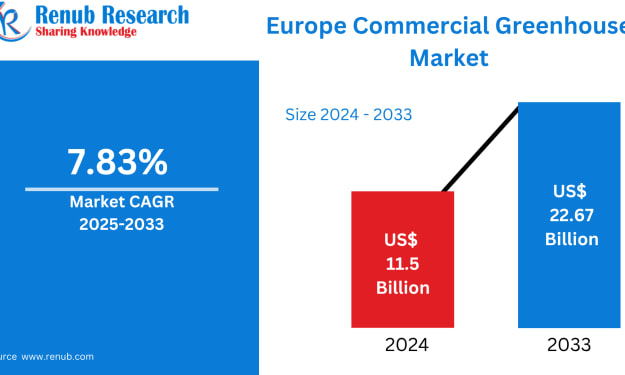
The Europe Commercial Greenhouse Market is set for dynamic expansion over the coming decade, reflecting the region’s accelerating transition toward sustainable, technology-driven agriculture. According to Renub Research, the market is projected to reach US$ 22.67 billion by 2033, rising from US$ 11.5 billion in 2024, at a robust CAGR of 7.83% during 2025–2033. This growth is being driven by increasing demand for year-round crop production, the rapid adoption of Controlled Environment Agriculture (CEA), and a strong policy push toward climate-resilient and resource-efficient farming.
By Renub Research3 days ago in FYI
3 Impossible Planets That Defy the Laws of Astronomy
For as long as humans have looked up at the stars, we’ve tried to make sense of our place in the universe. We’ve found thousands of exoplanets orbiting distant suns, and we thought we had a pretty good handle on how they formed.
By Areeba Umair3 days ago in FYI
How to Succeed at the Benson Directory®
Congratulations and welcome to the Benson Directory® employee #22391! As our newest call handler, you will have the privilege of speaking with dozens of unique and interesting people on a daily basis as well as the opportunity to earn bonuses for high performance. Contained within this handbook you will find a set of ease to follow instructions designed to help you settle in to your new role and begin paving the way to success.
By S. A. Crawford3 days ago in Fiction



Comments
There are no comments for this story
Be the first to respond and start the conversation.