
Robotic Race
Insights from Big Tech's A.I. Robot Race


As we move further into the 21st century, the race to develop advanced robotics and artificial intelligence (A.I.) is heating up, with major companies like Tesla, Boston Dynamics, and others pushing the boundaries of what machines can do. The integration of A.I. into robotics is not just about creating more sophisticated gadgets—it's about revolutionizing industries, transforming economies, and changing how we live and work. Here's a look at the key insights from the ongoing A.I. robot race and what it means for the future.
Humanoid Robots
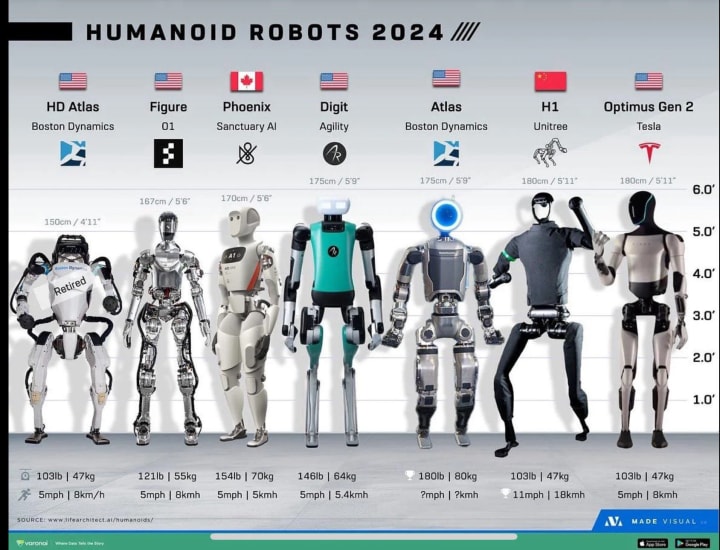
In the ever-evolving world of artificial intelligence (A.I.) and robotics, humanoid robots have emerged as one of the most ambitious and intriguing developments. As our world is designed for humans, it makes perfect sense that some of the most cutting-edge robotics projects aim to create machines that can mimic human abilities. Companies like Boston Dynamics, Honda, and Sony are at the forefront of this race, unveiling early versions of humanoid robots designed to perform tasks in environments built for people. The fundamental idea driving the development of humanoid robots is straightforward: robots that resemble humans can navigate and interact with our world more naturally and effectively. This concept is not just about making robots look like us; it's about functionality. A humanoid form allows robots to use tools, open doors, climb stairs, and operate machinery in the same way humans do. This makes them highly versatile, especially in environments designed with human dimensions and ergonomics in mind.
The journey to create functional humanoid robots has been long and challenging. The first significant steps were taken in the 1990s, with Honda's development of ASIMO, one of the most iconic early humanoid robots. ASIMO was designed to walk, run, and even climb stairs, showcasing the potential of bipedal locomotion in robotics. However, ASIMO's capabilities were limited compared to today's standards. Fast forward to the present, and we see companies like Boston Dynamics pushing the boundaries of what humanoid robots can achieve. Boston Dynamics' Atlas robot, for instance, is a marvel of modern engineering, capable of performing backflips, parkour, and complex maneuvers that were once thought impossible for machines. This leap in capability is largely due to advancements in A.I., machine learning, and robotics.
A crucial element in the development of humanoid robots is the training process, which relies heavily on A.I. and vast amounts of data. Humanoid robots are being trained using data collected from human activities. By observing and mimicking how humans perform tasks, these robots are learning to do the same things autonomously. For example, a robot might watch a person perform a task 200 times, record that data, and then use it to train A.I. models to replicate the task independently. This approach mirrors how generative A.I. models, like GPT, are trained to produce human-like text. The data collected is not just about the actions themselves but also the context in which these actions are performed. This includes understanding the environment, recognizing objects, and making decisions based on the information available. The integration of advanced sensors, cameras, and machine learning algorithms allows humanoid robots to process this data and learn in a way that closely mimics human learning.
Today, humanoid robots are still in the early stages of development, but the progress made so far is impressive. Companies like Tesla have also entered the fray with their own humanoid robot projects, aiming to bring these machines into everyday life. The ultimate goal is to create robots that can work alongside humans in a variety of settings, from homes and offices to factories and even hazardous environments where human presence might be dangerous. The potential applications for humanoid robots are vast. In healthcare, they could assist with tasks like lifting patients or delivering medications. In disaster response, they could navigate through rubble and debris to find survivors. In manufacturing, they could work on assembly lines with a level of precision and consistency that surpasses human capabilities.
The race to develop humanoid robots is not just about creating machines that look like humans; it's about pushing the boundaries of what A.I. and robotics can achieve. As these robots become more advanced, they will likely play an increasingly important role in our lives, helping us tackle challenges in ways we never thought possible. The journey is far from over, but the progress made so far suggests that the future of humanoid robots is bright, and their impact on society could be profound.
The Power of A.I. and Big Data
In the rapidly evolving landscape of artificial intelligence (A.I.) and robotics, one of the most transformative aspects is the ability of modern A.I. systems to learn and adapt beyond their initial programming. This capability is fundamentally changing how robots interact with the world and perform tasks, making them more versatile and intelligent than ever before. Central to this revolution is the use of A.I. models that require vast amounts of data to train effectively, enabling these machines to generalize from data and perform tasks they were never explicitly programmed to do.
At the core of modern robotics is the synergy between A.I. and big data. Unlike traditional programming, where robots were limited to predefined instructions, today's A.I.-powered robots learn by analyzing massive datasets. These datasets, often collected from real-world human activities, provide the robots with the context they need to understand and replicate complex tasks. The more data these systems are exposed to, the better they become at making decisions, recognizing patterns, and adapting to new situations.
For instance, consider a robot in a warehouse setting. Traditional robots might be programmed to pick up specific items from certain locations, but any deviation from the norm—such as a misplaced item—would confuse them. However, an A.I.-powered robot trained on vast amounts of data can recognize and correct for such anomalies, making it far more efficient and reliable in dynamic environments. This ability to learn and adapt is what sets modern A.I. apart from traditional robotics, making it a key driver of innovation. As companies continue to collect and analyze more data, A.I. systems will only become more sophisticated, capable of tackling increasingly complex tasks across various industries.
Big Tech's Role in A.I. and Robotics
Big Tech companies like Google, Microsoft, and NVIDIA are pivotal in advancing A.I. and robotics. These tech giants provide the computing power, resources, and infrastructure needed to develop and deploy advanced A.I. systems at scale. For instance, NVIDIA's powerful GPUs are essential for training large A.I. models, while Google's TensorFlow and Microsoft's Azure platforms offer the tools and frameworks necessary for building and scaling A.I. applications.
Moreover, these companies are not just providers of technology—they are also innovators pushing the boundaries of what A.I. can achieve. Google's DeepMind, for example, has made significant strides in machine learning and A.I., including the development of A.I. systems that can outperform humans in complex games like Go. Microsoft has also been a leader in applying A.I. to real-world problems, from healthcare to autonomous driving.
For companies looking to lead in the A.I. and robotics space, partnering with these tech giants is not just beneficial—it is essential. The scale of resources, talent, and technology that companies like Google, Microsoft, and NVIDIA bring to the table is unmatched, even by governments. This partnership allows businesses to leverage cutting-edge A.I. technologies and integrate them into their operations, giving them a competitive edge in a rapidly evolving market.
Why Invest in the A.I. and Robotics Industry?
Investing in the A.I. and robotics industry presents a unique opportunity for forward-thinking investors. Some of the reasons to invest include explosive growth potential. The A.I. and robotics industry is on the cusp of a massive expansion, with market growth projected to be exponential in the coming years. As industries across the board—from healthcare to manufacturing to logistics—begin to integrate A.I. and robotics into their operations, the demand for these technologies is expected to surge dramatically. Companies at the forefront of this revolution are likely to see significant benefits, making them highly attractive to investors. The continuous advancement in A.I. capabilities, coupled with the increasing need for automation and efficiency, creates a perfect storm for robust growth, making this sector one of the most promising areas for investment.
Another of the most compelling reasons to invest in A.I. and robotics is the vast range of applications across multiple sectors. These technologies are not confined to a single industry; they have the potential to revolutionize numerous fields, including autonomous vehicles, smart cities, personalized healthcare, and beyond. This diversification is a critical advantage for investors, as it spreads risk across various sectors rather than tying success to the performance of just one. Whether it’s enhancing productivity in manufacturing, improving patient outcomes in healthcare, or transforming urban infrastructure, A.I. and robotics are poised to impact nearly every aspect of modern life, making them a versatile and resilient investment.
The success of A.I. and robotics companies is often bolstered by strategic partnerships with tech giants like Google, Microsoft, and NVIDIA. These partnerships are invaluable, providing access to cutting-edge technology, vast resources, and the scalability required to bring advanced A.I. systems to market. Aligning with these industry leaders allows companies to leverage their extensive research and development capabilities, as well as their global networks, ensuring they stay ahead of the competition. For investors, businesses that have forged strong alliances with Big Tech are particularly appealing, as these partnerships significantly enhance their potential for growth and market dominance.
Investing in A.I. and robotics is not just a short-term play; it’s a strategy for building sustainable long-term value. As A.I. systems continue to improve and become more deeply integrated into everyday life, their intrinsic value is only set to increase. The potential for A.I. and robotics to drive efficiency, innovation, and new revenue streams across various industries means that companies in this space are likely to generate enduring returns. For investors looking to build wealth over time, the A.I. and robotics sector offers a compelling opportunity to invest in the future, with the promise of substantial and sustainable growth.
The A.I. and robotics sector is a magnet for some of the brightest minds and most visionary leaders in technology. Companies leading the charge in this industry are often helmed by innovators who are not just responding to market trends but actively shaping the future of technology. These leaders are driving the next wave of advancement, pushing the boundaries of what is possible with A.I. and robotics. For investors, backing these visionary companies means being part of a transformative journey, supporting the pioneers who are set to redefine industries and create the technological foundation for the future. Investing in these companies is not just about financial returns; it’s about being part of the next great leap forward in human innovation.
The fusion of A.I. and big data is revolutionizing robotics, creating machines that learn, adapt, and exceed the limitations of traditional programming. With Big Tech driving innovation and offering the necessary infrastructure, the A.I. and robotics industry is poised for remarkable growth. For investors, this presents a golden opportunity to be part of a transformative era in technology—one that will shape the future of multiple industries and create lasting value. Investing in A.I. and robotics is not just about capitalizing on the present; it's about securing a stake in the future.
Tesla's Vision

One of the most vocal proponents of A.I. and robotics is Elon Musk, who has boldly predicted that Tesla could become the world's largest robotics company. Tesla's journey from electric cars to humanoid robots seems logical when you consider Musk's vision. He views Tesla's vehicles as "robots on wheels," with advanced self-driving capabilities powered by A.I. It makes sense to extend this technology to humanoid robots that can perform dangerous, repetitive, and boring tasks.
Musk has even suggested that Tesla's future market value could be driven more by its robotics division than by its automotive business. With ambitions as high as a $25 trillion market cap, Musk envisions a world where millions of robots are produced and deployed, reshaping industries from logistics to healthcare.
The Role of Startups and Global Competition
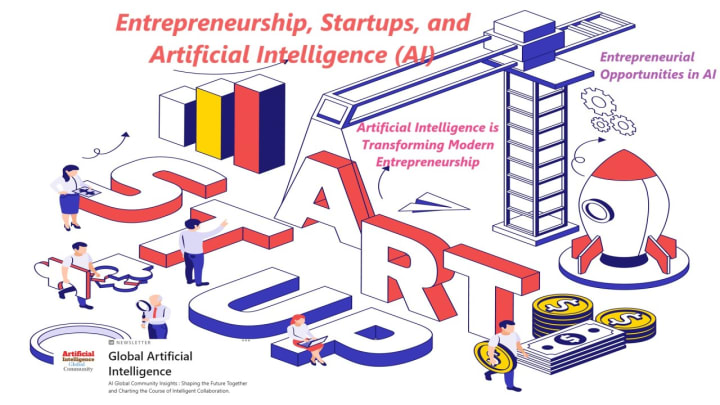
While industry giants like Tesla and Boston Dynamics often dominate the spotlight with their cutting-edge robotics projects, a wave of innovative startups is quietly making significant strides in the field. Companies like Agility Robotics are leading this charge, developing versatile robots capable of handling a wide range of tasks, from warehouse logistics to retail operations. These startups are not only competing with the established big players but are also driving innovation by exploring new approaches and technologies.
Agility Robotics, for instance, is known for its humanoid robot, Digit, designed to navigate human environments with remarkable agility. Unlike the more specialized robots produced by some of the bigger companies, Digit is built to handle various tasks, making it adaptable and practical for multiple industries. The agility and versatility of such robots allow them to perform a variety of functions, such as package delivery, inventory management, and customer interaction, making them invaluable assets to businesses looking to streamline operations and reduce labor costs. Startups like Agility Robotics are also pushing the boundaries of what’s possible with robotics by leveraging advanced A.I. and machine learning algorithms to enhance robot functionality. By focusing on flexibility and adaptability, these companies are creating robots that can learn from their environment and improve over time. This approach contrasts with the traditional method of programming robots for specific tasks, making the new generation of robots far more capable and versatile.
As startups in the U.S. and Europe continue to innovate, the global race in robotics is heating up, with China emerging as a significant player. In recent years, China has become the world's largest installer of industrial robots, surpassing traditional leaders like Japan and Germany. This rapid growth is driven by China’s focus on automating its manufacturing sector to maintain its competitive edge in global markets. Chinese companies are not just mass-producing robots; they are also innovating in design and functionality. For example, Chinese manufacturers are increasingly focused on developing robots with more realistic facial features and expressive capabilities, a stark contrast to the faceless, utilitarian robots often seen in the U.S. market. This divergence in design philosophies highlights the cultural differences in how robots are perceived and integrated into society. In China, robots are often seen as companions or assistants that should blend seamlessly into human environments, while in the U.S., the focus has traditionally been on functionality and efficiency. China's ability to produce robots at a lower cost gives it a competitive edge in the global market. By leveraging its manufacturing prowess and economies of scale, China can offer more affordable robotics solutions to businesses worldwide. This cost advantage is particularly appealing to industries looking to automate on a large scale, making Chinese robots an attractive option for companies in sectors such as automotive manufacturing, electronics, and logistics.
The growing competition from China is forcing companies in the U.S. and Europe to accelerate their innovation efforts. To stay competitive, these companies must continue to invest in R&D and develop more advanced and capable robots. This competitive pressure is driving the industry forward, resulting in rapid advancements in robotics technology. As companies race to develop the next generation of robots, consumers and businesses stand to benefit from the increased availability of sophisticated, cost-effective robotics solutions. Furthermore, the global race in robotics is not just about technology—it’s also about influence. Countries leading in robotics and A.I. are likely to shape the future of these technologies and set global standards. As China continues to expand its presence in the robotics industry, the country’s influence over the direction of the industry will likely grow, potentially challenging the dominance of Western companies and creating a more multipolar landscape in global robotics.
The role of startups and global competition in the robotics industry cannot be underestimated. Startups are driving innovation and pushing the boundaries of what’s possible, while global competition, particularly from China, is accelerating advancements across the industry. As this competition intensifies, the robotics industry will continue to evolve, offering new opportunities for investment, innovation, and collaboration. The future of robotics will likely be shaped by a dynamic interplay between established giants, nimble startups, and global competitors, creating a vibrant and rapidly evolving landscape that promises to revolutionize industries around the world.
Challenges and Ethical Considerations
As exciting as the advancements in A.I. and robotics are, they also raise important ethical and regulatory questions. In the U.S., most robots are currently deployed in warehouses, where workplace safety is a major concern. Powerful machines working alongside humans could lead to accidents if not properly regulated. Ensuring that robots operate safely and ethically is crucial as they become more integrated into our daily lives. Moreover, there's the question of job displacement. As robots take over more tasks, some jobs may be lost, but new roles could emerge, such as managing and maintaining these robots. The transition may not be smooth, and society will need to address the economic and social implications of widespread automation.
Final Thoughts
The A.I. robot race is more than just a technological competition—it's a race that will determine the future of work, industry, and society. As big tech companies and startups alike push the boundaries of what's possible, we're likely to see robots become an increasingly common part of our lives. From automating dangerous jobs to creating new forms of interaction, the potential is vast, but so are the challenges. The question isn't just about what robots can do—it's about how we, as a society, will integrate them into our world.
About the Creator
Horace Was
Essay Writer, Aviation and Technology Expert
Keep reading
More stories from Horace Was and writers in FYI and other communities.
What is a Tech Out Outage?
A significant tech outage has caused chaos at airports and businesses around the globe, with disruptions affecting flights, stock exchanges, and essential services. The issue originated from a problematic content update to a widely used software, leading to what is being described as a "blue screen of death" scenario across multiple sectors.
By Horace Was2 years ago in FYI
Managing Tariff Impacts on Imported Aerospace Components
The aerospace industry operates within a highly interconnected global supply chain where manufacturers, suppliers, and maintenance providers depend on specialized components sourced from multiple countries. Aircraft production and maintenance require thousands of parts, ranging from structural materials and avionics systems to electronic hardware and precision fasteners.
By Beckett Dowhan3 days ago in FYI
Worth the Wait: Puerto Viejo, Costa Rica
Beach bumming in a small Caribbean beach town sounded like a perfect way to end our 6-month trip through Mexico and Central America. Or so we thought. The foul, fishy stench of rotten seaweed hit our nostrils as we stepped from the cramped bus and looked out at a rather depressing, empty, and underwhelming black sand beach. It was pouring with rain, and we had to quickly fish out our ponchos. We thought, this couldn’t be it, could it?
By Sh*t Happens - Lost Girl Travel7 days ago in Wander




Comments
There are no comments for this story
Be the first to respond and start the conversation.