
Revealing the Ultimate Transformation: From F/A-18 Hornet to EA-18G Growler!
By AirPra

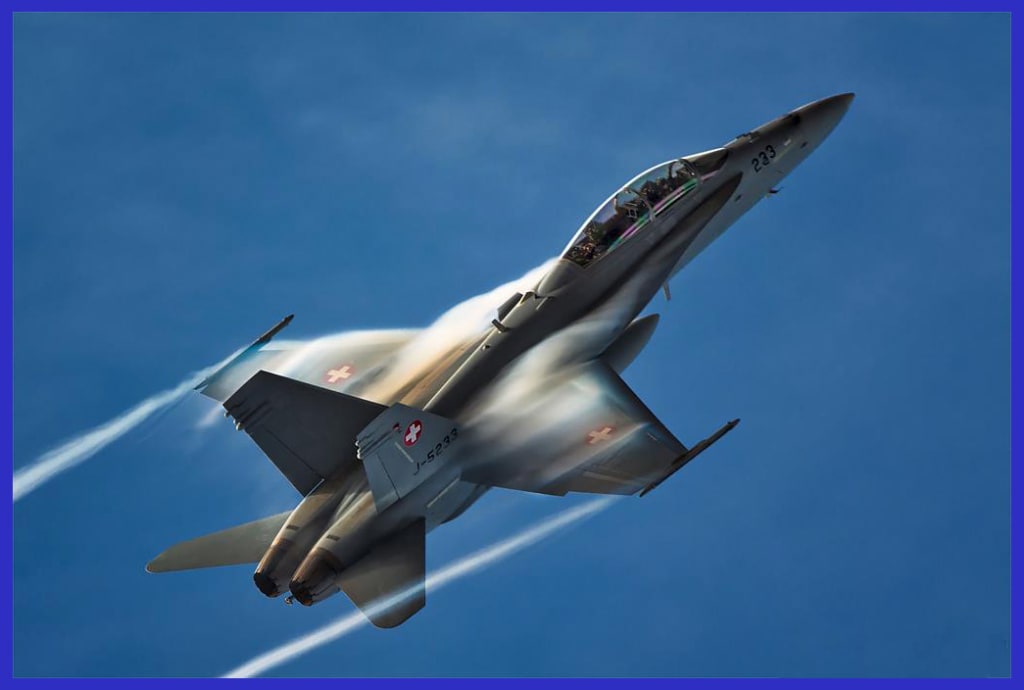
The F/A-18 Hornet is a versatile and iconic multirole fighter aircraft designed and developed by McDonnell Douglas until 1997. Afterwards, it was taken over by Boeing to produce the Super Hornets and Growlers for the United States Navy and Marine Corps. Unveiling the Best of F/A-18 Hornet to EA-18G Growler, this transition brought about even more advanced and sophisticated capabilities in aerial warfare. With its sleek design and twin-engine configuration, the aircraft boasts exceptional agility, speed, and range, making it a formidable asset in various combat scenarios.
Its combat-proven track record and ability to operate from aircraft carriers further enhance its strategic significance, solidifying its position as a vital defence asset for naval and allied forces worldwide, both in 2023 and beyond. Equipped with state-of-the-art avionics and radar systems, the F/A-18 Hornet can engage in air-to-air combat and ground-attack missions with unparalleled precision, ensuring its effectiveness in modern warfare.
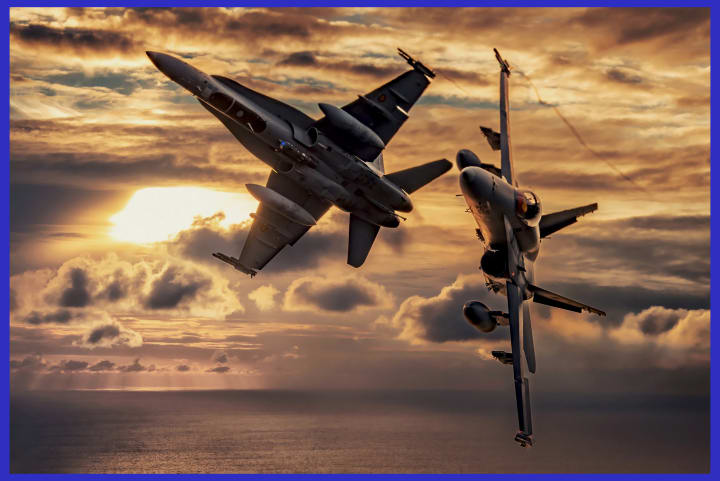
The Genesis of Northrop / McDonnell Douglas F/A-18 Hornet
The origins of the F-18 can be traced back to the 1970s when the U.S. Navy found itself in need of a new aircraft program. The primary objective was to procure a multirole aircraft that would replace the Douglas A-4 Skyhawk, the A-7 Corsair II, and the ageing fleet of McDonnell Douglas F-4 Phantom IIs. Furthermore, the Navy aimed to complement its existing F-14 Tomcat and sought a highly agile and rugged fighter capable of operating from aircraft carriers and performing both air-to-air and ground-attack missions.
In August 1973, Congress stepped in and mandated that the Navy pursue a more cost-effective alternative to the F-14. During the same year, Secretary of Defense James R. Schlesinger instructed the Navy to evaluate competitors in the Air Force’s Lightweight Fighter (LWF) program, which included the General Dynamics YF-16 and Northrop YF-17. By that time, the YF-16 had already been chosen by the USAF, as F-16.
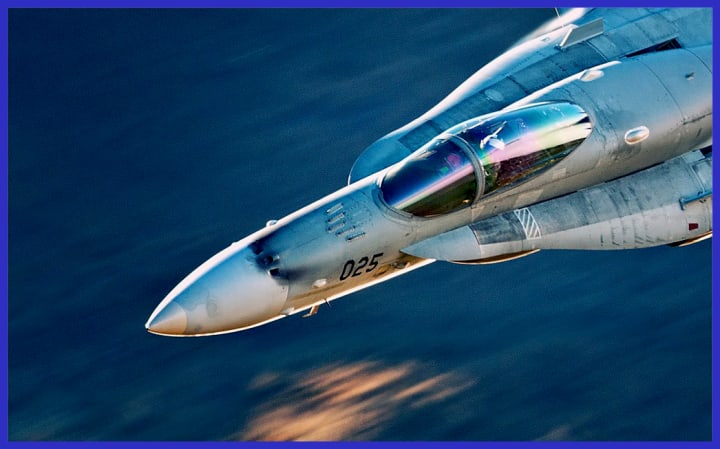
In 1975, the Navy officially announced its selection of the YF-17 design to meet its future requirements. However, considering the unique needs of the Navy, they requested McDonnell Douglas and Northrop to collaborate and redesign the YF-17, developing a new aircraft based on its principles.
Finally, on 1 March 1977, Secretary of the Navy W. Graham Claytor made the momentous announcement that the F-18 would be the series, named “Hornet.” With this decision, the F-18 Hornet entered into service, becoming a vital asset for the U.S. Navy’s carrier-based operations.
The Development of Northrop / McDonnell Douglas F/A-18 Hornet
In the context of the F-18 project, the two collaborating companies agreed to divide component manufacturing equally, with McDonnell Douglas being responsible for the final assembly. The specific tasks assigned to each company were defined, as McDonnell Douglas would undertake the construction of the wings, stabilators, and forward fuselage, while Northrop would focus on the centre and aft fuselage and vertical stabilizers. It’s worth noting that McDonnell Douglas served as the prime contractor for the naval versions, while Northrop assumed the prime contractor role for the F-18L land-based version, with the intention of selling it in the international market.
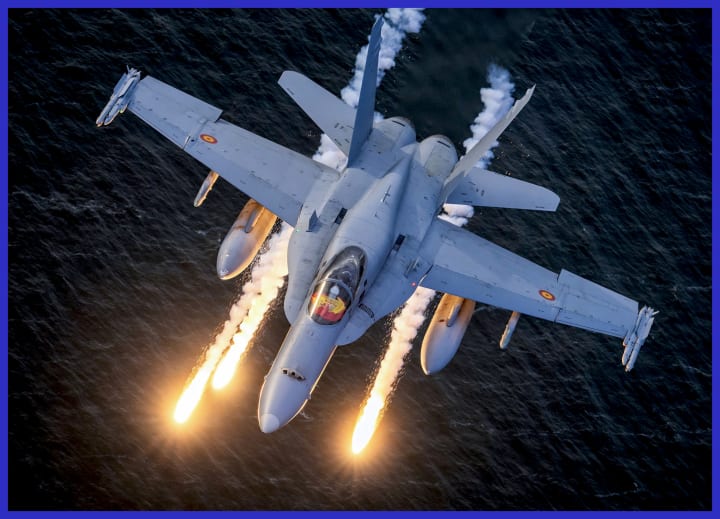
To enable carrier operations, a series of specific modifications were made. The airframe, undercarriage, and tailhook were reinforced for carrier suitability. Folding wings and catapult attachments were integrated, and the landing gear was widened to meet carrier-specific requirements. Additionally, McDonnell responded to the Navy’s demands by increasing fuel capacity by 4,460 pounds (2,020 kg), achieved through enlarging the dorsal spine and adding a 96-gallon fuel tank to each wing. Enlargements were also made to the wings, stabilators, and aft fuselage by 4 inches (102 mm). Optimizing performance further, the engines were canted outward at the front, resulting in a 10,000 lb (4,540 kg) increase in overall gross weight, bringing it close to 37,000 lb (16,800 kg).
Finally, a significant update was made to the YF-17’s control system, which was replaced with a fully digital fly-by-wire system featuring quadruple redundancy. This particular enhancement was noteworthy, as it marked the first implementation of such a system in a production fighter aircraft.
Originally, the initial plans involved the acquisition of a total of 780 aircraft with three distinct variants: the single-seat F-18A fighter, the A-18A attack (A) aircraft, which differed solely in avionics, and the dual-seat TF-18A, retaining the full mission capability of the F-18 but with a reduced fuel load. However, over the subsequent two years, significant enhancements in avionics and multifunction displays were implemented, along with a redesign of external store stations, leading to the combination of A-18A and F-18A into a single aircraft.
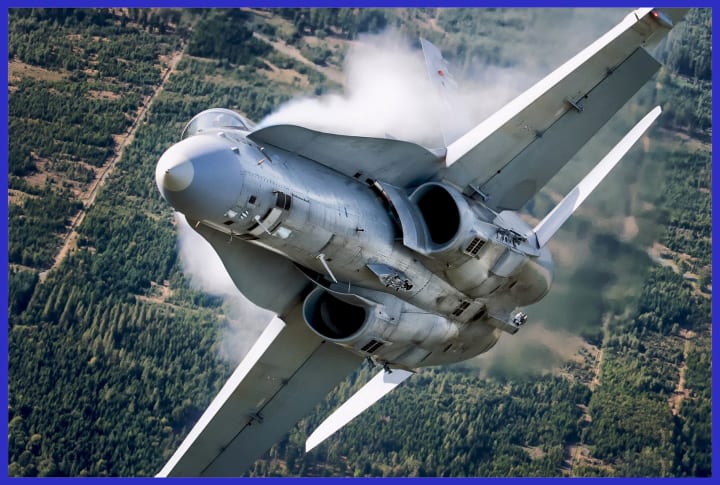
Consequently, starting in 1980, the aircraft began being referred to as the F/A-18A and the official designation was announced on 1 April 1984. The trainer TF-18A was subsequently renamed F/A-18B. On 12 April 1980, the first production F/A-18A took flight, and it was eventually deployed for service by the U.S. Navy and Marine Corps. After the production of 380 F/A-18As, the manufacturing focus shifted to the F/A-18C in September 1987.
Throughout the years, the F/A-18 Hornet has earned a reputation as a highly successful and reliable multirole fighter, becoming an integral part of the military inventories in numerous countries worldwide. Its continuous evolution led to the development of more advanced variants like the F/A-18E/F Super Hornet, ensuring its enduring service well into the 21st century.
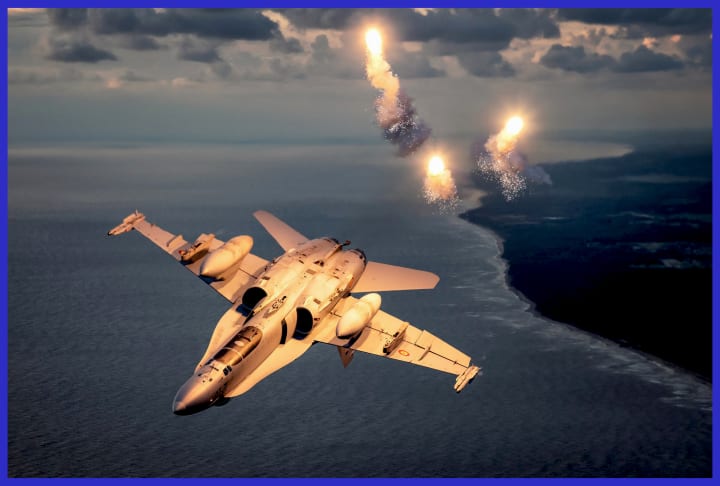
Over the years, the F/A-18 Hornet family has evolved and expanded to include various variants, each with specific capabilities tailored to meet the requirements of different branches of the military, both for domestic and foreign clients. As of now, Four major variants have been developed since its inception, which include the F/A-18A/B, F/A-18C/D, and the more advanced F/A-18E/F Super Hornet. However, based on its advanced avionics, radar systems, and long-range capacity, the Boeing engineers have developed an electronic warfare specialist platform, which can be seen in the EA-18G Growler variant, making it an integral asset for the U.S. Navy & Marine Corps, and various allied nations in modern aerial warfare. Below, we are discussing this latest variant in detail.
About the Creator
Prajesh Majumdar
Hi there, I'm Prajesh, the creator of airpra.com
The site is dedicated to nurturing a community of individuals with a keen interest in exploring the intricate aspects of defence equipment and related news.
Keep reading
More stories from Prajesh Majumdar and writers in FYI and other communities.
Let’s Delve into the Best of the Lockheed F-16 in Detail
The F-16, the most advanced 4th-generation fighter ever built, brings a new level of capability to air forces around the world. So, Let’s Delve into the Best of the Lockheed F-16 in Detail. A highly agile and versatile multirole fighter aircraft with a sleek and streamlined design, it was built by General Dynamics. The F-16 Fighting Falcon was made for the USAF in 1974 and remains an enduring symbol of aerial prowess and combat effectiveness, with a legacy that spans decades of service in air forces around the world.
By Prajesh Majumdar3 years ago in FYI
Tax Preparation Guide, Tips for Easy and Accurate Filing
Filing taxes can feel overwhelming, even for people who are usually organized with their finances. Deadlines, paperwork, and changing regulations often make the process more complicated than expected. A small mistake can lead to delays, penalties, or missed opportunities for savings.
By Lisa Hurley7 days ago in FYI
A Transparent Look at Vocal Challenges and Top Stories
Almost three years ago, we shared a resource article that served as a place for people to suggest new challenge prompts. We thought it would be a good idea to refresh that thread, and take the opportunity to answer a few common questions about top stories, how challenges are judged and how submissions are reviewed.
By Vocal Curation Team4 days ago in Resources



Comments
There are no comments for this story
Be the first to respond and start the conversation.