
Revealing the Heritage of Ancient India
The Foundation of Abundant Culture and Civilization.


India, recognized as one of the most populous and historically significant countries in the world, has served as a center for commerce, culture, and religion for centuries. Celebrated as the origin of Hinduism, Jainism, Buddhism, and Sikhism, the country's rich tapestry of traditions has developed through extensive interactions with numerous cultures and faiths over time. But what initiated this journey? What are the core elements of this ancient civilization, and what insights do archaeological findings provide about its history?
The term "India" originates from the River Indus, which was included in the country's territory until the 1947 partition that led to the creation of Pakistan. The Indus Valley area contains remnants of a sophisticated civilization that thrived approximately 7,000 years ago, recognized as the Indus Valley Civilization or Harappan Civilization. Archaeological evidence indicates that this society was notable for its advanced urban planning, skilled craftsmanship, and extensive trading systems.
The subcontinent hosted ancient species well before the arrival of Homo sapiens. The earliest anatomically modern humans in South Asia are believed to have appeared around 30,000 years ago. Mesolithic rock art, particularly that discovered in Bhimbetka, offers insights into life during this era. By 7,000 BCE, the emergence of Neolithic settlements laid the groundwork for the development of the first urban culture in South Asia.
The Indus Valley Civilization, which thrived from 2,500 BCE to 1,900 BCE, represented a remarkable advancement in urbanization. Notable cities such as Mohenjo-Daro, Harappa, and Dholavira featured sophisticated infrastructure, including effective drainage systems and storage facilities for grain. Archaeological findings indicate a vibrant artisanal sector and extensive trade networks. Although the civilization eventually declined, leaving a cultural void, its influence significantly impacted later societal progress.
Between 2000 BCE and 1500 BCE, Indo-Aryan migrants brought Vedic traditions that became the cornerstone of Hinduism. During this era, texts such as the Vedas were created, establishing the groundwork for Sanatana Dharma (the Eternal Order). Society evolved into a caste system, which initially mirrored occupational roles but eventually became entrenched as hereditary classes.
The 6th century BCE marked the emergence of reformist movements that questioned Vedic orthodoxy. Mahavira and Gautama Buddha established Jainism and Buddhism, respectively, focusing on personal enlightenment and ethical conduct. These religions fostered philosophical discussions, which significantly impacted later societal and cultural changes.
In this pivotal period, the subcontinent experienced the rise of the Mahajanapadas—16 significant states or oligarchies that established the foundation for centralized governance. The Kingdom of Magadha gained prominence, setting the stage for the Mauryan Empire under the leadership of Chandragupta Maurya. Additionally, this era was marked by foreign influences, including Persian invasions and the campaigns of Alexander the Great, which contributed to the region's diverse cultural landscape.
India's rich historical narrative showcases its significant impact on philosophy, science, and the arts. The Vedas and the Mahabharata, along with notable progress in urban development and governance, highlight the subcontinent's enduring legacy that continues to influence global thought. As we explore India's history further, we reveal tales of resilience, creativity, and the interconnectedness that have contributed to the formation of the contemporary world.
Continue to follow our journey as we uncover the magnificence of India's past and the empires that have shaped its enduring legacy.
About the Creator
A História
"Hi. My name is Wellington and I'm a passion for general history. Here, I publish articles on different periods and themes in history, from prehistory to the present day.
Keep reading
More stories from A História and writers in FYI and other communities.
Unveiling Qatar
Qatar has recently emerged as a focal point of global interest, having hosted the illustrious 2022 FIFA World Cup. Despite its modest size, this Gulf nation is steeped in a profound history, marked by swift economic advancement and a vibrant cultural legacy. What insights do you possess about Qatar, a land that harmoniously blends the ancient with the contemporary? Join us as we traverse the annals of Qatar’s past and witness its extraordinary transformation into one of the wealthiest nations on the planet.
By A Históriaabout a year ago in FYI
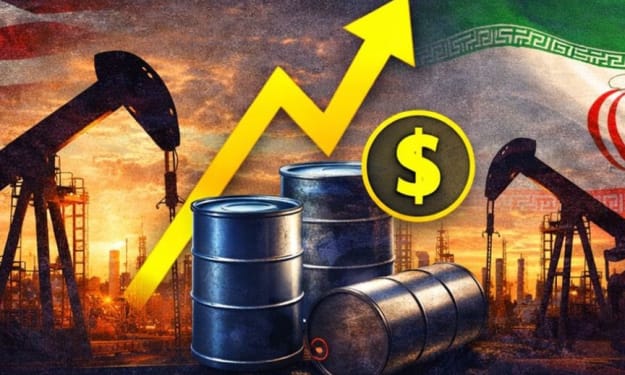
Oil Prices and the Hidden Struggles Behind Global Energy
Oil prices influence daily life in ways many people rarely notice. From the cost of gasoline at the pump to the price of food in grocery stores, shifts in oil prices ripple through the global economy. A sudden rise can strain family budgets, while a sharp drop can shake entire industries. Behind these changes are complex forces such as political tension, supply shortages, economic growth, and environmental concerns. Yet for many people, oil prices remain a distant headline rather than a personal story. The truth is far more connected to everyday life. Understanding how oil prices move, why they change, and who feels the impact most can reveal a deeper picture of the modern world and the fragile balance that keeps global energy flowing.
By Muqadas khan5 days ago in FYI



Comments
There are no comments for this story
Be the first to respond and start the conversation.