
Philippe Aghion: The Economist Who Put Innovation at the Heart of Growth
Early Life and Education

Introduction
Philippe Aghion is a name that comes up often when people talk about what drives long-term economic growth. He is a French economist whose ideas have helped shape how governments, businesses, and academics think about innovation, competition, and progress. Recently, in 2025, Aghion won one of the biggest recognitions in his field—the Nobel Prize in Economic Sciences—for his pioneering work on “creative destruction” and sustained growth.
---
Early Life & Education
Born in Paris in 1956, Aghion comes from a culturally rich background. His mother, Gaby, was a founder of the fashion house Chloé, and his family roots stretch back to Alexandria, Egypt.
He studied mathematics at École Normale Supérieure de Cachan, then moved into mathematical economics at Université Paris 1 Panthéon-Sorbonne for postgraduate study. After that, he earned his PhD in Economics from Harvard University in 1987. These strong academic foundations—both in math and economics—helped shape his later work.
---
Academic Career & Positions
Over the years, Aghion has taught and worked at many of the world’s top universities. Among them: MIT, Oxford (Nuffield College), University College London, Harvard, INSEAD, the London School of Economics, and Collège de France.
He’s also a fellow or member of leading academic societies: the Econometric Society, the American Academy of Arts and Sciences, etc. This means his work is peer-recognized and influential.
---
Key Ideas: Growth, Innovation, & Creative Destruction
One of Aghion’s biggest contributions is helping develop the Schumpeterian growth paradigm (with economist Peter Howitt). This theory builds on ideas from Joseph Schumpeter, who believed that the economy grows through cycles where new technology and ideas replace old ones. Aghion’s work formalizes this with models. Innovation doesn’t just add to the economy—it constantly reshapes it by making outdated ideas obsolete.
In particular, Aghion’s research explores how policy environments, competition, education, and institutions affect whether firms and economies innovate or simply imitate others. In other words, it’s not enough to have scientists or entrepreneurs—how policies, firms, and markets are set up matters a lot.
He has also written influential books:
Endogenous Growth Theory (with Peter Howitt)
The Economics of Growth
Competition and Growth (with Rachel Griffith)
The Power of Creative Destruction (with Celine Antonin and Simon Bunel)
---
Recognition & Awards
Aghion’s work has earned him many honors over the years:
Yrjö Jahnsson Prize (for best European economist under age 45) in 2001
John Von Neumann Prize in 2009
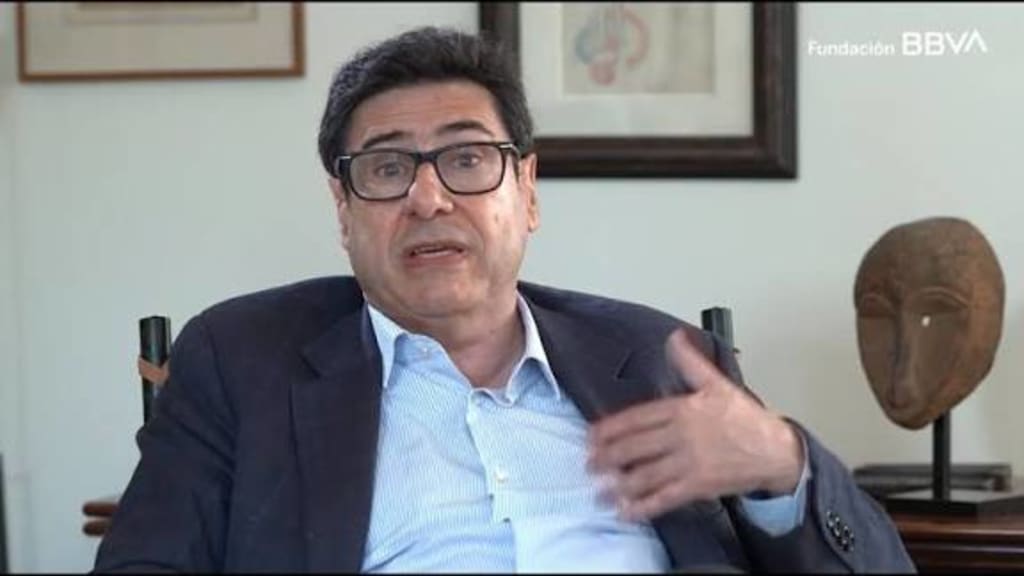
BBVA Frontiers of Knowledge Award in 2020 (shared with Howitt) for work on innovation and creative destruction.
2025 Nobel Prize in Economic Sciences for the theory of sustained growth through creative destruction.
---
Why His Work Matters Now
In a world where many economies grow slowly, income inequalities rise, and technological change feels disruptive, Aghion’s ideas are more relevant than ever. His research gives tools for thinking about how to design policies that encourage innovation and keep economies dynamic rather than stagnant.
For example, he often talks about the balance between letting firms compete (which pushes them to innovate) and having some regulations or support where needed (so that new tech doesn’t just benefit a few). He also focuses on how education, research investment, and institutional frameworks (like the legal and financial system) matter.
Also, with global challenges—climate change, inequality, AI, etc.—Aghion’s work offers insights on how innovation policies can help meet them without leaving large groups behind.
---
Criticisms & Challenges
While Aghion’s ideas are influential, they are not without debate. Some critics say that the models may assume conditions (good institutions, access to capital, education) that many countries do not have. Others point out that innovation can lead to disruption—jobs lost, older industries shut down, geographic disparities. Balancing growth via creative destruction with social safety nets is harder than theory often admits.
Also, innovation doesn’t automatically spread everywhere. Some countries or regions lag because of weak institutions, low education levels, or lack of infrastructure. Aghion’s framework helps explain this, but solving those gaps is tough in practice.
---
Recent Highlight: The Nobel Prize 2025
In October 2025, Philippe Aghion was awarded the Nobel Prize in Economic Sciences (shared with Joel Mokyr and Peter Howitt). The Royal Swedish Academy of Sciences cited their work explaining how innovation—especially creative destruction—drives sustained growth. They also noted the importance of avoiding economic stagnation.
For Aghion, this prize is recognition not only of decades of research but also of the policy relevance of his ideas—how they matter in shaping the future of economies around the world.
---
Conclusion
Philippe Aghion is more than just a theorist. He has shaped an entire field—growth economics—in a way that connects theory with real-world policy. His work reminds us that innovation isn’t optional for progress—it’s essential. But innovation must be paired with good institutions, education, competition, and thoughtful policy to make sure that growth benefits many, not just a few.
As economies face slowing growth, technological change, climate pressures, and inequality, Aghion’s research offers a roadmap. Understanding his ideas is more than an academic exercise—it’s essential for shaping economies that are not just richer, but more just and resilient.
---
About the Creator
Fiaz Ahmed
I am Fiaz Ahmed. I am a passionate writer. I love covering trending topics and breaking news. With a sharp eye for what’s happening around the world, and crafts timely and engaging stories that keep readers informed and updated.
Keep reading
More stories from Fiaz Ahmed and writers in FYI and other communities.
Europe Snowfall: Beauty, Challenges, and Climate Change
When winter arrives in Europe, it brings with it one of nature’s most magical sights—snowfall. From the snow-capped Alps to the quiet streets of Scandinavian villages, snowfall transforms the continent into a winter wonderland. For many people, the image of Europe in winter is tied to sparkling white landscapes, festive markets, and ski resorts filled with travelers.
By Fiaz Ahmed 4 months ago in FYI
Downtown Memphis Is Having a Moment — And the City’s Soul Has Never Shined Brighter
Memphis has always been more than a dot on the map. It is a feeling, a rhythm, a lived experience rooted in resilience, creativity, and community. In recent years, downtown Memphis has reemerged as the heartbeat of that spirit—a place where history and progress walk hand in hand, where independent voices are being amplified, and where people are coming together to build something meaningful. For anyone paying attention, downtown Memphis is not just alive; it is thriving.
By The Blacksheepkid Collective by: El Pablo 1x4 days ago in FYI


Comments
There are no comments for this story
Be the first to respond and start the conversation.