
Mixing and Matching Moroccan Tiles for a Unique Aesthetic
Why Mixing and Matching Works So Well in Moroccan Design

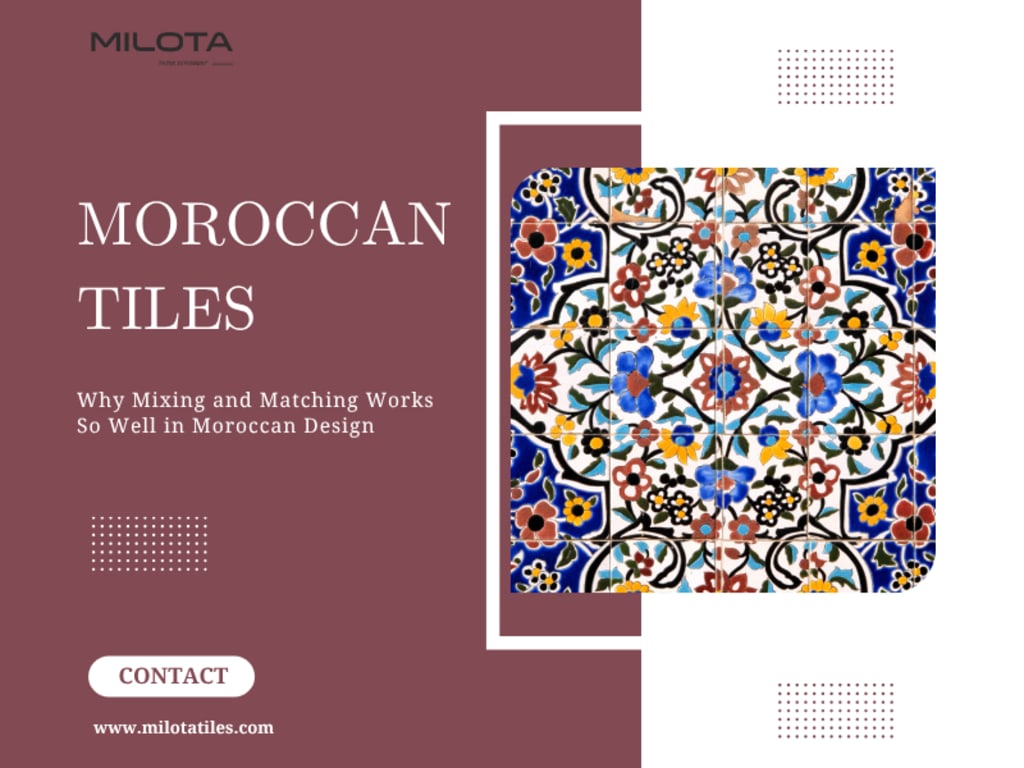
Moroccan tiles are more than just surface coverings — they’re tiny pieces of art, steeped in centuries of craft, geometry, color, and story. Whether you’re renovating a kitchen, reinventing a bathroom, or adding an accent wall that stops guests mid-sentence, Moroccan tiles deliver an immediate sense of character and warmth. This guide walks you through everything you need to know to mix and match Moroccan tiles in ways that feel cohesive, fresh, and uniquely yours.
Why Moroccan tiles work so well for mixing and matching
At the heart of Moroccan tile appeal is variety. Unlike minimalist, monochrome tiles, Moroccan tiles celebrate pattern, color, and contrast. They were designed historically to create visual rhythm and to play with light and shadow in courtyards, hammams, and palaces. This means they can be layered with confidence — small motifs against large motifs, matte surfaces with glazed shine, geometric repeats with painterly florals.
Because Moroccan tiles come in a broad palette and in many patterns, you can craft everything from a subtle nod to Moroccan design (a narrow backsplash stripe) to an all-out visual feast (a floor or full wall). The key is mixing with intention: balancing scale, color temperature, and visual weight so the result reads as curated rather than chaotic.
A short history to set the mood
Understanding a little history helps you make design choices with respect. Traditional Moroccan tiles — often known as zellige (also spelled zellij) — are hand-cut terracotta tiles, individually glazed and set in plaster. They originate from the Maghreb region and reflect Islamic geometric art and Andalusian craft traditions. Their charm lies in slight irregularities: the hand-cut edges, the uneven glazing, the way colors pool and vary — all of which give surfaces depth and life.
Modern producers reinterpret these traditions with precise ceramic manufacturing and new colorways. Whether you select hand-crafted zellige or machine-made Moroccan-inspired ceramics, the spirit of pattern, repetition, and color remains. That’s why Moroccan Tiles can feel vintage and contemporary at the same time.
Types of Moroccan tiles to know
When you’re mixing and matching, it helps to know which tile types you’re working with:
Zellige (hand-cut glazes): Small 2–4 inch tiles with irregular faces and vibrant glazes. Great for backsplashes and statement walls.
Encaustic or patterned porcelain/ceramic: Larger tiles printed with repeat patterns that emulate traditional motifs — consistent, easier to install.
Mosaic sheets: Pre-mounted tiles on mesh backing for easier installation while retaining a Moroccan look.
Large-format Moroccan-inspired tiles: These tiles mimic zellige or encaustic patterns at a bigger scale for floors and modern spaces.
Hand-painted tiles: Artisanal, where motifs may vary between tiles, creating a handmade tapestry effect.
Each type has its place: zellige feels artisanal and textural; encaustic-like ceramics provide pattern precision; large-format takes all the drama of Moroccan motifs into modern proportion.
Principles for mixing Moroccan tiles successfully
- Start with a dominant element. Choose one tile or pattern to be the hero — perhaps a floor field or a backsplash panel — and then layer supporting tiles around it.
- Balance scale and density. Pair dense, small-pattern tiles (like classic zellige mosaics) with larger, simpler tiles to avoid visual overload.
- Limit your color story. Use a palette of 3–5 colors. Moroccan patterns often use deep blues, terracottas, greens, blacks, and whites — but you can also pick modern palettes (soft pastels, monochrome, jewel tones). Consistency in color temperature (warm vs cool) helps unify the mix.
- Vary finishes for texture. Combine matte and glossy glazes to create depth. A glossy patterned tile next to a matte field tile can elevate the overall composition.
- Respect negative space. Leave areas of plain tile, plaster, or paint to give the eye somewhere to rest. This is especially important when using traditional moroccan tiles with busy patterns.
- Use grout as a design tool. Contrast grout (dark on light tiles, or vice versa) can sharpen patterns; neutral grout softens transitions.
- Repeat elements for cohesion. Introduce one motif or one color in multiple places (backsplash, shelf lip, niche) to tie the room together.
Planning a Moroccan tile scheme for your kitchen
Kitchens are one of the most popular places to use Moroccan tiles for kitchen applications. Here's how to make the most of them.
1. Backsplash as focal point
A tile backsplash is the easiest place to start. Choose a patterned tile — perhaps encaustic-inspired porcelain — as the central panel behind the stove. Then frame it with a simpler field tile. This instantly centers the eye and contains the visual energy.
Tip: For a smaller kitchen, choose vertical subway-shaped zellige laid stacked to create a sense of height.
2. Counter-to-ceiling drama
If your budget allows, extend Moroccan tiles from countertop to ceiling behind cooking zones. This creates an elegant, easy-to-clean feature that visually expands your backsplash into a vertical tapestry.
3. Floor anchoring
A mosaic or patterned tile on the floor (perhaps just in a kitchen nook or under the kitchen table) anchors the space and pairs beautifully with simpler cabinetry. If you opt for a bold floor pattern, keep backsplash and countertops quieter.
4. Island accent
Tile the vertical face of a kitchen island with Moroccan tiles to make the island a sculptural element. Use larger-format Moroccan patterns for scale, or smaller mosaics for texture.
5. Open shelving and niches
Line the back of open shelving with Moroccan tile or a contrasting accent tile in alcove niches. The depth of color and pattern makes glassware and serveware stand out.
Throughout all these uses, the phrase moroccan tiles kitchen often points to combining traditional motifs with practical surfaces that handle heat, splashes, and heavy use. Focus on durable glazes and slip-resistant floor tiles where needed.
Mixing approaches with examples
Here are practical mixing approaches you can adapt to your project:
The "Striped Accent" approach
- Use a plain neutral field tile (e.g., cream or soft gray) across most surfaces.
- Insert horizontal or vertical stripes of patterned Moroccan tile as accents — behind the range, at the sink, or as a border.
- The stripes give pattern without overwhelming the room.
Great for: small kitchens; renters who want an easy visual upgrade.
The "Patchwork Tapestry" approach
- Combine several Moroccan patterns in a patchwork layout on a backsplash or a kitchen powder room wall.
- Keep the grout consistent and the color palette limited (e.g., blues + terracotta + cream).
- Allow one motif to repeat elsewhere (like a shelf back or island face) for continuity.
Great for: eclectic, boho, or artistically driven spaces.
The "Hero Panel + Field Tile" approach
- Use a bold patterned tile in a framed panel behind a stove or a sink.
- Surround it with a single-color field tile that complements one of the hero tile’s colors.
- This gives drama while maintaining balance.
Great for: homes that want a single strong statement piece.
The "Monochrome Geometry" approach
- Choose Moroccan tiles in one color family (e.g., all shades of blue) but in different patterns and scales.
- This creates a sophisticated, layered effect that feels cohesive and crisp.
Great for: contemporary interiors seeking pattern without too much color complexity.
Color palettes and mood
Color choices change everything. Moroccan tiles offer flexible palettes:
- Jewel tones (cobalt, emerald, saffron): luxurious, energetic, ideal for feature walls.
- Earth tones (terracotta, ochre, olive): warm and grounded; pair well with wood and brass.
- Monochrome (black, gray, white): modern minimalism with Moroccan geometry — powerful in small doses.
- Pastels (mint, blush, powder blue): soft, playful, and contemporary when paired with light woods.
- High contrast (blue-and-white, black-and-white): crisp and graphic — great for kitchens.
When mixing, aim to pick one dominant color and one or two accent hues. Let neutrals (white, cream, soft gray) form the background. This makes it easier to mix bold patterns without fatigue.
Pairing Moroccan tiles with finishes and furnishings
Moroccan tiles play well with many materials:
- Wood: warm wood tones (walnut, oak) balance cool tiles; reclaimed wood adds rustic charm.
- Brass/Gold fixtures: metallics warm up tile surfaces and add glamour.
- Matte black fixtures: create modern contrast with ornate tiles for an updated look.
- Marble or quartz countertops: simple stone counters provide a calm counterpoint to busy tile patterns.
- Plaster or lime-washed walls: textured plaster complements zellige’s handmade feel.
- Textiles: woven rugs (flat-weave kilims) echo Moroccan motifs and soften rooms.
In a moroccan tiles kitchen, consider matte cabinet fronts with tactile hardware to ground the colorful tiles and keep the space from feeling too busy.
Practical considerations: durability, slip resistance, and maintenance
- Choose tiles fit for purpose. For floors, select tiles rated for flooring with adequate slip resistance. For backsplashes, glazed tiles are easy to wipe.
- Protect grout. High-quality grout and sealants reduce staining. For kitchens, consider epoxy grout for durability.
- Heat and splash resistance. Tiles behind stoves should withstand heat; choose tiles with stable glazes and avoid soft-surface artisanal finishes directly behind high-heat areas.
- Cleaning. Use pH-neutral cleaners on traditional glazes. Avoid harsh acids on natural terracotta unless properly sealed.
- Sealing zellige. If you choose authentic zellige (unglazed or thinly glazed), sealing may be required to prevent staining and to make cleaning easier.
- Repairability. Smaller tiles (zellige mosaics) are easier to replace individually; patterned large tiles may require exact replacement tiles from the same batch for perfect match.
Installation tips for mixed tile schemes
- Mock up the layout. Lay tiles out on the floor to test pattern interactions and grout lines before committing.
- Work with an experienced installer. Combining different sizes, thicknesses, and materials is trickier than uniform tile installs.
- Use transition pieces. Metal or wood trim can help bridge areas where tile types change.
- Match or stagger grout lines intentionally. Aligning grout lines where possible creates geometry; staggering creates a more organic look.
- Acclimate tiles. Some artisanal tiles change slightly as they acclimate — follow manufacturer recommendations.
If budget or installation complexity is a concern, pre-mounted mosaic sheets and larger printed tiles can achieve the look with fewer complications.
Design case studies: ideas you can copy
Case study 1: Small city apartment — Accent backsplash
A compact kitchen used a single 24-inch hero tile panel behind the cooktop featuring blue Moroccan geometry. The field backsplash used cream zellige to complement. Warm oak cabinets and matte black hardware grounded the look. Result: dramatic focal point without overpowering the small footprint.
Case study 2: Countryside cottage — Patchwork tabletop
In a cottage kitchen, the homeowner installed a patchwork patterned Moroccan tile field on the breakfast nook floor and carried one repeating tile pattern into the backsplash behind open shelves. Soft sage cabinets and a butcher-block counter kept the palette cozy and lived-in.
Case study 3: Luxurious modern kitchen — Monochrome geometry
A luxury renovation chose monochrome patterned tiles for the floor and a subtle matte gray field tile for the backsplash. Brass fixtures and white quartz countertops kept the balance between modern minimalism and ornate pattern.
These examples show that the same toolkit — hero panels, field tiles, repetition, and a careful palette — can produce wildly different moods.
Where to find Moroccan tiles and what to ask
If you’re shopping, consider both artisans and contemporary manufacturers. When selecting tiles, ask:
- Is this tile suitable for floors, walls, or both?
- What is the water absorption rating?
- Is it glazed, and does the glaze vary tile-to-tile?
- Are replacement tiles available (important for long-term repairs)?
- What size variations can I expect (for handmade tile, slight irregularities are normal)?
- Are there recommended grout colors and sealants?
For curated collections and specific Moroccan tile product pages, check specialized suppliers and tile studios.
Budgeting and sourcing strategies
- Start with samples. Order small sample packs to see how colors and glazes read in your light. Lighting dramatically changes tiles.
- Mix high and low. Use artisan zellige where it counts (a backsplash or feature wall) and more affordable printed porcelain for larger expanses.
- Consider remnant batches. Hunt for end-of-line or remnant tiles for lower cost accents.
- Think in modules. Using mosaic sheets reduces installation time and cost.
- Factor in labor. Complex mixing increases installation time — budget accordingly.
Eco and ethical considerations
Handmade zellige uses traditional methods and local craftspeople; buying from ethical sources supports artisans. Look for suppliers who can verify fair labor and responsible material sourcing. Many modern manufacturers also produce Moroccan-inspired tiles with recycled content or energy-efficient processes.
Styling tips beyond the tile
- Use plants. Lush greenery pops against terracotta and blue tiles.
- Layer rugs. Flat-weave rugs or neutral runner rugs warm up tile floors and provide acoustic dampening.
- Artwork and textiles. Choose art and cushions that echo tile colors to create cohesion.
- Lighting. Warm accent lighting enhances glaze depth; pendant lights can frame tile features.
Mistakes to avoid
- Too many simultaneous patterns. Resist mixing five different tile patterns unless you have a strong unifying color or neutral buffer.
- Ignoring scale. Tiny mosaic patterns feel busy in large rooms; conversely, large-scale patterns can lose detail in small spaces.
- Poor proportion of plain vs patterned. Always leave breathing room — a sea of pattern without neutral areas can feel chaotic.
- Wrong grout choice. The wrong grout color can visually disrupt a carefully chosen palette — test grout with tile samples.
- Not accounting for lighting. Bold tiles in poor lighting can feel heavy; ensure adequate ambient and task lighting.
Final checklist before you commit
- Order tile samples and view them in your space at different times of day.
- Choose your dominant pattern and limit your color palette to 3–5 colors.
- Decide finishes (glossy vs matte) and grout color.
- Confirm tile suitability for floor, wall, or countertop use.
- Hire an installer experienced with mixed-size/mixed-material installations.
- Plan for sealants and maintenance routines, especially for zellige.
- Keep extra tiles (5–10% overage) for future repairs.
Conclusion: make it yours
Mixing and matching Moroccan Tiles is a joyful design exercise that rewards boldness tempered by restraint. Whether you favor the handcrafted warmth of traditional moroccan tiles or a modern take on vintage motifs, the recipe for success is simple: pick a hero, limit your palette, balance scale, and leave breathing room.
About the Creator
Milota Tiles
Milota Tile is a proud venture of the Milota Group, rapidly emerging as a leading name in the manufacturing, distribution, and export of premium ceramic and porcelain tiles under the MILOTA brand.
Keep reading
More stories from Milota Tiles and writers in FYI and other communities.
Vibrant Patterns, Endless Styles: Designing with Moroccan Tiles
When it comes to transforming spaces with timeless artistry, Moroccan Tiles stand unmatched. Known for their intricate geometry, bold colors, and rich heritage, these tiles embody a perfect fusion of history and design innovation. From traditional patterns handcrafted by artisans to modern interpretations for contemporary homes, Moroccan Tiles are redefining interiors across the world.
By Milota Tiles5 months ago in FYI
The Politics of Playing Dress-Up
Well, to start off I'd like to say a happy world book day to all who celebrate. I know I haven't really posted anything on my socials about it but I'm not a jubilant kind of person. I lay low most of the time. Let's start off with a popular anecdote from the vaults...
By Annie Kapur7 days ago in Geeks


Comments
There are no comments for this story
Be the first to respond and start the conversation.