
Mastering Next.js 15 Routing: A Simple Guide to Get Familiar with Next.js 15 Routing
Getting Started with File-Based Routing

Next.js brings a file-based routing system that is simpler and more efficient than the traditional React Router. This innovation saves both time and resources when dealing with complex routing setups. In this article, we will dive deep into the different routing methods provided by Next.js.
Getting Started with File-Based Routing
The first and foremost feature of Next.js routing is its simplicity. All you need to do is create a folder in the app directory and a file named page.tsx or page.jsx, depending on your preference. This automatically creates a route. It’s as simple as that!
Types of Routing in Next.js
Beyond file-based routing, Next.js offers several advanced routing options, including:
- Dynamic Routing: Use brackets ([slug]) to create dynamic routes.
- Nested Routes: Organize routes into subfolders to establish a hierarchy.
- Layouts: Apply reusable layouts to specific routes.
- Middleware: Add custom logic before routes are processed.
- API Routes: Build server-side functionality directly in the app directory.
Setting Up Basic Routes
Creating a basic route in Next.js is as straightforward as creating a file or folder in the app directory. Use lowercase letters for file and folder names. Here’s an example structure:
Example Definitions
Home Route

About Page

Dynamic Blog Route

When visiting /blog/routing-blog, the routing-blog segment is dynamically fetched from the URL parameters, displaying:
Blog Post: routing-blog
Catch-All Dynamic Routes
Dynamic routing goes a step further with catch-all routes. Replace [slug] with [...slug] to capture multiple dynamic segments.
Example

For a URL like /car/worlds/best/ferrari, the output will be:
Cars here: worlds > best > ferrari.
Layouts in Next.js
A layout is a shared UI component across multiple routes under the same folder. Define layouts in a layout.tsx file within a folder.
Example
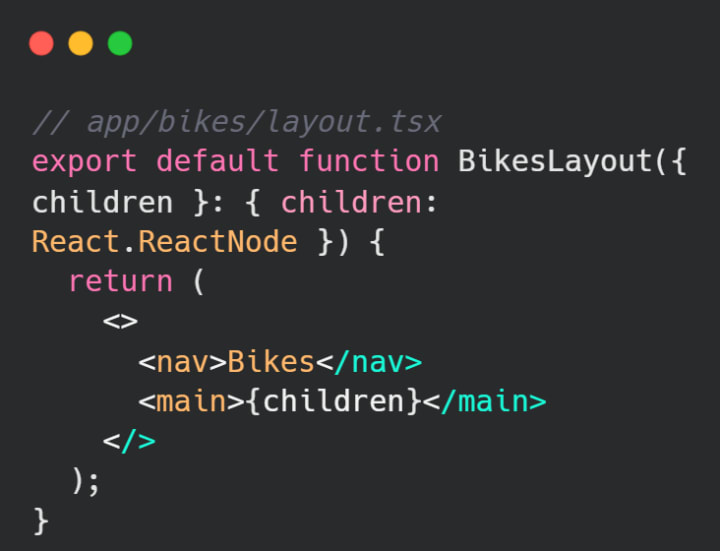
All routes under /bikes, such as /bikes/brands or /bikes/dealers, will use this layout. Layouts keep the code clean and consistent.
API Routes
Next.js enables server-side routing directly in the app directory for backend functionality. Create a folder with a file named route.ts under an api directory to define an API route.
Example

Accessing /api/hello will return a JSON response:

API routes are ideal for handling data fetching and form submissions.
Middleware in Routing
Middleware lets you add custom logic before a request reaches its destination. This is useful for authentication, redirects, or private routes.
Example

Best Practices for Next.js Routing
Organize Your Routes: Use clear and logical folder structures to avoid confusion.
- Leverage Layouts: Define layouts for a consistent user experience.
- Optimize Performance: Use route groups to reduce bundle sizes and improve loading speed.
- Limit Dynamic Segments: Keep dynamic routing simple and necessary.
- Efficient Middleware: Ensure middleware is lightweight and optimized.
Conclusion
Next.js 15’s routing system is a developer-friendly and powerful tool for building modern web applications. With its file-based structure, dynamic routing capabilities, layouts, and middleware, it simplifies development and enhances performance.
Whether you’re creating a blog, an e-commerce platform, or an enterprise solution, Next.js routing ensures scalability and efficiency. At Concept Solutions LLC, we leverage Next.js for top-notch performance and server-side rendering, ensuring excellent SEO and fast delivery times.
Start experimenting with Next.js 15 today and elevate your web development game! 🚀
#Nextjs15, #NextjsRouting, #DynamicRouting, #FileBasedRouting, #WebDevelopment, #FrontendDevelopment, #NextjsTutorial, #ReactFramework, #ModernWeb, #NextjsLayouts, #ServerSideRendering, #NextjsAPI, #MiddlewareInNextjs, #WebAppDevelopment, #NextjsTips, #NextjsGuide, #CodingBestPractices, #WebPerformance, #NextjsFeatures, #Nextjs2024
About the Creator
Keep reading
More stories from Concept Solutions LLC and writers in FYI and other communities.
Understanding ERP Software: A Comprehensive Guide
Enterprise Resource Planning (ERP) software has changed the way businesses are managing their operations. ERP systems are like the backbone of a company, bringing together different processes into one system to improve visibility, efficiency, and decision-making. In this blog post, we'll explore the main parts, benefits, and things to keep in mind about ERP systems.
By Concept Solutions LLCabout a year ago in FYI
A Failed Artist, A Disillusioned Poet, An Underpaid Game Show Host
I took my son and niece to Gori, a small town in Georgia where Joseph Stalin was born. They talked me into visiting the Stalin's Museum, the largest in the post-Soviet space. I had resisted going there because I just can't stand the monster and know enough about him, or so I thought.
By Lana V Lynx17 days ago in FYI


Comments
There are no comments for this story
Be the first to respond and start the conversation.