
Mary Queen of Scots as a Writer, Part I
Introduction to the heartbreaking letters of the Tragic Queen

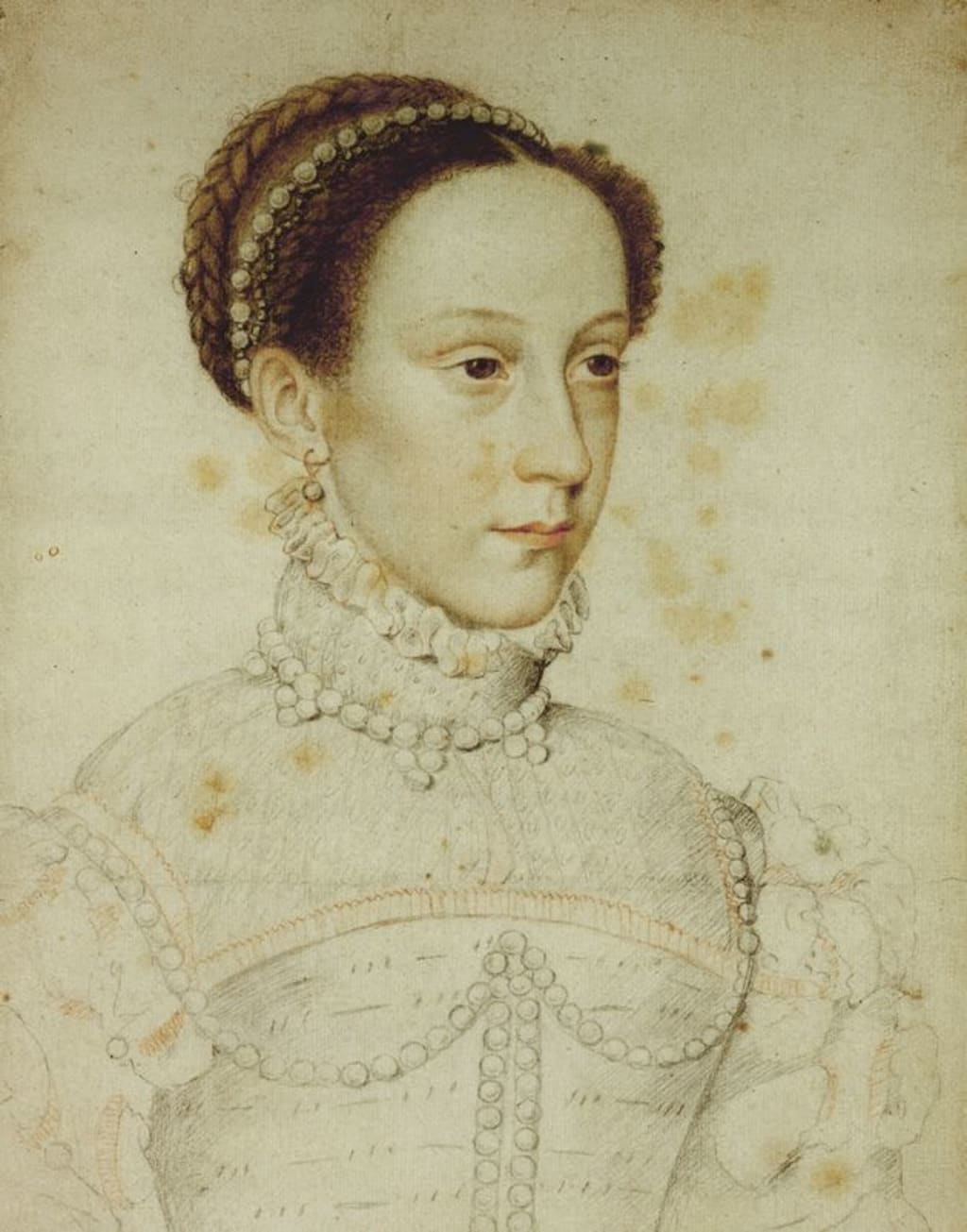
Mary Stuart, three times married and three times widowed, accused of adultery, murder, treason and conspiracy. She was Queen of Scotland and Dowager Princess of France, and ultimately beheaded by her cousin-monarch Queen Elizabeth I for the crimes imputed to her. Her life was one of adventure and tragedy that has been the subject of many films, plays, operas, and novels.
She is a surprisingly well documented historical figure, due not only to contemporary sources both from allies and enemies, but in an even larger part due to the copious correspondence she carried out with the various European powers and potentates that were her family and connections, even during her two decades of house arrest.
Many hundreds of letters written by her exist, and nearly a third of those are autograph compositions of inestimable historical value, and bringing her own perspective to the forefront. The immense literary value of her letters is a fact often stated by compilers of her epistolary work, but seldom explored or assessed fully. She can compare to the best that the 16th century has to offer in this kind of writing, and more impressive because she wrote under duress, quickly, and mostly without revision.
However, before moving on to a general appreciation of her style and look at the contents of her letters in part II of this piece, I think it more relevant to present one of her short letters in full. This is my translation from the French. It is addressed to Queen Elizabeth upon her learning the sentence of execution passed on her, and details Mary's final requests.
November, 1586
Madame, it is with all my heart I give thanks to God that it pleases him to put an end through your Orders to the wearisome pilgrimage of my life. I ask not that it be prolonged further, having had all too much time already experience of all its bitterness. And since I shan’t expect any favor from certain of your zealous ministers who hold the highest ranks in this your kingdom of England, I only beseech Your Majesty let me receive from you alone, and from none other, the following boons:
Firstly I beg of you that, as it is not lawful for me to hope for a burial in England following the Catholic solemnities, practiced by the bygone kings, your forebears and my own; and being that in Scotland they have ravaged and desecrated the ashes of my ancestors—that, when my adversaries will have finally rendered themselves drunk upon my innocent blood, my corpse be transported by my domestics to some sacred ground to be interred. Especially in France, where the bones of the Queen my much-honored mother lie in rest: so that this poor body, which has never known any rest since it has been joined to my soul, can finally find its repose when they have been torn asunder.
Secondly, I pray your Majesty, because of the fore-dread I feel of the tyranny of those into whose power you have abandoned me, let me not be executed in a hidden place, but in view of my domestics and other such persons who can bear witness to my faith and obedience towards the true Church, and can defend the remnants of my life and my last breath against the false rumors that my adversaries would be able to disseminate against me.
In the third place, I implore you, Madame, by the blood of Jesus Christ, by our parental relations, by the memory of Henry the 7th, our common father, and by the title of Queen, that I carry still unto death, not to refuse me such reasonable requests and to assure me of them by word written in your own hand, and thereupon I shall die, as I have lived,
your affectionate sister and prisoner,
MARY, QUEEN
As it was written on the dais above her throne, en mon fin est mon commencement: in my end is my beginning.
To be Continued in Part II
About the Creator
Rob Angeli
sunt lacrimae rerum et mentem mortalia tangunt
There are tears of things, and mortal objects touch the mind.
-Virgil Aeneid I.462
Keep reading
More stories from Rob Angeli and writers in FYI and other communities.
Mary Queen of Scots as a Writer: Part II
Sometimes what defines the legacy of a remarkable person is not their astounding rise to success, but the breadth of experience and tragic dignity that is gained from a life of suffering and thwarted aims. If you lose your kingdom, or even your head, maybe something greater is gained through the perennial power of the written word.
By Rob Angeli3 years ago in FYI


Comments
There are no comments for this story
Be the first to respond and start the conversation.