
Lighting and Moroccan Tiles: How Light Changes Color and Pattern Perception
Expert Tips for Lighting Moroccan Tiles Like a Designer

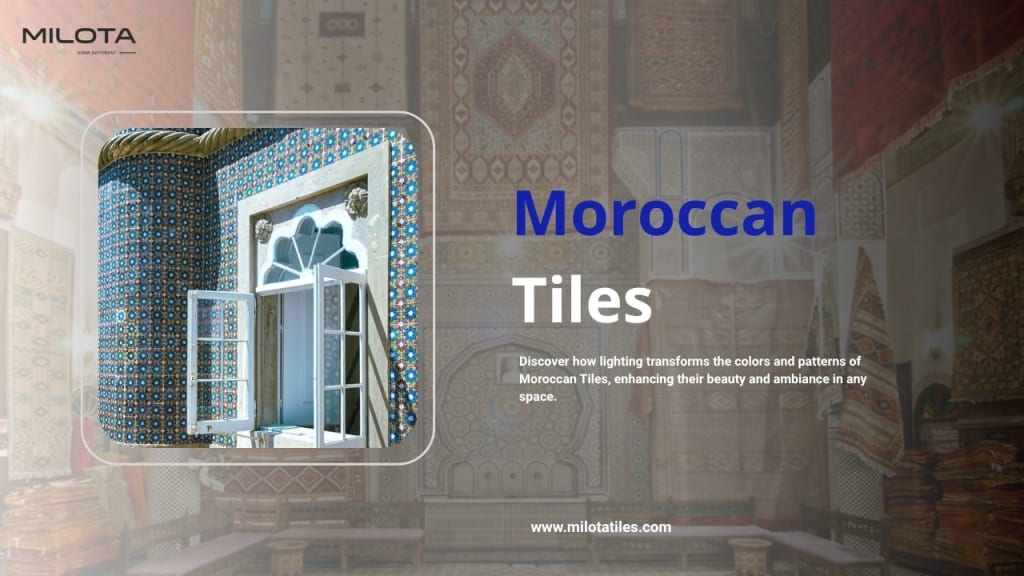
Moroccan Tiles are among the most visually rich and appealing of tiling options. Their vibrant glazes, complex geometries, textured surfaces and artisanal irregularities are what make them so compelling. But the way they look depends greatly on lighting. Light doesn’t just illuminate tiles—it transforms them. What looks radiant and jewel-like in one light may appear muted, flat or even entirely different in another.
In this article I will explore how different types of light, angles, intensity, and surface finishes affect perception of color and pattern in Moroccan Tiles. I’ll also share practical design strategies so that when you choose Moroccan Tiles, you can anticipate how they will perform in real settings. Whether you’re installing a backsplash, a feature wall, or flooring, understanding lighting will help your project shine—in every light.
How Light and Human Perception Work Together
Every visual experience involves light interacting with surfaces, eyes capturing reflected waves, and brain interpreting them. For Moroccan Tiles, several fundamental phenomena affect what we see.
First, color perception depends on which wavelengths of light are reflected. A tile’s glaze or body absorbs some wavelengths, reflects others. If lighting lacks certain wavelengths (for example, many artificial lights have limited spectrum), those colors may appear weak or distorted.
Second, the finish of the tile—whether it’s glossy, matte, textured or uneven—determines how light behaves. Glossy finishes produce specular reflection (mirror-like highlights), whereas matte finishes scatter light diffusely. Textured or handmade surfaces have undulations that produce micro-shadows and highlights depending on light angle. Those details often give Moroccan Tiles their special depth and charm.
Third, human vision adapts. The same tile may look very different under bright daylight, during dusk, or under low artificial light. Under low light, our eyes are less sensitive to red/orange hues—a phenomenon known as the Purkinje Effect. Rich warm colors (reds, terracottas) can appear darker or muted, while blues and greens may seem more prominent in dim settings. Also, the Helmholtz-Kohlrausch effect describes how the perceived brightness of a color increases with its saturation—even sometimes more than its actual luminance would suggest, so richly colored tiles may seem to glow perceptually when properly lit.
Fourth, context influences perception. Grout color, expansion joints, adjacent surfaces (floors, cabinets, windows), and surrounding wall colors all affect how our brain interprets a tile’s color and pattern. Light bouncing off adjacent surfaces can add unwanted color cast. Shadows cast by nearby objects or unevenness accentuate texture—or highlight flaws.
Types of Moroccan Tiles and Their Interaction with Light
Moroccan Tiles come in numerous varieties: traditional zellige, hand-glazed ceramic with Moroccan patterns, cement-look motifs, encaustic styles, mosaic pieces and mixed-material installations. Each interacts differently with light.
Traditional zellige tiles are handmade, often with slightly uneven edges, irregular glazing, slight color variation tile-to-tile. These characteristics make them highly reactive to light. When light grazes across a zellige wall, the small undulations catch highlights and cast tiny shadows, producing a shimmering effect. In warm light, glazes with orange, copper, gold, or red tones glow. In cooler light, greens, blues or grays may be emphasized, and the warm hues may recede or look more muted.
Glazed ceramics with Moroccan patterns but more uniform surfaces behave more predictably. High-gloss ceramics reflect light strongly—glare may become an issue, particularly under direct spotlights or if light sources are visible in reflection. Semi-gloss or satin glazed surfaces soften these effects. Matte finish ceramics absorb more light, reducing glare but also reducing apparent brightness. Patterns are still visible, but may lack the “sparkle” or lustre of gloss.
Cement or encaustic-style tiles often have matte or semi-matte surfaces, sometimes unglazed or lightly sealed. They tend to absorb more light rather than reflect it. Their patterns depend more on contrast (color difference between pattern and background, grout, etc.). In low-light settings or where lighting is diffuse, these tiles may appear flatter. Under stronger, directional lighting, their pattern edges, texture, and relief become more visible.
Mosaics or mixed materials (glass, ceramic, metal accents) bring further complexity. Glass or reflective materials will catch specular highlights. If used, those pieces can feel jewel-like under the right lighting, but in poor lighting they can seem bland or lose their special effect. Mixed pigment tiles (multiple colors) will show shifts depending on which colors are emphasized by the lighting temperature.
How Natural Light Impacts Moroccan Tiles
Natural daylight is often considered “ideal” because it has the broadest, most complete spectral composition. But even natural light changes dramatically over the course of a day, and with weather, orientation, and window design.
In mid-morning or afternoon, daylight tends to be bright, sometimes cool-white or bluish depending on sky conditions. Under this light, Moroccan Tiles with cooler tones—blues, greens, turquoises—are vivid. Patterns with white or pale outlines show high contrast. The texture of zellige or hand-glazed tiles is visible; subtle irregularities are easier to perceive.
At midday, when sun is overhead, light may be intense, creating strong glare and flattening textures. Direct sun on gloss surfaces can lead to hot spots (areas of intense reflection) that wash out pattern or make color appear bleached. Shadows are minimal under overhead light, so relief is less emphasized.
Late afternoon / dusk light takes on golden or warm tones, making warm hues in the tiles richer. Reds, golds, oranges—and tiles with earthy bodies—“glow.” Contrast decreases slightly (due to longer wavelengths dominating), but the emotional and aesthetic richness often increases. Patterns with warm glazes may feel deeper and more inviting.
Orientation of windows matters. North-facing windows (in the northern hemisphere) tend to deliver cooler, more consistent light. South-facing windows deliver more direct sun and stronger shifts. East and west windows bring warm tones in morning or evening respectively. Also, diffuse daylight (overcast sky, filtered through trees or curtains) delivers softer light that brings out color uniformly but may suppress the sparkle or unevenness that makes Moroccan Tiles interesting.
Natural light is excellent for appreciating the authentic colour and pattern of Moroccan Tiles, but its variability means that what you see in a showroom might differ in your home at different times of day.
Artificial Light: Types, Temperature, and Their Effects
When natural light is insufficient or inconsistent, artificial lighting takes center stage. Yet artificial sources are varied—and their impact on Moroccan Tiles can make a big difference.
Color temperature (often expressed in Kelvin) describes whether light is warm (yellow/orange), neutral, or cool (bluish). Warm light (around 2700-3500K) tends to enhance and amplify warm tones—reds, yellows, oranges, warm browns. If your Moroccan Tiles have those shades (terracotta, blush, gold, warming glazes), warm light can bring out depth, richness, and emotive warmth.
Neutral or daylight-balanced LEDs (about 4000-5000K) give a more balanced rendering. Both warm and cool tones are represented more authentically. This is often preferable when you have a mix of color tones in your tile pattern and you want all elements to be visible without bias.
Cool lighting (5000K or more, or fluorescent lights with strong blue content) brings out cooler hues. Blues, greens, greys, silvers stand out. But warm ceramic glazes may seem less vibrant or appear muted. Also, under overly cool light, terra cotta, gold, or warm reds can seem less warm, potentially giving a tile surface a harsher or more clinical feel.
Important to combine color temperature with Color Rendering Index (CRI). Low-CRI lights can distort color regardless of temperature. Even a warm light may render colors oddly if it doesn’t include enough of the needed wavelengths. For Moroccan Tiles, which are often richly colored and glazed in subtle gradients, using high-CRI fixtures (90+ where possible) ensures that what you expect (from samples and catalogs) is what you see in reality.
Another factor is the direction of artificial light. Overhead downlights or ceiling fixtures deliver ambient light but tend to flatten surfaces, reduce shadows, reducing perception of depth or texture. Accent lights—wall washers, spotlights, side-lighting, strip lights—can highlight pattern or texture, bring out relief, emphasize motif edges, or even draw attention to decorative insets or focal tile panels.
Intensity matters too. Very bright artificial light (strong LEDs, halogens) can cause glare, especially on glossy tiles, possibly washing out colors or making reflective surfaces uncomfortable to look at. Low light makes textures hard to see, colors appear dull, patterns indistinct.
Warm ambient light combined with strong accent lighting often gives Moroccan Tiles their magical character: ambient light sets the general tone, accent lighting picks out motifs, texture, edges, and relief.
How Surface Finish, Texture, Glaze and Grout Affect Perception
Surface finish of the tile interacts intimately with lighting to shape what you see. Glossy finishes reflect more light—and in many cases, large light sources or nearby windows may be mirrored or mirrored distortions may appear. That can produce hotspots or glare if fixtures are not carefully positioned. Gloss also increases perceived color saturation when hit by directional light.
Matte finishes absorb more light, reducing glare but lowering perceived brightness. They tend to produce softer color transitions; pattern edges are less sharply defined unless the lighting is directional or accent-based.
Textured surfaces—hand finish, undulating surfaces, relief, handmade edges—cast micro-shadows when light comes from a grazing angle. This enhances depth, brings out craftsmanship variations. In zellige or similar hand-glazed tiles, these texture nuances give visual life and richness. But that also means that unevenness or defects may become more visible under strong directional lighting.
Glaze thickness and quality matter. Glaze that pools or that has slight variations in thickness or color will catch light differently. In bright light, glaze “pools” may appear darker and richer, while thinner glaze areas appear lighter. The variation creates sparkle. With matte or lightly glazed surfaces, this difference is subtler, but the base clay color (body color) becomes more visible, especially in unglazed or lightly glazed tiles.
Grout color both frames patterns and influences contrast. Dark grout around light tiles raises contrast; light grout around dark tiles softens contrast. The visibility of grout lines changes with light: strong side lighting accentuates grout relief; overhead diffused lighting may reduce contrast in grout. Also, highly contrasting grout can compete with tile pattern and affect overall perception of color and pattern unity.
Practical Design Strategies for Lighting Moroccan Tile Installations
To make the best use of Moroccan Tiles, thoughtful lighting design is essential. Below are design principles, tips, and strategies that you can use when planning a project for milotatiles.com customers or in your own home.
When selecting Moroccan Tiles, always bring samples into the actual room you’ll use them. View them across different times of day—morning, midday, evening—and under both natural and artificial light. Observe how the colors shift. Sometimes what looks vivid in showroom lighting looks cold or dull under your own overhead lighting.
If the tile has warm glazes or earthy bodies, pairing them with warm artificial lighting (around 2700-3200K) will help maintain their warmth. For mix-colored patterns or cooler tones, a more neutral LED light (around 4000K) helps reduce color shifts.
Use layered lighting. One layer serves ambient lighting—general illumination of the room. Another is accent lighting—light that specifically highlights tile walls or pattern features. Use wall washers, recessed linear lighting, vertical fixtures or spotlights to illuminate the tile surface at shallow angles. Such side or grazing lighting will bring out texture, undulation, shine, and pattern.
In areas like kitchens or bathrooms, where you need both function and beauty, task lighting (under-cabinet, strip lights) is important. But be mindful of glare. Glossy Moroccan Tiles as a backsplash directly under bright under-cabinet lights can reflect those lights unpleasantly. If that’s a concern, opting for semi-gloss or matte finishes helps, or placing lights at an angle that minimizes direct reflection into your eyes.
Accent lighting works well for Moroccan Tiles when you have a feature element—a decorative inset, a mosaic border, an arch, or a dramatic wall panel. Using narrow beam spotlights or directional side lighting draws attention to the patterns, colors, and texture. Backlighting behind tile niches can also give a beautiful glow, especially if tile pieces include translucent glazes or glass mosaic accents. The ambient lighting around this accent should be lower so the feature stands out.
Distance and angle of light source matter. Grazing light (light source placed close to the surface, angle low) accentuates texture and irregularities. But if the angle is too shallow or the tile surface too uneven, you may end up with harsh shadows or exaggerated imperfections. Overhead light from steep angles tends to flatten texture and reduce pattern contrast, which may be beneficial if you want a more uniform appearance.
Consider why you are using Moroccan Tiles: Is it to create warmth, color richness, drama, texture, or refined elegance? Your lighting choices should align with your goal. For example, if warmth and richness are your goal, use warm light sources, dimmers, and accent lighting. If you prefer a crisp, clean, modern look, cooler temperature lighting with bright, evenly distributed ambient light may serve better.
Lighting control is valuable. Using dimmer switches, multiple circuits, or fixtures with adjustable color temperature (some LED products support this) allows you to change how Moroccan Tiles appear throughout the day or for different occasions. What looks dramatic in the evening might feel overwhelming in the morning; having flexibility allows you to adapt.
Also, the placement of windows and natural light sources plays a big role. If a wall of Moroccan Tiles faces a strong sun window, that wall will see many lighting conditions (direct sun, bright light, shadows). Consider how glare, fading, and heat may affect the tiles over time. Sometimes glazing may degrade under direct UV light, or colors may fade if the tile is exposed to strong sunlight continuously.
Another strategy: avoid mixing too many finishes unless you want dynamic contrast. Mixed finishes (gloss + matte + textured) can look stunning if lighting is designed carefully; if not, it may look disjointed. Better to use similar finish types in large continuous areas and reserve mixed finishes for focal features.
Finally, selecting grout color and joint width thoughtfully helps in how pattern and color will be read under various lighting. Thin grout lines with matching color reduce visual distractions and make pattern feel more continuous. Wider or contrasting grout lines produce crisp separation but may accentuate shadows and contrast under directional lighting.
Common Challenges and Solutions
Even with careful planning, there are pitfalls when using Moroccan Tiles with lighting. Understanding them helps prevent disappointment.
A common issue is glare on glossy tile surfaces. Glossy Moroccan Tiles, especially those with strong glazes, can reflect bright light sources so that the eye sees the reflection rather than the tile’s color or pattern. To counter this, position lights so that the major light sources are not directly reflected into the most viewed vantage points. Use diffusers or indirect lighting. Alternatively, use a semi-gloss or satin finish instead of a very high gloss for areas with lots of light.
Another frequent problem is color shift: tiles that looked one way in the showroom appear different at home. Warm tiles may look cooler or even washed out under cool artificial lighting, and vice versa. This can especially dismay homeowners who chose a tile based on catalog images. Always test samples under your own lighting conditions.
Uneven texture or slight warping in handmade Moroccan Tiles may be accentuated by sharp, grazing lighting and may create shadows that look like defects. If tiles are significantly uneven, opt for more diffuse lighting or combine with soft ambient light to even out contrast. Use grout and substrate leveling carefully.
In low light or dim ambient lighting, pattern may be difficult to perceive, especially for darker tiles or those with low contrast between pattern and background. If the pattern is important, ensure sufficient light intensity, especially accent or ambient light. Use higher lumen fixtures, avoid relying entirely on ambient light.
Another issue is mismatch between color temperature of different light fixtures in the same space. For example, one light being warm LED and another being cool fluorescent can cause parts of the tile surface to look different in color or temperature. That inconsistency may make the effect feel jarring. To avoid this, standardize fixtures (or at least key light sources) on matched color temperature, or use fixtures with tunable white (adjustable color temperature).
Maintenance also influences appearance. Grime, dust, or soap residue reduces light reflection and can accumulate unevenly on textured surfaces. Dull, poorly maintained tiles will lose color strength and pattern clarity. Regular cleaning suited to the tile type and glaze helps preserve how light interacts with the tile surfaces.
Case Examples: Lighting Moroccan Tiles in Real Settings
To illustrate, here are several scenarios showing how lighting changes perception in different rooms or installations with Moroccan Tiles, and what design decisions make them more successful.
Imagine a kitchen backsplash made of Moroccan patterned glazed ceramic tiles in shades of turquoise, cobalt blue, white and ochre. In daylight, the blues and whites pop, the pattern looks crisp, grout lines provide contrast. Under warm LED strip lighting under cabinets, the blues may take on a more teal or greenish cast, and whites may appear cream-colored. If the cabinet lighting is too bright, glare from gloss may overwhelm pattern detail. To manage this, using under-cabinet LEDs with diffusers helps; matching color temperature with overall room lighting helps maintain consistency. Also choosing grout color that is not stark white but slightly off-white contains contrast so it doesn’t become overly harsh.
Consider a shower wall or feature niche done in zellige tile with earthy glazes and hand-made texture. In a spa-style lighting scheme with soft warm overhead light plus concealed linear lighting from niche edges, and perhaps a soft wall-wash at a grazing angle, the undulating surface of the zellige comes alive. Glaze pooling catches light, edges and variable thickness produce subtle shadows, creating depth and richness. At dusk, when ambient light is lower, turning on accent lighting only focused on the tile wall yields a dramatic effect: shadows deepen, warm tones glow, and texture becomes tactile.
In a large commerical space (restaurant, boutique hotel lobby) where Moroccan Tiles are used as part of a dramatic feature wall, designers often combine natural light (through windows or skylights) with well-placed artificial accent lighting. For portions of wall that are visible from far away, stronger "wash" lighting ensures pattern is legible. For close inspection, spotlights or cove lighting emphasize texture or sheen. Also, fixtures are planned so no single section remains in shadow or glare across the day; adjustments, dimmers and programmable lighting help adapt.
In an entryway with limited windows, Moroccan Tiles of lighter color (pale creams, soft greens, light turquoise) help bounce light back. Using overhead ambient lighting with a warm color temperature plus accent sconces or uplights shining across tile walls ensures that pattern remains visible even after sunset. Contrasting grout can help pattern in daylight, but excessive contrast under low artificial light may become visually overwhelming; a balance is needed.
Putting It All Together: Best Practices for Milotatiles.com Customers
For customers or designers working with milotatiles.com/moroccan-tiles/, here are consolidated recommendations to maximize how Moroccan Tiles appear through lighting, minimizing unpleasant surprises.
Always view tile samples in the actual room, at different times of day, and under both natural and artificial lighting. Lighting in showrooms tends to be ideal or highly controlled; home lighting is rarely so.
Choose color temperature of lighting carefully. For richly colored Moroccan Tiles (especially warm tones, earth tones), aim for warm to neutral lighting (around 2700-3500K). If the tile pattern includes cooler tones (blues, greens, silver), neutral or slightly cool tones may work—just ensure it's not so cool that warm colors look washed out or dull.
Match light fixtures and color temperature across the room so lighting feels cohesive. If you have multiple types of fixtures (pendants, wall lights, strip lights), ensure they are chosen for consistent color temperature and CRI.
Use accent and directional lighting to highlight texture and pattern. Wall-washer lights or grazing light from the side help bring out undulating surfaces in zellige or handmade tiles. Avoid lighting that flatly shines over tile surfaces if you want texture; use a mix of ambient and accent.
Control brightness and glare. Glossy Moroccan Tiles look spectacular when highlights are controlled. Use diffused lighting, shaded fixtures, or indirect light to avoid direct glare. If under-cabinet lighting or recessed downlights are necessary, choose lenses or diffusers to soften reflections. Use dimmers wherever possible so that the same installation can feel different at different times (day/night; mood vs utility).
Consider the grout: color, width, finish. Contrast in grout will be more or less visible depending on lighting. Light grout increases brightness but can highlight imperfections. Dark grout provides contrast but may make pattern boundaries more pronounced under side lighting and strong light.
When using mixed finishes (gloss + matte + textured) in one tile installation, plan lighting accordingly. Glossy patches will reflect differently, matte patches less so; uniform finishes help avoid inconsistent reflection. If mixed, use accent lighting to create intentional highlights rather than leaving them accidentally glaring.
Think about orientation, window placement and natural light sources. Walls that get direct sunlight will see more color shift over day. If that’s inevitable, consider glazing or sealing that protects against UV, or choose tile colors less prone to noticeable fading.
Plan for maintenance. Dust, soap scum, moisture, wear can dull glazes or alter reflection. Clean tiles as per manufacturer’s recommendations; check that sealants are intact for unglazed or semi-glazed tiles, especially in wet areas. Good maintenance helps preserve how light interacts with surface.
Scientific/Perceptual Phenomena That Influence Color and Pattern Perception
Understanding some scientific effects helps explain what you will see and why, enabling better decisions.
One such phenomenon is the Purkinje Shift: at lower light levels, vision shifts sensitivity away from red wavelengths. Thus a warm red tile that looks vibrant in bright light may appear darker, less saturated under dim light. Designers need to anticipate how dusk or evening lighting will affect warm tones.
Another phenomenon is the Helmholtz-Kohlrausch effect: colors that are highly saturated may appear brighter than they are. So Moroccan Tiles with rich glazes or deeply saturated pigment may seem to glow or “pop” under the right light, more so than their measured reflectance would suggest. This plays into design when the tile has jewel tones or vivid pigment.
Additionally, contrast effects matter: human vision perceives a color not only by its own light but relative to its surroundings. If a Moroccan Tile is next to very light or very dark tiles, or in a room with dark walls vs light walls, or near different metals / woods / fabrics, perception will shift. Also, ambient reflected light (light bouncing off walls, ceilings, floors) adds color cast. For example, a red painted wall near the tile can reflect warm red light onto the tile, influencing its seen color.
Color temperature mismatch between different light sources (for example, a cool LED strip under cabinet plus warm ceiling pendant) can lead to “color shift boundaries” where one area of tile looks different from another. The human eye naturally notices these shifts, often perceiving edges, shadows, or pattern breaks that are not physical but perceptual.
Lighting in Different Rooms and Environments
The function of the room, frequency of use, and other elements (furniture, fixtures, décor) all influence which lighting approach works best with Moroccan Tiles.
In bathrooms, where moisture is involved and surfaces may be wet, reflections increase. Glossy tiles may reflect water droplets, bright spots; safety requires ensuring lighting does not blind or cause glare. Warm, diffused ambient lighting, plus niche lighting if needed, helps maintain luxury without harshness.
In kitchens, lighting is both functional and aesthetic. Work surfaces need strong task light; backsplashes with Moroccan Tiles could be behind counters, under cabinets. Under-cabinet lighting helps, but one must consider how that light reflects off the tile into the user’s eyes. Use strip LEDs with diffusers, or lights placed slightly forward so reflection is less direct. Use overhead ambient lighting that is consistent and of matching color temperature to avoid conflicts.
Living rooms or lounges with Moroccan Tiles as accent walls or fireplace surrounds benefit from softer, ambient lighting with warm tones. Accent lighting (spotlights, wall washers) helps draw attention to pattern. This kind of lighting scheme helps the tile feature feel inviting, warm and luxe.
Hallways or entryways sometimes have minimal natural light. Here, tile color choice tends toward lighter hues to bounce light, but lighting fixtures must ensure sufficient brightness. Wall sconces or uplights can help illuminate tile walls, reducing shadows, bringing out pattern.
Outdoors: patios, courtyards, exterior facades with Moroccan Tiles will be subject to daylight mostly, but in evening artificial lighting comes in. The durability of tile glazes and finishes becomes important under weathering; light fixtures need to be weather rated. Warm lighting (warm white LEDs) often creates welcoming ambiance in outdoor installations. Watch how exterior lighting may cast shadows from plants, edges, overhangs—these interplay with tile texture and pattern.
A Vision: Mood, Style, and the Emotional Effect of Light + Moroccan Tiles
Beyond the technical, lighting + Moroccan Tiles work together to evoke mood and style. The same tile, under different lighting, tells different stories.
Warm light + rich tiles = cozy, intimate, romantic, perhaps traditional Moroccan-inspired interiors. Think deep reds, golds, rust, terra cotta glowing as though by firelight.
Bright neutral light + bold geometric patterns = modern, crisp, graphic, perhaps Mediterranean-minimal or contemporary with a nod to craft.
Cool light + muted patterns or softer glazes = calm, spa-like, serene, possibly modern rustic or Scandinavian fusion.
Dimmed lighting or selective accent (only tile wall lit, rest subdued) = high drama, theatrical; tile feature becomes focal point, glowing jewel in the room.
Shifting lighting throughout the day: daylight in morning, soft ambient and accent in evening—this “lighting choreography” allows Moroccan Tiles to reveal more of their character over time. Those subtle undulations, color shifts, variation in glaze—all contribute to a living appearance.
Summary: Key Takeaways for Lighting Moroccan Tiles
Putting all this together, here are the core principles to ensure that your Moroccan Tiles look as beautiful in your home as they do in catalog images or showrooms:
- Always evaluate tile samples in your actual lighting—daylight and artificial, across parts of day.
- Choose lighting fixtures with high CRI to preserve true colors.
- Decide on a color temperature (warm, neutral, cool) that aligns with the tile’s predominant hues, and maintain consistency across main lighting in the space.
- Use a mix of lighting: ambient for general, accent/directional to emphasize pattern, texture, relief; task lighting as needed.
- Be conscious of glare and reflections, especially with glossy finishes; use diffusers, indirect lighting or softer fixtures if needed.
- Take advantage of texture (in handmade or rustic tiles) with grazing light; but avoid harsh shadows or highlighting unintentional imperfections excessively.
- Choose grout color and width while thinking about how contrast will play under various lighting conditions—not just in daylight.
- Use dimmers, layered lighting to adapt ambience for time of day or mood.
- Account for natural light, orientation, and exposure (windows, sun angle) when placing Moroccan Tiles on walls or floors.
- Don’t neglect maintenance: clean surfaces, keep sealant intact, ensure tiles are not dulled by grime which reduces light interplay.
Conclusion
Lighting does not merely reveal Moroccan Tiles—it transforms them. It affects color, pattern, perception of depth, texture, and emotional impact. With Moroccan Tiles, whose beauty often lies in subtle variations, handmade irregularities, and rich glazes, light becomes a partner in design, not just a necessity.
By understanding how light temperature, direction, intensity, finish quality, and context influence what we perceive, designers and homeowners can make informed choices. Whether aiming for drama, warmth, or crisp modernity, pairing Moroccan Tiles with thoughtful lighting design can turn tile installations into luminous works of art.
About the Creator
Milota Tiles
Milota Tile is a proud venture of the Milota Group, rapidly emerging as a leading name in the manufacturing, distribution, and export of premium ceramic and porcelain tiles under the MILOTA brand.
Keep reading
More stories from Milota Tiles and writers in FYI and other communities.
Trend Forecast: What’s Next for Moroccan Tiles in 2026
From ancient palaces in Marrakech to modern penthouses in London and Dubai, Moroccan Tiles have captivated the world for centuries. Known for their geometric precision, vivid color palettes, and handcrafted artistry, these tiles blend heritage with sophistication.
By Milota Tiles5 months ago in FYI
A More Human Vocal
When we launched Vocal nearly a decade ago, the world was a very different place. LLMs did not exist, and stories were created one at a time by people sitting down to write, revise, and share something personal. Many of our assumptions about publishing, trust, and participation were built for a world where effort and output were inseparable.
By Justin @ Vocal2 days ago in Resources




Comments
There are no comments for this story
Be the first to respond and start the conversation.