
Let's Talk Turkey About Substance Dependence
Why we talk turkey, and why we go cold turkey

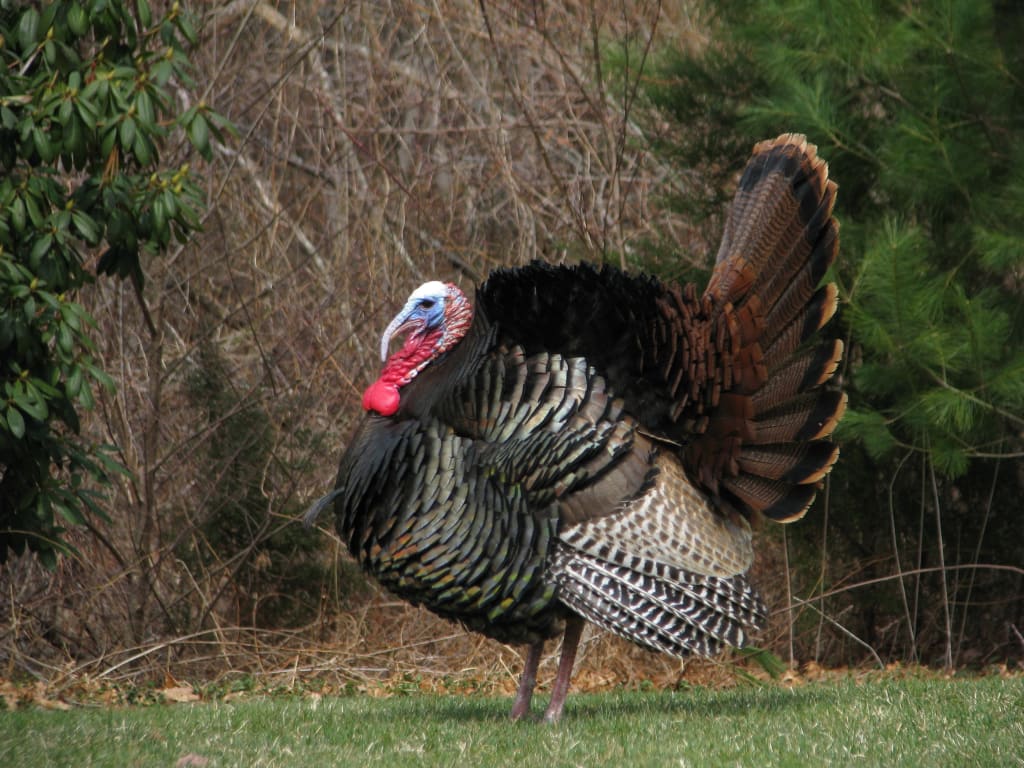
In a modern context, this is something you do to cut something out entirely.
We say “going cold turkey”, which means we are giving up some drug or otherwise addictive and harmful substance entirely (like Twitter). Not cutting back, not gradually reducing, not replacing with something else (like Facebook), but stopping altogether.
Often, for drugs such as heroin and other highly dangerous drugs, “going cold turkey” is a pretty bad idea. But why, exactly? And what doe turkeys have to do with drugs?
Let’s talk turkey
Okay, so before we look at where this phrase comes from, what does going cold turkey actually look like? In other words, is going cold turkey safe, and to those addicted to various substances, how does the body react to something so abrupt?
Well, firstly, let’s look at addiction itself. In its simplest terms, it’s the dependence of a substance developed by the brain’s release of dopamine — the feel good chemical. Some drugs trick the brain in to releasing dopamine, the brain then in turn adapts, thus meaning the user’s behaviour changes to continue seeking this desired feeling.
So effectively, in layman’s terms, addictive substances rewire your brain and trick it in to making you feel better and put importance on continued usage. Quitting an addictive substance causes your rewired brain to struggle with natural chemical balances, causing withdrawal symptoms and relapses.
So “going cold turkey” is effectively saying to your brain: “no more soup for you.” (A timely Seinfeld reference.)
Understandably, your brain is going to give you a pretty hard time over this. It really likes that soup.
For some things, depending on how addictive they are, stopping altogether can be the most effective strategy to quit: you’ll have it out of your system quicker, in theory, and stop its damaging effects sooner. Huzzah.
But for other substances it can be very very very dangerous.
All addictive substances will cause some physical or emotional symptoms, as the brain effectively gets used to ‘normal’ once again. And while going cold turkey with nicotine and alcohol is safe (no one has ever literally dropped dead from cigarette withdrawals), suddenly cutting out opioids (such as heroin) and serious long term alcohol addiction can lead to seizures, psychological trauma and irregular heart rhythms. All serious stuff.
Rather than going cold turkey, some users may gradually taper off their usage, i.e. going from 40 cigarettes a day, down to just one or two over the space of an allotted period of time. The theory being quitting 40 cigs a day is WAY harder than quitting one a day, because over time they’d be gradually cutting the dependency the brain feels on it.
But we don’t call this gradually tapering off of an addictive substance “going warm turkey”, do we?
Why turkeys and why cold
Okay, so now that’s done, let’s look at why the hell we call it cold turkey and not cold duck, or tepid donkey or something else equally nonsensical. Typically, there are several possible origins to the expression.
One common theory relates to the appearance of someone going through opioid withdrawal with piloerection (which isn’t as sexy as it sounds. Saying to someone “I have piloerection” just means you have goose bumps, so calm down).
Typically, opioid users experience goose bumps when going through withdrawal, called such as your skin resembles the appearance of a literal plucked turkey’s skin after it has been refrigerated. While a different bird, you can see why people would draw links there.
Another theory with a little more substance to it stems all the way from an 1877 issue of a British satirical magazine, in which a miserable Ebenezer-Scrooge-style fictional character moans and grumbles through the Christmas season. In the comedic story, he stays at a cousin’s house and is served literal slices of cold turkey on his plate continuously over several days, much to his increased horror and disgust, becoming more and more personally offended. When he leaves, he responds, quite appropriately some might say, by cutting this individual out of his will.
The popularity of this article, this theory suggests, seems to have then led to the expression of giving someone “the cold turkey treatment” — much like the fictional character did to his cousin by cutting them out of his will.
Thus giving someone “the cold turkey treatment” meant excluding someone entirely, which evolved in to “going cold turkey” meaning to cut something out, such as addictive substances.
In 1910 we see possibly the first idiomatic use in the modern context, in Robert W. Service’s The Trail of ’98: A Northland Romance:
“Once I used to gamble an’ drink the limit. One morning I got up from the card-table after sitting there thirty-six hours. I’d lost five thousand dollars. I knew they’d handed me out ‘cold turkey’…”
Yet another theory, placing the expression in a more modern and typically American context, relates it to the expression “talking cold turkey”, meaning to speak bluntly and matter-of-factly. This can then be said to have evolved over time, from talking no nonsense, to doing no nonsense, i.e. “going cold turkey” and giving up something completely.
The history of this seems to come a little later than the above, however, with the first recorded entry being from The Des Moines Daily News, in 1914:
And furthermore he talks “cold turkey”. You know what I mean — calls a spade a spade.
But whatever the origin, the first use of “cold turkey” in relation to giving up substances first appears in a 1920 American medical bulletin:
Some addicts voluntarily stop taking opiates and “suffer it out” as they express it without medical assistance, a process which in their slang is called taking “cold turkey”
The true etymology, then, is likely a combination of all these theories, with meanings being twisted and redefined over the years, influencing and popularising one another, and re-entering the language proverbially after initially existing with some alternative meaning.
But that’s enough turkey talk for one day…
* * *
Sources
About the Creator
R P Gibson
British writer of history, humour and occasional other stuff. I'll never use a semi-colon and you can't make me. More here - https://linktr.ee/rpgibson
Keep reading
More stories from R P Gibson and writers in FYI and other communities.
Welcome To The Information Dumping Ground
Planning your next family holiday or travel adventure? Then why not consider a trip to an island in the South Atlantic, just off the west coast of the African continent, some 354 miles (570 km) from Ghana. There you’ll (supposedly) find a small community, estimated population of four thousand (but with millions of tourists every year), the world’s highest per capita Segway users, and home to some of the most diverse landmarks imaginable.
By R P Gibson4 years ago in FYI
Top 10 Luxury Travel Experiences Around the World for 2026
Luxury travel in 2026 is no longer just about opulence; it’s about immersive, transformative experiences that combine comfort, adventure, and cultural depth. For seasoned travellers seeking something beyond ordinary vacations, the world offers a rich tapestry of unique journeys—from private islands to cultural explorations with personal guides. Below, we explore ten luxury travel experiences that promise exclusivity, personalization, and unforgettable memories.
By All 4 Seasonabout 24 hours ago in FYI



Comments
There are no comments for this story
Be the first to respond and start the conversation.