Latest Stories
Most recently published stories in FYI.
Sir George Cayley's flying machine
The first man to take off from the ground and fly was not Orville Wright in 1903 but (it is believed) John Appleby, a coachman who was a highly reluctant pioneer of aviation fifty years earlier. He had his employer, Sir George Cayley, to thank for that.
By John Welford5 years ago in FYI
The Latest Twist In The Life-On-Venus Debate?
Phosphine is considered a biosignature gas on Earth, meaning it is produced by living organisms. On rocky planets, conditions are so extreme that there is no known way to produce phosphine in the absence of life, but the process is extremely demanding. In other words, the observations of phosphine on Venus are just right to replenish molecules in the atmosphere of a planet.
By Sita Baral5 years ago in FYI
Why Humans See Faces In Everyday Objects
The German word pareidolia was first used in an article by Karl Ludwig Kahlbaum, for example in his 1866 essay Die Sinnesdelierien. The work was referred to the following year in the Journal of Mental Science Volume 13 where it was translated as "pareidolia" in English and noted as synonym for the terms "change hallucination," "partial hallucination" and "perception of secondary images".
By Sita Baral5 years ago in FYI
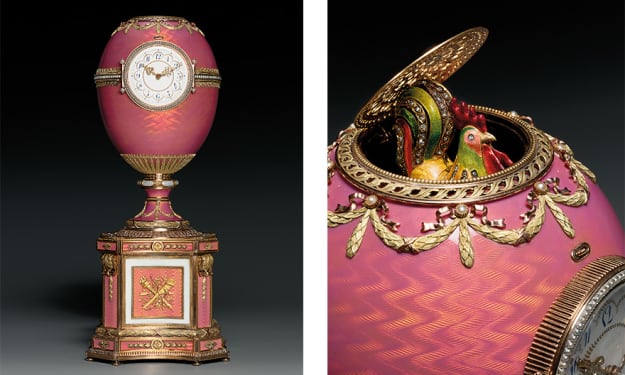
All about Fabergé Egg Auction
From the start, Fabergé eggs were just planned for Russian eminence. Let us go through this story of this Faberge egg. Tsar Alexander III turned out to be so fascinated with them that he demanded offering one to his better half every Easter until he kicked the bucket in 1894. His child, Tsar Nicholas II, kept the House of Fabergé occupied with creating eggs for the two his mom and spouse. That all reached a sudden conclusion with the Russian Revolution of 1917, the imperial family's execution, and a significant number of the Fabergé eggs moving to the Moscow Kremlin Armory. The praised series of 50 Imperial Easter eggs was made for the Russian Imperial family from 1885 to 1916 when the organization was controlled by Peter Carl Fabergé. These manifestations are inseparably connected to the brilliance and grievous destiny of the last Romanov family. They were a definitive accomplishment of the prestigious Russian adornments house and should likewise be viewed as the last incredible commissions of objets d'art. Ten eggs were delivered from 1885 to 1893, during the rule of Emperor Alexander III; 40 more were made during the standard of his devoted child, Nicholas II, two every year, one for his mom, the widow, the second for his significant other.
By Jenna Miller5 years ago in FYI
From Cloth to Revolution
The Ming treasure voyages consisted of 317 ships. Columbus had a fleet of 17. One changed the way the world went about trading and another opened the door to unknown people, riches, and property. These feats were made possible by the invention of the sail. Archaeologists and scientists alike have been unable to identify where the first sail originated. However, it led the way for exploration and a new beginning. The function of a sail allows the sail ships’ captain to sail into, perpendicular to, or away from the wind. This maximizes the potential places a ship can reach and the effectiveness in travel. Evolved from a simple square shape to a triangle for effectiveness, the sail has single-handedly revolutionized the way that human beings explore the world around them. Understanding basic laws of nature, exploration, and technological advancements are all contributions that the invention of the sail has to society and humans in general.
By Jocelynn L. Taylor5 years ago in FYI
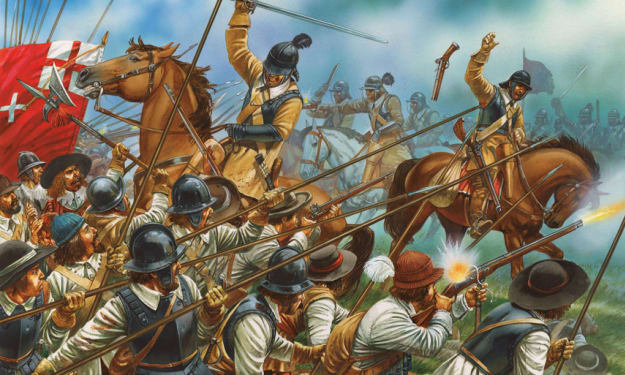
The Self-Denying Ordinance, 1644-5
The self-denying ordinance was a short bill passed by Parliament at the height of the English Civil War (1642-49), and which turned out to be instrumental in the eventual victory of the Parliamentary forces over those of King Charles I.
By John Welford5 years ago in FYI
The Murder of 14-Year-Old Emmett Till
Before Emmett Till’s mom sent him to Mississippi to visit family, she explained that things were different for Black boys in the South. They weren’t as friendly to people like him, a 14-year-old teen prankster who was always joking around. Mamie warned her son to be careful and he promised that he would.
By Criminal Matters5 years ago in FYI
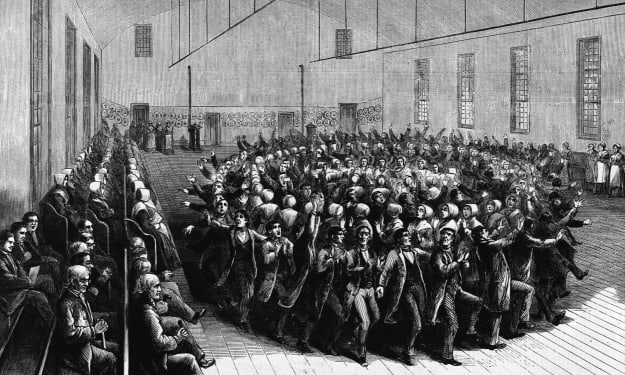
The Shakers
The Shaking Quakers, better known as Shakers, were a remarkable group of Christians that flourished in the United States during the late 18th and early to mid 19th centuries. Although their numbers were never all that large their name lives on mainly because of the artefacts they left behind them.
By John Welford5 years ago in FYI
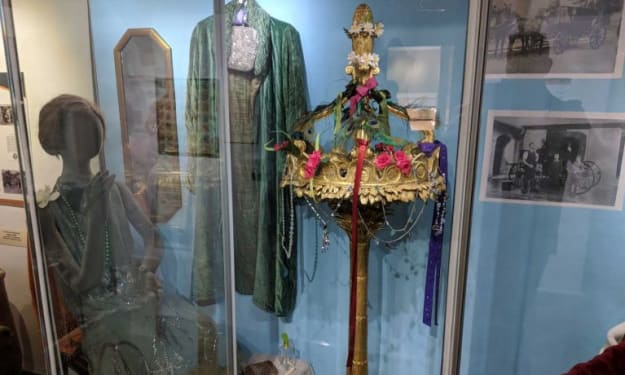
The Shaftesbury Byzant
If you pay a visit to the Museum in the Dorset town of Shaftesbury you are quite likely to see a very strange exhibit that looks a bit like a cross between an open umbrella and a May garland. It is a metal structure that has been gilded to make it look like solid gold, although that is not the case. This is the Shaftesbury Byzant (which is a corruption of “besom”, a type of sweeping brush). It has a fascinating history.
By John Welford5 years ago in FYI