Latest Stories
Most recently published stories in FYI.
History of New Year's Eve
New Year’s Eve is the last day of the year, according to the Gregorian Calendar, and is known as Old Year’s Day, or St. Sylvester’s Day. You may remember reading that Emperor Constantine was considered the first “Christian” Roman Emperor? St. Sylvester is responsible for Constantine’s conversion in the 4th-century.
By Bill Petro4 years ago in FYI
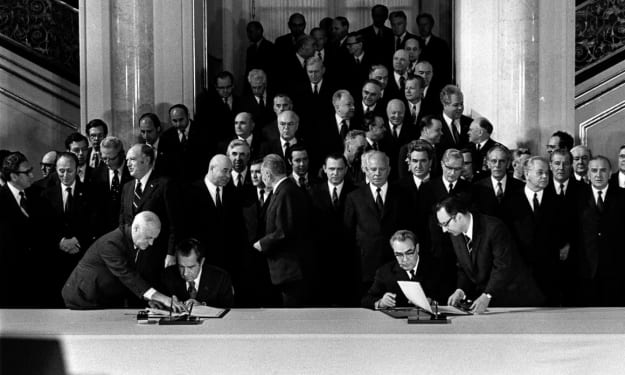
Treaty of San Stefano
The Ottomans settled at San Stefano (now Asilcoy) on the western edge of the city, and, as the name implies, he and the Ottomans entered into a treaty, which they signed on March 3. On March 3, 1878, Russia and Turkey signed a "preliminary peace treaty" in Santo Stefano, which established, with attached maps, new borders for Montenegro and Serbia. Unsurprisingly, the treaty also made provision for the creation of Great Bulgaria. The treaty provided for the creation of an autonomous principality of Bulgaria after nearly 500 years of Ottoman rule.
By Soni Sharma4 years ago in FYI
History of Auld Lang Syne
Why is it that each New Year’s Eve, we sing “Auld Lang Syne,” but do we know what it means? The song contains words from a language that few are familiar with, in a syntax that is confusing to most, and is from a poem about friends recalling adventures they had long ago but had nothing to do with New Year’s Eve.
By Bill Petro4 years ago in FYI
India Is Bringing The Third Wave Upon Itself, Risking Chaos and Implosion
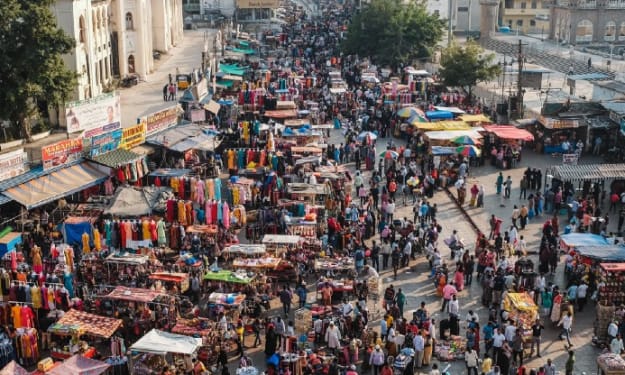
It would be an understatement to say that India is not prepared for the Third Wave of Covid infections, caused by the Omicron variant. On paper, both the central and state governments say that they are well prepared. However, much like the brutal Second Wave that caught the nation off guard, the Third Wave would arrives at a time when the country is in the midst of madness and mayhem. With its political elite caught up in campaigning for the next round of the elections in various states, which looks unlikely to be postponed, the chances of super spreaders in the form of election rallies and door to door campaigns remains high. Moreover, the images of people thronging markets and flocking to large gatherings, raises fears about spread of the virus. That too, when the Omicron variant eludes antibodies due to vaccinations, which renders any gains from them useless and leads to breakthrough infections.
By Rammohan Susarla4 years ago in FYI
The Teratoma
This article contains medical details and images. Please proceed with caution if you are squeamish or sensitive to this subject matter. I am not a doctor, just a writer with an interest in the bizarre. Do not use this article to self diagnose or seek medical advice.
By Jade Hadfield4 years ago in FYI
"Hobo Johnson Alienates His Fanbase" Is Misunderstood, Just Like the Generation It's Written About
Have you ever heard or watched something so awful that it was actually good? Take Tommy Wiseau’s 2003 cult classic, The Room, for example; it’s mind-numbing but nonetheless impactful. That’s my impression of artist Hobo Johnson’s newest album: Hobo Johnson Alienates His Fanbase. With 20 minutes and 46 seconds of chaotic, whiny, and downright not-giving-a-fuck-ness, 26-year-old Hobo Johnson manages to put his listener into the deranged headspace of a young adult growing up in the complex, media-hungry, extremist times of today. Commenting on socio-political topics such as the effects of capitalism, the true ideological foundation of socialism, and the trials of wavering mental health and consequential medication, the singer and lyricist are bold enough to state the effectual dilemmas of this young generation, alienating those who cannot relate to its candid content.
By Kyla Crist4 years ago in FYI
The Japanese Worldview in "Mono no Aware"
“Mono no aware” is a Japanese term used to describe the transience of all things. “Mono” means “things” and “aware” is an expression of surprise, like the “ah” you blurt out. It roughly translates to “the ahh-ness of things.” “Mono no aware” captures a mix of contrasting feelings. It expresses both the beauty and sadness from knowing that something is transient. There is no other word that encapsulates the human experience as this word does.
By Yulina Goto4 years ago in FYI
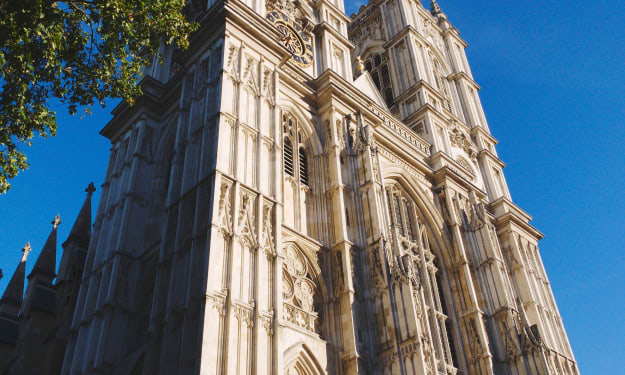
WESTMINSTER ABBEY
When the abbey was established by monks in 960 AD, it existed on an island on the River Thames called Thorney Island. Its elevations and stable foundations delivered the perfect position to build an abbey and the Palace of Westminster. The island no longer exists, although it has provided the name for Thorney Street in Westminster.
By Paul Asling4 years ago in FYI
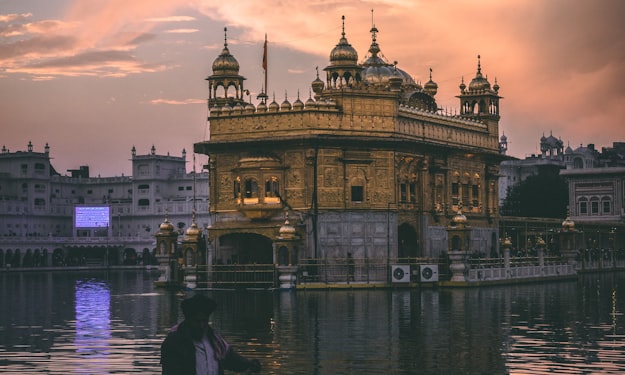
Learning About Our Local Sikhs During The Holidays
As the world changes and we start to resemble more of a global community, there is little excuse not to learn about the neighbors and fellow community members that come from other lands. If you politely show an interest in them, politely ask questions, and be respectful, the rest is just an internet search and some reading away.
By Jason Ray Morton 4 years ago in FYI